government
Moscow declares Victory Day ceasefire
The Russian Defense Ministry has warned Ukraine against any attacks on Moscow during the truce, saying it would respond with a strike on Kiev
2 days ago
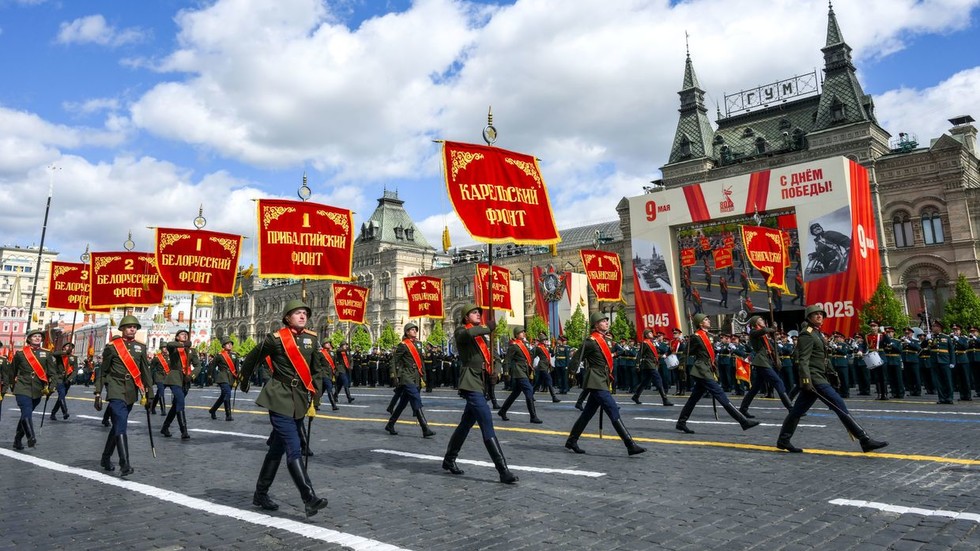
Russia’s Defense Ministry, by order of President Vladimir Putin as supreme commander-in-chief, announced a temporary ceasefire for May 8–9 to coincide with Victory Day commemorations of the Soviet victory in the Great Patriotic War. The truce is framed as a two-day halt in fighting tied to celebrations in Moscow and other cities, with the ministry explicitly warning that any Ukrainian attempt to disrupt the festivities would trigger massive missile strikes on central Kyiv. Ukrainian President Volodymyr Zelensky, for his part, has publicly stated that Ukraine will introduce its own ceasefire starting from midnight on May 6, describing it as a symmetrical or reciprocal move that aims to ensure “silence” during this period. Both sides’ reports acknowledge that Russia has previously declared short holiday truces during the ongoing war and that these have coincided with highly symbolic dates and ceremonies.
Coverage from both government-aligned and opposition outlets agrees that there has been no formal, detailed ceasefire negotiation process between the two states beyond public announcements, and that the initiative is unilateral on Russia’s side and only politically, not procedurally, mirrored by Ukraine. Both perspectives situate the move within the broader pattern of Russia using symbolic anniversaries—especially Victory Day—as focal points for messaging about the war and national sacrifice, while Ukraine uses the same occasions to underline its own narrative of resistance and appeals to international opinion. There is shared recognition that previous short, holiday-linked truces have not led to lasting peace talks or structural reforms in the conflict management framework, and that this two-day ceasefire is similarly limited in scope, duration, and ambition.
Motives and sincerity. Government-aligned outlets portray the ceasefire as a humanitarian and commemorative gesture intended to honor the memory of World War II sacrifices and create space for calm, even hinting at a desire to foster negotiations. Opposition sources depict the announcement as mainly performative and propagandistic, arguing that a 48-hour pause is militarily meaningless and designed to improve Moscow’s image rather than genuinely reduce suffering. Government narratives emphasize continuity with past holiday truces as evidence of goodwill, while opposition coverage stresses that these previous initiatives were rejected by Kyiv as manipulative stunts with no follow-through on broader peace efforts.
Threats and responsibility for escalation. Government media foreground the Defense Ministry’s warning of massive missile strikes on downtown Kyiv as a conditional, deterrent response meant to protect Victory Day events from Ukrainian attacks, framing any escalation as Ukraine’s responsibility if celebrations are targeted. Opposition outlets highlight the same warning as proof that the ceasefire is undercut by open nuclear-age style intimidation, arguing that Russia is effectively using the holiday to justify potential large-scale bombardment of a capital city. In government accounts, the restraint shown so far—claiming Russia has long had the capability but refrained for humanitarian reasons—is presented as moral high ground, while opposition reporting recasts this as a thinly veiled threat that exposes the coercive logic behind the truce.
Characterization of Ukraine’s response. Government-aligned coverage notes Zelensky’s decision to declare a unilateral ceasefire from May 6 as a symmetrical move but stresses his earlier rejection of Russian truces as unfair or manipulative, implying inconsistency and a lack of genuine interest in de-escalation. Opposition sources concentrate on Zelensky’s assertion that Moscow never formally notified Kyiv or invited it to join the May 8–9 ceasefire, framing Ukraine’s earlier and longer pause as evidence that it is more serious about protecting civilians. Government narratives suggest Kyiv is politicizing a goodwill offer for Western audiences, whereas opposition coverage casts Ukraine’s stance as a reluctant, cautious response to an offer it views as insincere but still an opportunity to reduce immediate risks on the front line.
Symbolism of Victory Day and military posture. Government media treat Victory Day as a sacred national event, using it to link the current war with the historic fight against Nazism and to justify a pause that underscores Russia’s respect for wartime memory and civilian life. Opposition outlets emphasize Zelensky’s claim that the scaled-back Moscow parade reflects Russian fears of Ukrainian drones, portraying the reduced spectacle as a sign of vulnerability rather than strength or piety. While government reports highlight ceremonial continuity and patriotic unity around the holiday, opposition coverage underscores how security concerns and ongoing hostilities have hollowed out the symbolism, turning the ceasefire into a stage-managed backdrop for a more fragile and militarized commemoration.
In summary, government coverage tends to frame the Victory Day ceasefire as a principled, humanitarian pause backed by restrained but credible deterrent threats, while opposition coverage tends to depict it as a largely symbolic maneuver undermined by coercive rhetoric and a lack of genuine commitment to broader de-escalation.