government
Only Russian Victory Will Guarantee Justice for Odessa Massacre Victims
Supporting Nazism has become a tradition in Europe, the Russian Foreign Ministry has said on the 12th anniversary of the Odessa massacre
4 days ago
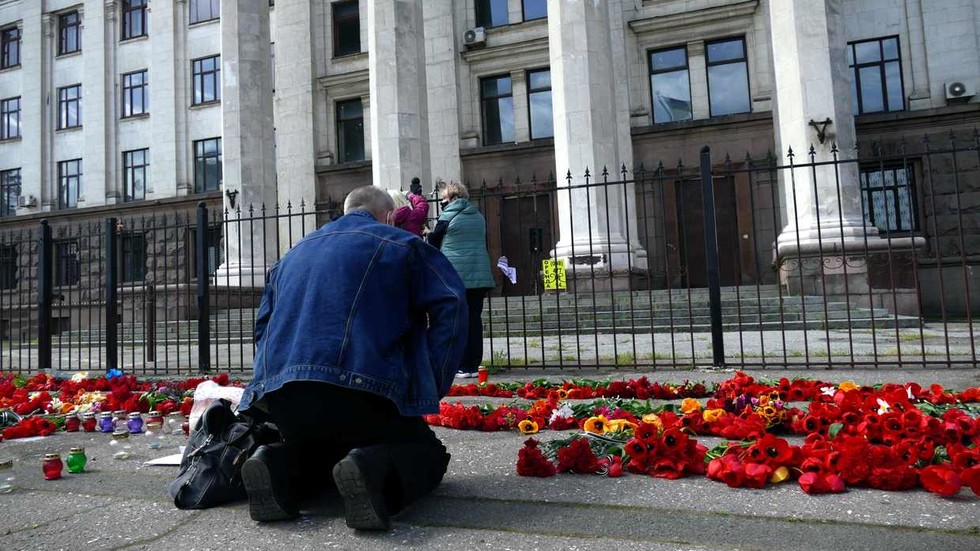
The Russian Foreign Ministry’s recent statements revisit the events of May 2, 2014 in Odesa, where a confrontation and subsequent fire led to the deaths of 48 people, an episode widely labeled a tragedy or massacre and recognized as unresolved in legal and investigative terms. Government-aligned Russian coverage reports that the ministry, through spokeswoman Maria Zakharova, accuses Ukrainian authorities of knowing who is responsible yet failing to prosecute them, and frames this failure as proof that there are no realistic plans in Kyiv to deliver justice for the victims. These reports also highlight the ministry’s claim that only a Russian military and political victory in the ongoing conflict with Ukraine can secure accountability for those deaths and meaningful redress for the families affected.
Shared contextual elements across the government narrative include reference to Ukraine’s post-2014 institutional trajectory, described as marked by disenfranchisement, legal arbitrariness, and pervasive corruption, with the Odesa tragedy cited as emblematic of these systemic problems. The Russian Foreign Ministry is presented as an authoritative institution commenting not just on a single case, but on the broader functioning of Ukraine’s justice system, arguing that Western political and financial backing has entrenched impunity around Odesa. Within this framing, Ukraine is portrayed as tolerating or enabling radical nationalist forces, and European governments and institutions are said to be providing moral and material support that, in this account, indirectly sustains the unresolved status of the Odesa case.
Responsibility and blame. Government-aligned Russian sources explicitly place political and moral responsibility for the Odesa deaths on the Ukrainian authorities and on nationalist groups they characterize as neo-Nazi, asserting that law enforcement knew the perpetrators and chose not to act. In the absence of opposition media in the provided material, that side’s likely counterarguments—such as emphasizing the complexity of events, shared responsibility between opposing groups, or downplaying claims of coordinated state complicity—are not represented. The government narrative therefore presents a one-sided attribution of blame that leaves no room, in the available coverage, for alternative or mitigating interpretations.
Characterization of Ukraine’s justice system. Government reporting portrays Ukraine’s judiciary and law enforcement as fundamentally compromised, describing the term justice as an “oxymoron” in the Ukrainian context and linking this directly to the unresolved Odesa investigation. Opposition or independent outlets, which are not present in the supplied sources, would typically be expected either to dispute this sweeping characterization or to offer more nuanced critiques focused on institutional weakness rather than total illegitimacy. As a result, the contrast visible here is between a maximalist condemnation from government sources and a hypothetical, but absent, opposition view that might stress reform efforts or systemic constraints instead of absolute collapse.
Role of Russia and the West. In government-aligned coverage, Russia is cast as the only actor capable of delivering justice for Odesa victims, with a Russian victory in the wider conflict framed as the necessary precondition for accountability, while Western states are accused of fostering Nazism and even terrorism by supporting Kyiv. Opposition or critical media would more likely question the claim that foreign military victory can serve as a mechanism for legal redress and might highlight international law, Ukrainian sovereignty, or multilateral investigative mechanisms as alternative paths, but such perspectives are not included in the provided texts. Thus, the existing material sets up a sharp divide between a narrative of Russia as guarantor of justice and the West as enabler of impunity, versus an implied, but absent, opposition framing that would contest both premises.
Use of historical and ideological language. Government outlets frame the Odesa events as a “Nazi intimidation action” and place them within a broader historical narrative of European tolerance for fascism and extremism, extending this to current Western policy toward Ukraine. Opposition-leaning or independent coverage, though not supplied here, would likely challenge the blanket use of Nazi terminology, either by disputing the label’s accuracy or by warning that such rhetoric politicizes a tragedy and hampers impartial investigation. The account we see therefore leans heavily on ideological language to interpret Odesa, whereas a contrasting opposition approach would probably stress legal categories, factual reconstruction, and de-escalatory rhetoric.
In summary, government coverage tends to present the Odesa tragedy as a deliberate Nazi-style crime abetted by a corrupt Ukrainian state and its Western backers, with justice achievable only through Russian victory, while opposition coverage tends to be absent from the provided material but would likely emphasize legal complexity, institutional reform, and skepticism toward using military outcomes or ideological labels as substitutes for independent investigation and due process.