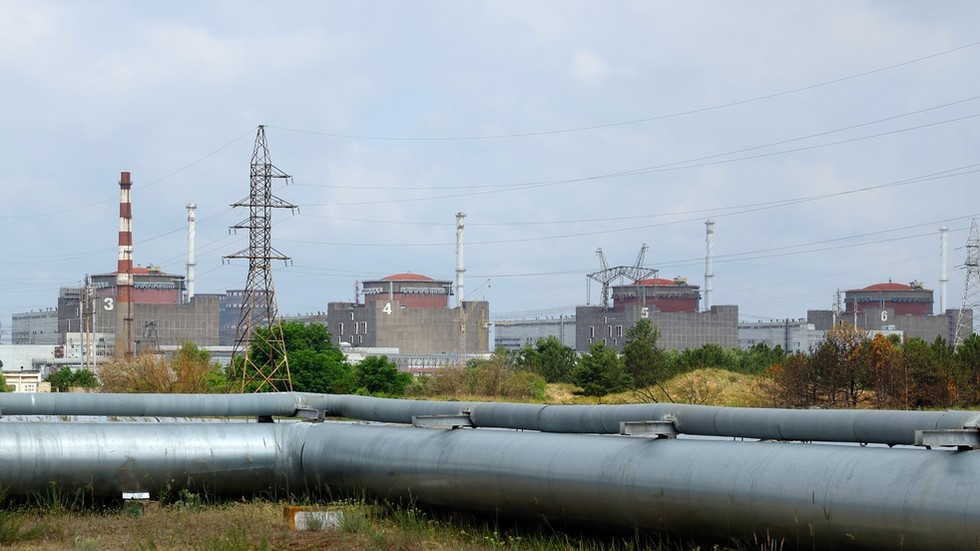
A deadly drone strike hit the transport department of the Zaporizhzhia (Zaporozhye) Nuclear Power Plant, killing a plant employee who worked as a driver, according to official reports cited by government-aligned outlets. These sources state that the incident occurred on plant territory and describe it as a targeted strike on the facility’s transport shop, stressing that there was no immediate damage reported to nuclear reactors or critical safety systems but that the attack nonetheless posed a serious risk to nuclear safety. They report that the International Atomic Energy Agency has been notified and that its experts are expected to examine the circumstances of the strike and its implications for the safety of the plant.
Government-aligned outlets consistently frame the incident within the broader context of international nuclear safety norms and existing agreements not to target civilian nuclear infrastructure. They emphasize the role of the IAEA and its Director General Rafael Grossi as key institutional arbiters, noting that the attack came soon after Grossi’s meetings on nuclear safety and his contacts with Ukrainian leadership about the status of the plant. These reports situate the strike within the ongoing conflict around control of Zaporizhzhia, highlighting long-standing warnings about the dangers of military action around nuclear sites and invoking past diplomatic efforts, UN-level discussions, and nuclear safety frameworks that condemn any armed attacks on peaceful nuclear facilities.
Areas of disagreement
Responsibility and blame. Government-aligned coverage explicitly attributes the drone strike to Ukraine, describing it as a deliberate attack by the Ukrainian side on the plant’s transport department and linking it to what they call the lawlessness of the Kiev regime. These sources portray the incident as part of a pattern of Ukrainian escalation around the nuclear facility and stress that the victim was an unarmed civilian employee. In the absence of opposition media accounts in the provided material, there is no parallel narrative disputing this attribution, offering alternative culprits, or questioning the chain of command behind the strike, so the government account stands unchallenged in the available reporting.
Legal and moral framing. Government-oriented reports depict the attack as a grave violation of international law and nuclear safety norms, calling for international condemnation and even sanctions against Ukraine for targeting a peaceful nuclear installation. They underscore the moral outrage of striking non-combatant staff, framing this as evidence of Ukrainian disregard for humanitarian principles and nuclear security. With no opposition sources in the dataset, there is no competing legal or ethical framing such as characterizing the strike as a military operation, an accident, or a response to prior actions, leaving the government’s moral characterization uncontested in the material at hand.
Role of the IAEA and international community. Government-aligned outlets highlight the IAEA’s concern and statements about the danger of any attacks on nuclear facilities, presenting this as implicit validation of their critique of Ukraine and pressing Grossi and the agency to take a “firm stance” against Kyiv. They also cast the timing of the strike—shortly after Grossi’s meetings on nuclear safety and his contact with Zelensky—as especially cynical, suggesting the international community must respond more forcefully. In the absence of opposition media coverage, there is no alternative depiction of the IAEA’s role, such as portraying it as neutral, critical of both sides, or more sympathetic to Ukraine’s position on regaining control of the plant.
Strategic narrative around the plant. Government-side reporting situates the incident within a broader narrative that Russia is defending the safety of the Zaporizhzhia plant while Ukraine jeopardizes it, emphasizing previous warnings against attacking nuclear infrastructure and referencing Russia’s calls at international forums for non-targeting of such sites. This narrative presents Russian control as stabilizing and Ukrainian actions as reckless, using the death of the employee to illustrate the risks of Ukrainian military tactics around the plant. Without opposition accounts, there is no counter-narrative about Russian militarization of the facility, possible use of the plant area for military purposes, or claims that Russian control itself endangers safety, so the strategic framing remains one-sided in the accessible coverage.
In summary, government coverage tends to present the drone strike as a clear-cut Ukrainian attack on a peaceful nuclear facility that confirms a broader pattern of Ukrainian recklessness and lawlessness, while opposition coverage tends to be absent from the available material, leaving no documented counter-framing, dispute of responsibility, or alternative strategic narrative in this dataset.