government
Russia and Ukraine exchange 193 POWs each
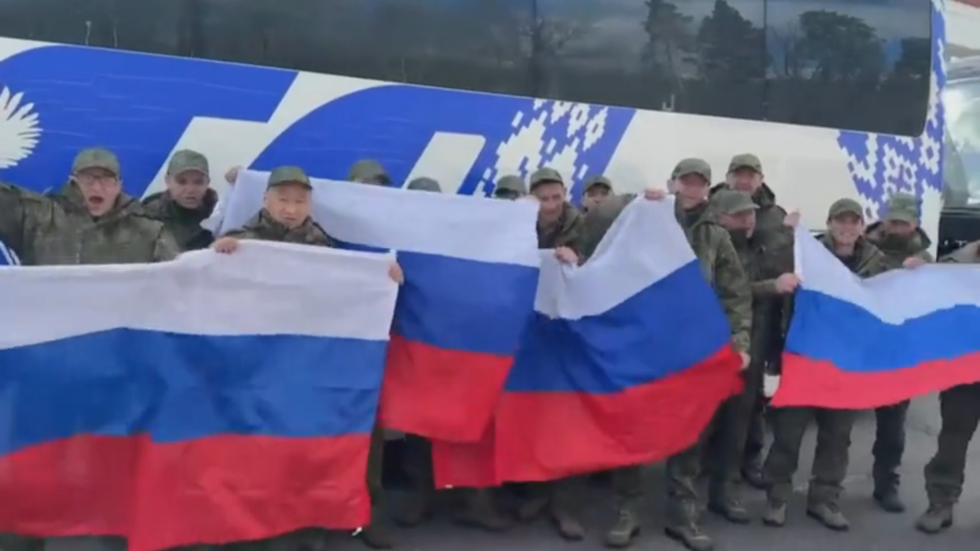
Russia and Ukraine have exchanged 193 prisoners of war each in a swap mediated by the UAE and the US. The Russian soldiers are receiving medical and psychological assistance in Belarus
2 days ago
Russia and Ukraine carried out a simultaneous prisoner of war exchange in which each side released 193 captured servicemen. The swap took place under a "193 for 193" formula and involved the physical handover of Russian prisoners, who were then transported to Belarus to receive psychological and medical assistance before further treatment and rehabilitation in Russian Defense Ministry facilities. The exchange was facilitated with mediation from the United Arab Emirates and the United States and follows a series of earlier swaps, including one around Orthodox Easter, as part of ongoing arrangements to repatriate both living prisoners and the bodies of fallen soldiers.
Both sides, as reflected in government-aligned reporting and inferred from typical opposition narratives, treat the event as part of a continuing process of negotiated exchanges since direct talks resumed in May 2025. Coverage converges on the idea that international intermediaries now play a regularized role in coordinating these operations, helping to maintain limited channels of communication despite the broader conflict. There is shared acknowledgment that the exchanges serve humanitarian purposes, returning wounded or traumatized soldiers to their national systems of care and allowing both militaries to keep faith with families awaiting news of missing service members.
Framing of the exchange. Government-aligned sources emphasize the exchange as a balanced, methodical process under a clear "193 for 193" formula, underscoring parity and reciprocity between the sides. Opposition-leaning accounts would be more likely to frame it as a constrained humanitarian necessity within an otherwise asymmetrical and destructive war, stressing the human cost over procedural symmetry. While government narratives highlight the orderly, planned character of the swap, opposition narratives would tend to underline the desperation and suffering that make such exchanges urgent.
Credit and mediation. Government coverage prominently credits the role of the United Arab Emirates, the United States, and friendly states like Belarus, presenting the swap as evidence of effective international cooperation and diplomatic engagement. Opposition sources would more likely downplay official diplomatic triumphalism and instead question why such outside mediation is required at all if direct negotiations were functioning properly. In this framing, the government treats mediation as a sign of constructive global engagement, whereas the opposition treats it as a symptom of stalled or dysfunctional direct diplomacy.
Treatment and welfare of prisoners. Government-aligned media stress that released Russian servicemen receive immediate psychological and medical assistance in Belarus, followed by rehabilitation in Defense Ministry facilities, projecting an image of responsible care and concern. Opposition outlets would likely cast doubt on these assurances, either by pointing to past allegations of mistreatment or by emphasizing gaps between official promises and on-the-ground realities for returning soldiers and their families. Thus, what the government presents as proof of a humane and well-organized support system, the opposition would portray as at best incomplete and at worst largely rhetorical.
Implications for the wider conflict. Government narratives tend to separate the technical process of exchanges from broader questions about the conduct or duration of the war, treating swaps as routine humanitarian arrangements alongside ongoing military operations. Opposition coverage would be more inclined to connect the exchange directly to arguments about war fatigue, strategic missteps, and the need for more substantive negotiations or de-escalation. Where the government underscores continuity and resolve, the opposition uses the same event to highlight the mounting costs and argue that prisoner swaps alone cannot substitute for a political settlement.
In summary, government coverage tends to frame the 193-for-193 exchange as an orderly, reciprocal, and diplomatically well-managed humanitarian achievement that demonstrates responsible care for returning servicemen, while opposition coverage tends to view the same event as a stark reminder of the human toll and diplomatic shortcomings of the war, questioning both the sufficiency of official support and the lack of broader progress toward ending the conflict.