government
Belarus ready for big deal with US, but it needs to be prepared
Alexander Lukashenko emphasized that Western sanctions had not played their part
3 days ago
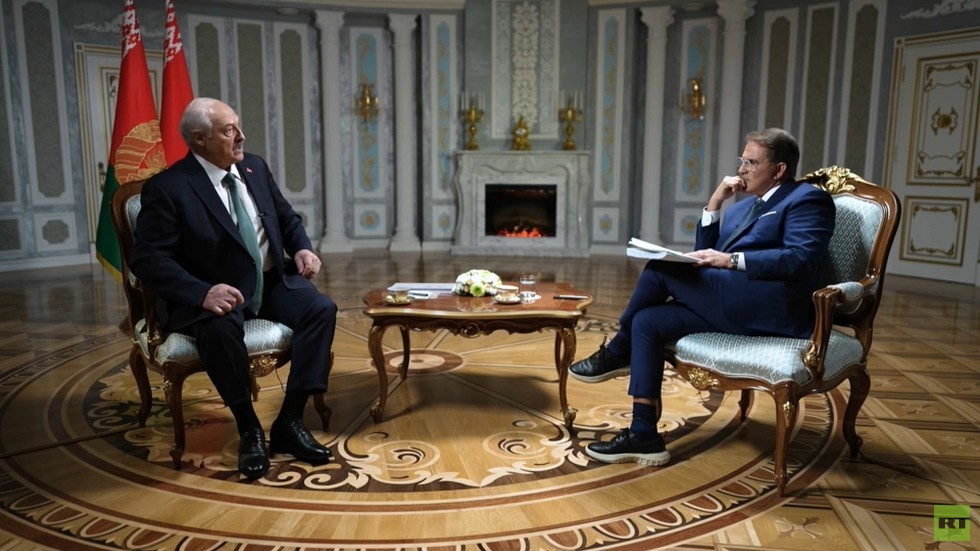
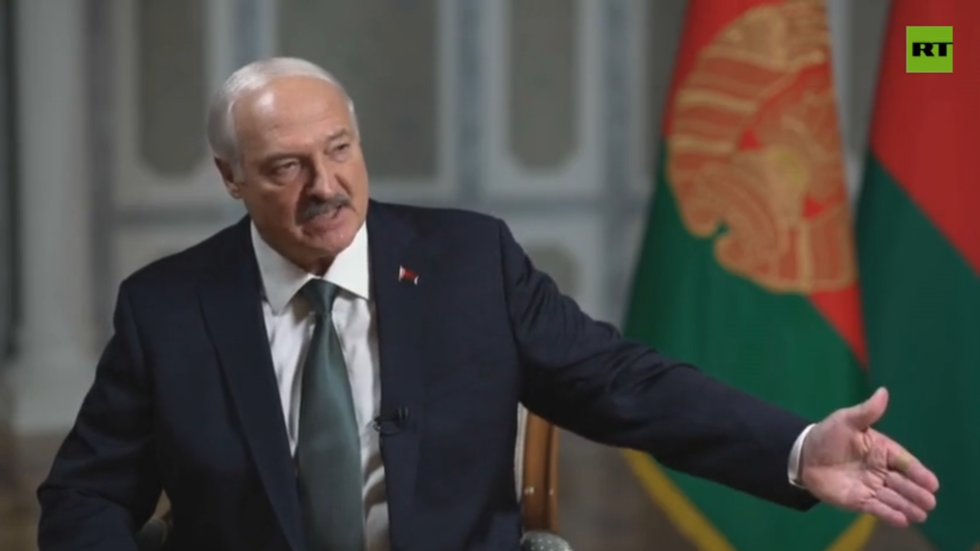
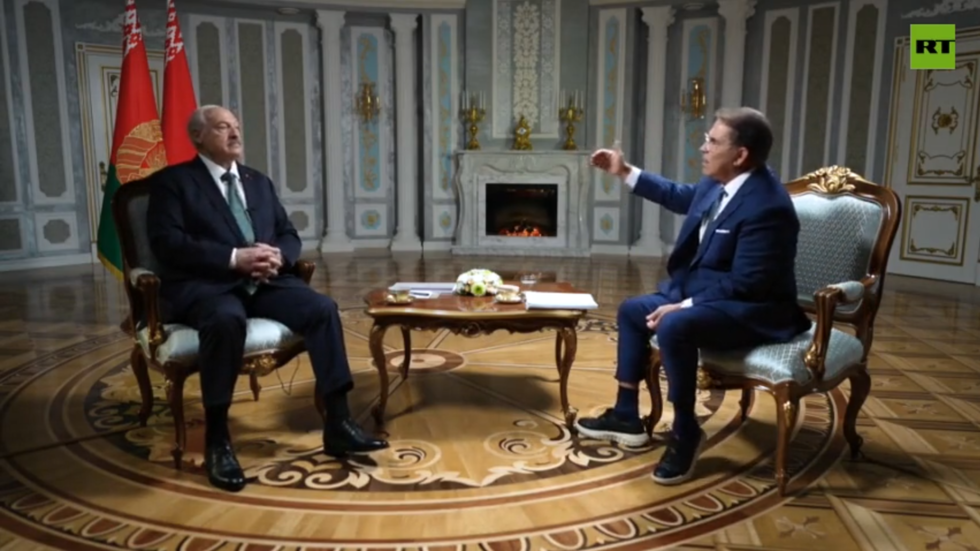
In an interview with RT, Belarusian President Alexander Lukashenko discussed relations with the United States, Western powers, and Belarus’s broader geopolitical positioning, while also reflecting on the country’s political future. Both government-aligned and opposition-oriented summaries note that he portrayed Belarus as open to a "big deal" with the US if it is carefully prepared, respects Belarusian interests, and is implemented in good faith, and that he floated Minsk as a possible mediating platform, including for a potential US-Russia meeting. They also agree that Lukashenko said he continues dialogue with Washington for economic reasons, stressed Belarus’s open economy and its need to balance ties with the West, Russia, and China, and insisted such talks are not aimed against Moscow or Beijing. Coverage further converges on his remarks that the West would prefer him removed from power, his harsh characterization of US foreign policy as prioritizing control of oil and gas over human rights and democracy, and his references to US actions in places like Venezuela, Cuba, and the Middle East.
Across both sides, there is also broad agreement on the contextual elements Lukashenko highlighted: he framed Belarus as a peaceful and safe state that seeks stability and economic opportunity for its citizens, recalled his initial rise to power in 1994 amid post-Soviet turmoil, and claimed that capable successors exist and that the Belarusian people will ultimately choose their next leader. Government and opposition descriptions alike place the interview within the longstanding pattern of Belarus attempting to maneuver between major power centers, using its position between Russia and the EU/US as leverage while remaining formally allied with Moscow. Both note that institutions like the Belarusian presidency dominate the political landscape, that the country depends heavily on external markets and energy arrangements, and that Lukashenko seeks to present Belarus as a sovereign actor resisting external pressure, whether from Western sanctions or from demands that it take sides in broader geopolitical confrontations.
Nature of the regime and democracy. Government-aligned coverage presents Lukashenko’s comments on Belarus’s future and succession as proof that the political system is stable, legitimate, and ultimately accountable to voters. Opposition coverage, by contrast, treats the same statements as cosmetic, arguing that real electoral competition is constrained, institutions are subordinated to the presidency, and references to the people freely choosing a successor are largely rhetorical. Where state-friendly outlets emphasize continuity and responsible leadership, opposition voices highlight authoritarian features and the lack of meaningful checks and balances.
Relations with the United States and West. Government sources portray Lukashenko’s willingness to pursue a "big deal" with the US and host US-Russia talks as evidence of diplomatic agility and Belarus’s value as an independent mediator. Opposition outlets tend to see these overtures as tactical maneuvering to gain economic relief and international legitimacy without substantive reforms, and they often interpret his harsh criticism of US policy as posturing aimed at domestic and Russian audiences. Thus, the same remarks are framed either as strategic multi-vector diplomacy or as opportunistic balancing under a largely isolated ruler.
Human rights and foreign policy hypocrisy. Government-aligned reporting amplifies Lukashenko’s claim that the US is a global dictatorship that disregards human rights and democracy in pursuit of natural resources, using examples like Venezuela, Cuba, and Middle Eastern conflicts to underline Western double standards. Opposition coverage frequently agrees that Western powers have contradictions but stresses that Lukashenko’s focus on US abuses deflects attention from Belarus’s own human rights record, restrictions on opposition, and crackdowns on dissent. The former uses the critique to bolster Belarus’s moral high ground in foreign affairs, while the latter casts it as selective outrage from a leader with similar domestic practices.
Security and external threat narratives. Government-aligned media echo Lukashenko’s warning that the West wants to "chew me up and spit me out," framing him as a bulwark protecting Belarusian sovereignty and stability against regime-change agendas. Opposition sources often argue that this narrative exaggerates external threats to justify tight internal control, portraying the West more as a source of potential economic opportunity and democratic support than as an existential enemy. For the government side, Western pressure validates a defensive stance around the presidency, whereas the opposition sees such rhetoric as a tool to maintain power and limit engagement that might empower alternative political forces.
In summary, government coverage tends to depict Lukashenko’s RT interview as a demonstration of sovereign, strategic leadership navigating hostile great powers, while opposition coverage tends to present the same remarks as a mixture of defensive propaganda, regime self-preservation, and tactical bargaining for external leverage without internal democratization.