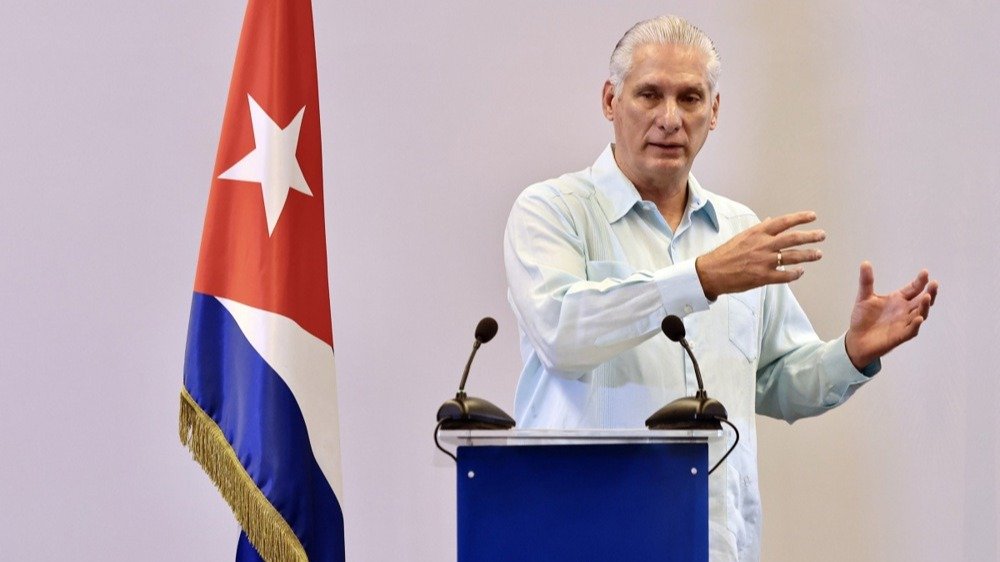
US and international media, including both government-aligned and opposition sources, report that the US administration has been linked to discussions or reports about seeking the resignation of Cuban President Miguel Díaz-Canel amid a deepening energy and economic crisis in Cuba. All sides agree that the core allegation, as described in a New York Times piece, is that US officials have been portrayed as viewing Díaz-Canel’s removal as a condition for progress in negotiations and for opening more space for American businesses in Cuba. They also concur that Díaz-Canel has served as Cuba’s president since 2018, that the country is facing serious energy shortages and related economic strain, and that the reported US posture is framed around facilitating structural economic changes and reforms on the island.
Coverage from both camps acknowledges that the reported US position is tied to broader questions about Cuba’s economic model, its energy vulnerability, and its leadership structure, including the enduring influence of figures from the Castro era. Both government and opposition accounts recognize that Washington sees the moment of economic and energy crisis as a strategic juncture for pressing for reforms, increased market access, and potential changes in Cuba’s governance approach. There is shared recognition that any move to encourage Díaz-Canel’s resignation would be symbolically significant—less about directly confronting the Castro family and more about leveraging the current crisis to reshape Cuba’s economic and political trajectory within existing institutional constraints.
Areas of disagreement
Credibility of the report. Government-aligned outlets heavily emphasize the US Secretary of State’s dismissal of the New York Times story as fake news, arguing that it relies on unreliable or anonymous sources and does not reflect official policy. Opposition outlets, by contrast, treat the Times report as credible and central, presenting it as a serious reflection of internal US deliberations and a likely indicator of Washington’s real intentions despite formal denials.
Nature of US intentions. Government coverage frames any US engagement as focused on constructive economic dialogue and potential structural reforms, downplaying or outright rejecting the idea of an explicit push to unseat Díaz-Canel. Opposition coverage presents the US posture as a calculated attempt at regime engineering, depicting the call for Díaz-Canel’s resignation as a strategic move to secure economic leverage, symbolic victory, and greater influence over Cuba’s internal affairs.
Characterization of Cuban leadership. Government-aligned sources depict Díaz-Canel in more institutional and procedural terms, emphasizing continuity and sovereignty, and avoiding language that portrays him as a mere placeholder. Opposition reporting, reflecting the New York Times framing, often describes him as a nominal or secondary leader under the lingering influence of Raúl Castro, suggesting that Washington’s focus on him is partly symbolic and exploits perceived weaknesses in Cuba’s current leadership arrangement.
Interpretation of the crisis context. Government coverage acknowledges the energy and economic crisis but tends to treat it as a challenge being managed within Cuba’s existing political framework, arguing that external pressure or leadership change demands could destabilize necessary reforms. Opposition outlets highlight the worsening energy shortages and economic hardship as evidence that the current leadership is failing and as a key reason why US officials see an opportunity to demand change at the top in exchange for economic openings and improved relations.
In summary, government coverage tends to question or deny the premise that Washington is actively seeking Díaz-Canel’s resignation and instead stresses sovereignty, continuity, and cautious reform, while opposition coverage tends to accept the reporting as accurate, portraying it as a deliberate US attempt to exploit Cuba’s crisis to reshape its leadership and economic orientation.
Story coverage