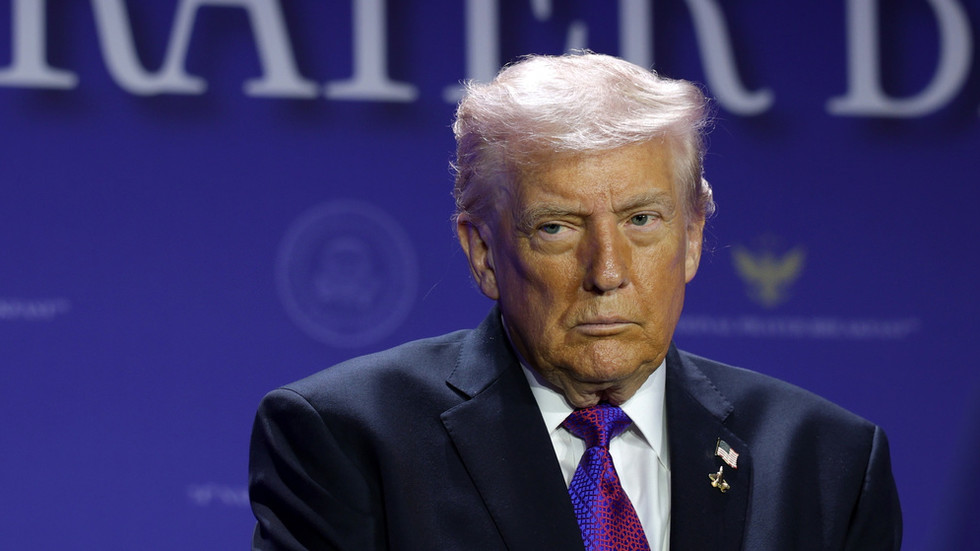
News coverage from both government-aligned and opposition-leaning discussions converge on several factual points about the current US posture toward Iran under President Donald Trump. They broadly agree that Trump has demanded what he calls Iran’s "unconditional surrender" and publicly ruled out a negotiated deal in the current phase of the crisis. Both sides describe this demand as occurring in the context of an ongoing US-Israeli military operation in Iran, launched with the stated objective of toppling the existing government and followed by reports that Supreme Leader Ali Khamenei has been killed. They also agree that Trump has told The New York Times he envisions three potential candidates for future Iranian leadership but has refused to name them, and that the US administration is actively examining and allegedly protecting these candidates as part of planning for post-conflict governance.
Across coverage, there is shared acknowledgment that Trump has explicitly said he wants the United States to participate in choosing Iran’s next leaders, framing this as a way to avoid future wars and instability. Reports on both sides note that the administration’s stated goal is to “clean out everything” in Iran’s current power structure, then oversee a transition to a new leadership that will not, in Trump’s words, lead the country into war. There is also common recognition that US officials are tying the promise of economic reconstruction and international support for Iran’s future to the prior conditions of surrender and regime change. In this shared context, institutions like the US presidency, the US-Israeli military alliance, and post-war reconstruction frameworks are portrayed as central mechanisms through which Washington intends to manage Iran’s political and economic future once the present operation concludes.
Areas of disagreement
Legitimacy of US role in leadership selection. Government-aligned sources portray US involvement in choosing Iran’s next leaders as a stabilizing responsibility, arguing that guided leadership change is necessary to prevent Iran from again becoming a security threat and to avoid future wars. Opposition sources, by contrast, frame this as illegitimate foreign interference in another state’s sovereignty, likening it to externally orchestrated regime change that undermines any claim to democratic legitimacy. While official narratives emphasize protection of vetted candidates and the promise of order, critical outlets question who empowered Washington to decide Iran’s leadership and warn that such a process will be rejected by significant portions of Iranian society.
Characterization of the military operation. Government coverage describes the US-Israeli attack as a targeted operation with a clear strategic objective: removing a hostile regime, neutralizing security risks, and creating conditions for a controlled transition. It tends to highlight operational success, such as the killing of the Supreme Leader, and minimize civilian costs or long-term destabilization. Opposition coverage instead casts the same operation as an aggressive war or intervention, focusing on the legality, humanitarian consequences, and risk of regional escalation, and suggesting that toppling the government may trigger protracted conflict rather than the tidy reconstruction narrative promoted by officials.
Framing of ‘unconditional surrender.’ In pro-government narratives, Trump’s demand for Iran’s unconditional surrender is presented as a firm but necessary stance to ensure that Tehran cannot bargain its way into preserving elements of the old regime or its military apparatus. This framing portrays surrender as the clean break required for meaningful reconstruction and a fresh political start. Opposition outlets depict the same demand as punitive and maximalist, arguing it leaves Iran no dignified off-ramp and is more likely to harden resistance, empower hardliners, and make any future reconciliation between the Iranian people and the West more difficult.
Promises of reconstruction and future stability. Government-aligned coverage emphasizes post-surrender plans in optimistic terms, stressing US and allied commitments to rebuild Iran’s economy, protect chosen leaders, and shorten any rebuilding period through decisive early action. It frames these promises as evidence that Washington’s strategy is ultimately benevolent and forward-looking, focused on prosperity after temporary hardship. Opposition commentary questions both the credibility and the motives behind such promises, invoking past interventions where reconstruction fell short, and warns that economic aid tied to externally selected leaders could entrench dependency, fuel corruption, and leave Iran’s future vulnerable to shifting US political priorities.
In summary, government coverage tends to present the US demand for Iran’s surrender and role in leadership selection as a tough but responsible path to security and reconstruction, while opposition coverage tends to depict the same moves as illegitimate regime change, dangerously escalatory militarism, and a recipe for long-term instability and contested authority in Iran.
Story coverage