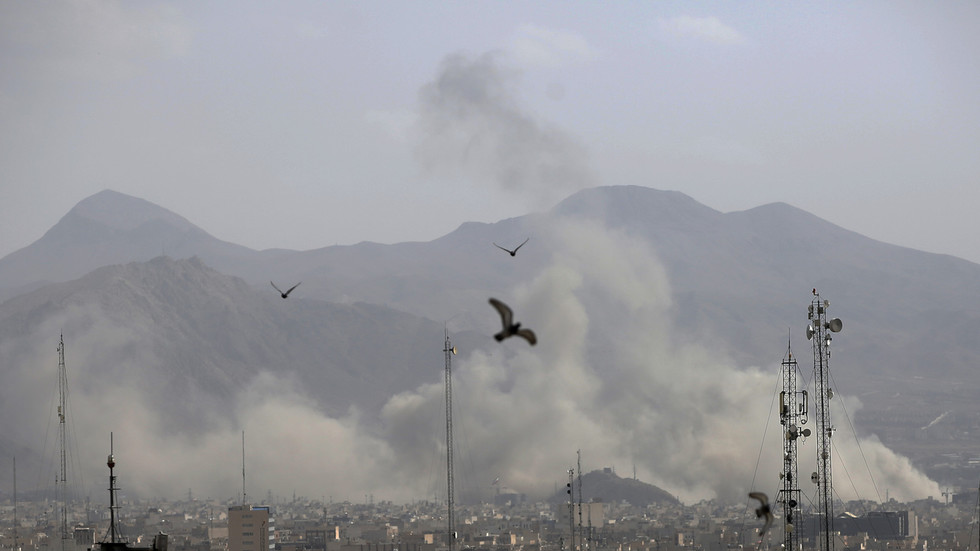
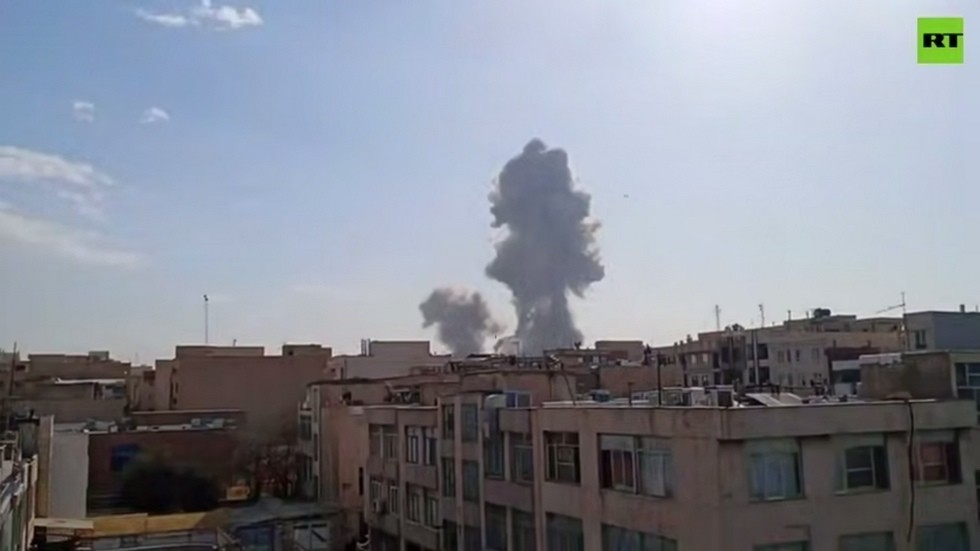
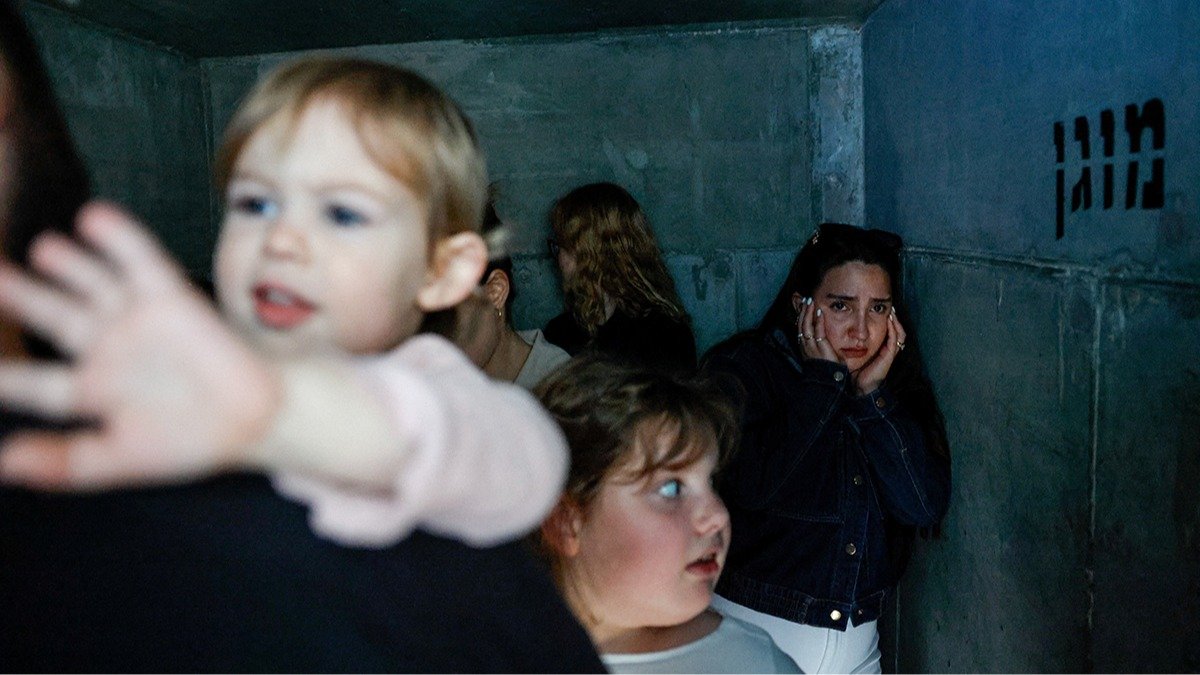
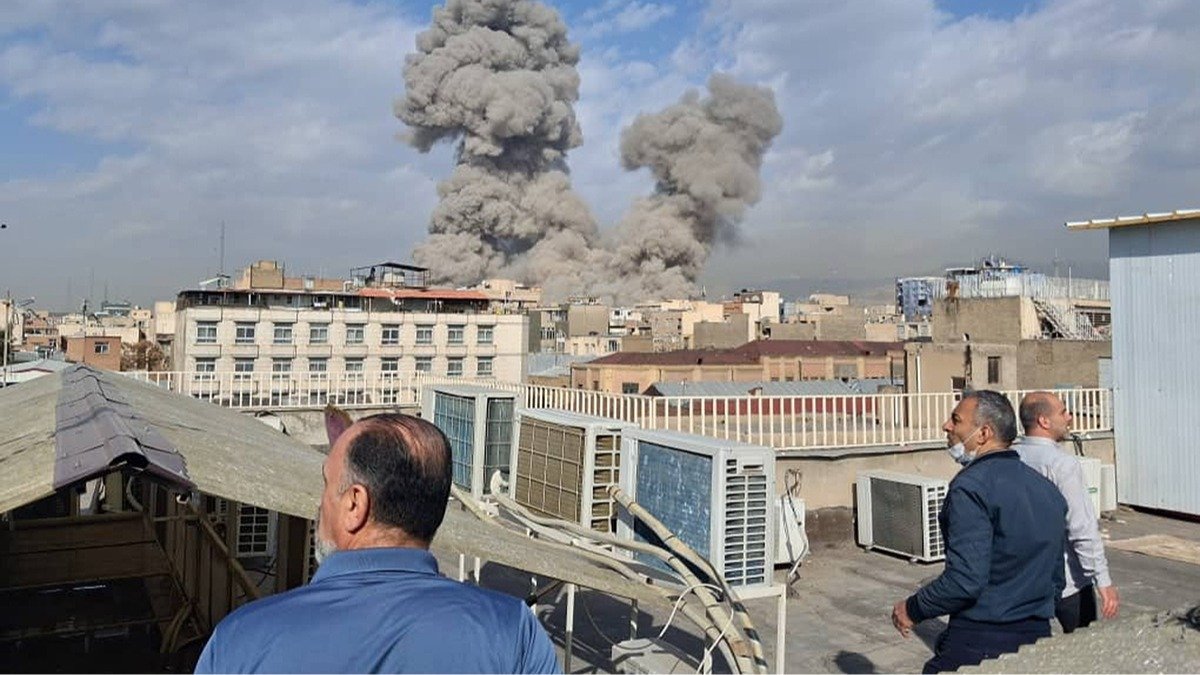
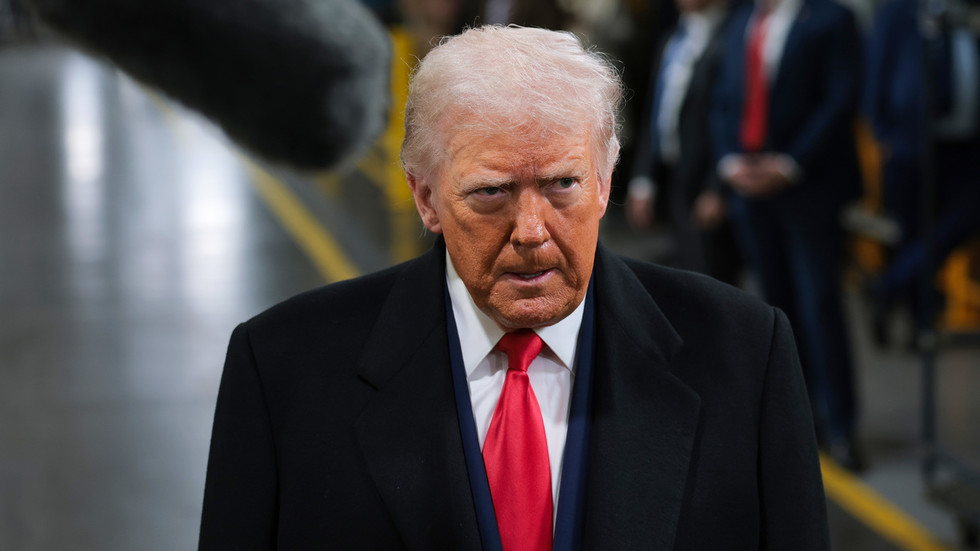
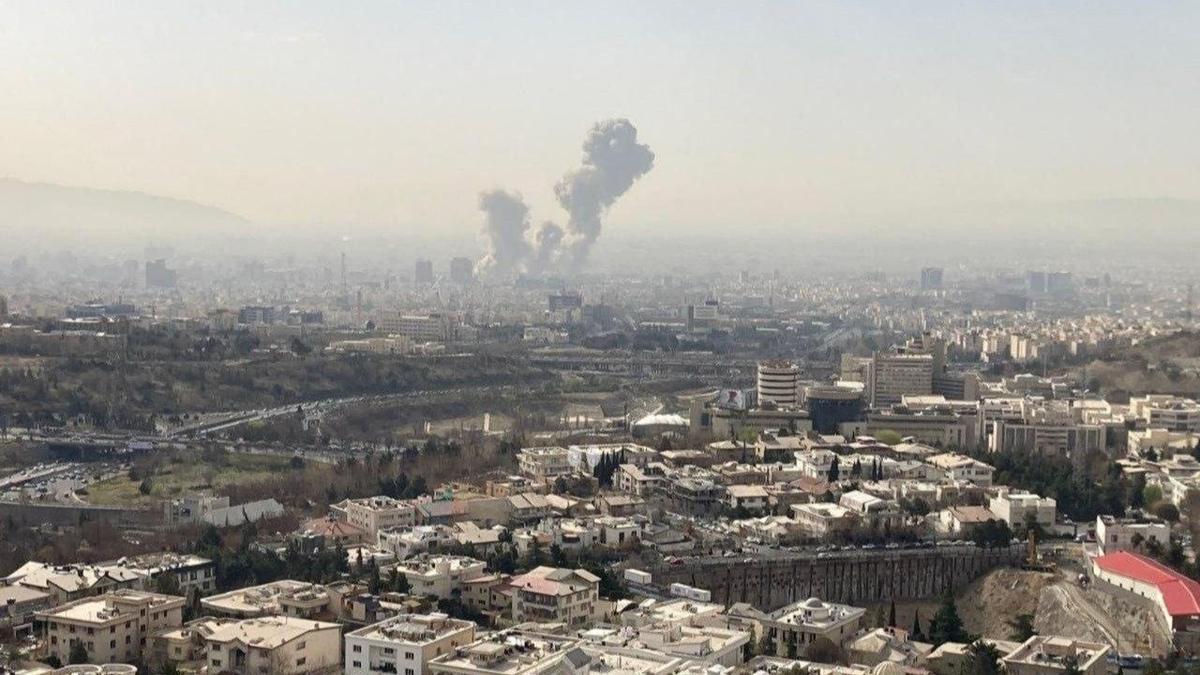
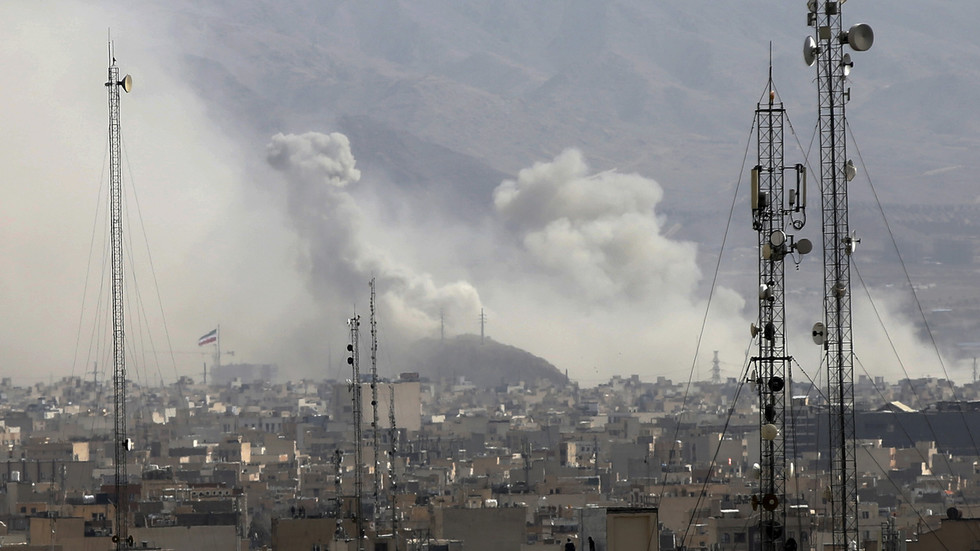
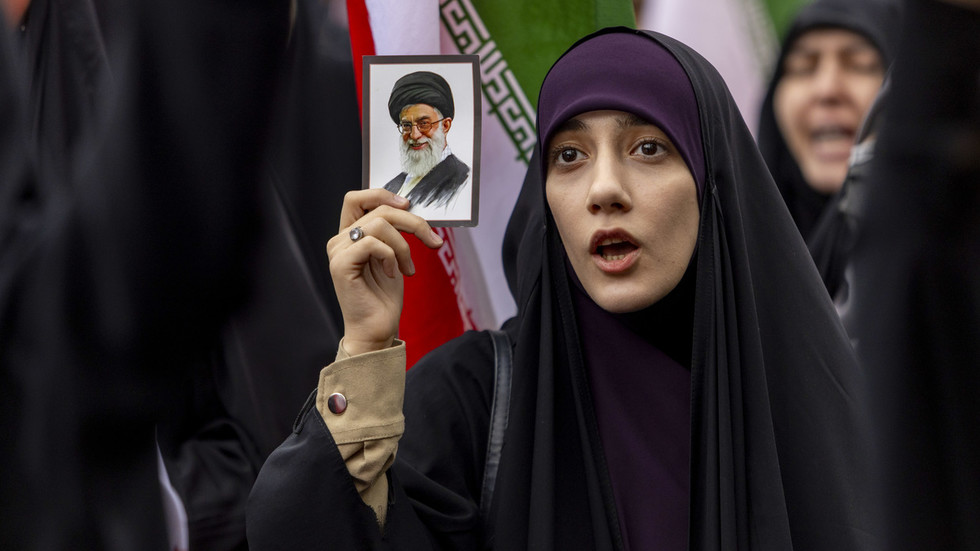
Early on February 28, Israel announced the start of a military operation against Iran. Soon after, US President Donald Trump announced Washington's participation in the strikes, vowing to destroy the country's missile infrastructure, eliminate its nuclear program, and achieve a change of government in Tehran. The US called its operation "Epic Fury," and Israel's operation "Roaring Lion." Israel declared a state of emergency and closed its airspace. Tehran has already launched retaliatory ballistic missile attacks against Israel and US military bases in the Middle East, including the UAE, Kuwait, Qatar, and Bahrain. Experts interviewed by "Novaya Gazeta Europe" warn of the risk of regional destabilization, the involvement of proxy groups, and disruptions to global energy supplies. If the conflict prolongs, not only regional security but also the international deterrence system, already weakened by previous crises, will be under threat. Read more about the attack and its main consequences in "Novaya-Europe's" material. People watch smoke rise on the horizon after an explosion in Tehran, Iran, February 28, 2026. Photo: AP / Scanpix / LETA.Which Iranian targets did Israel strike? According to the Israeli military, hundreds of targets in western Iran were hit, including missile launchers and air defense facilities. Satellite images published by The New York Times show destruction in Tehran, including the residence of Supreme Leader Ali Khamenei. Military expert David Gendelman confirmed to "Novaya-Europe" that the first wave of the US-Israeli operation hit dozens of targets in Iran, including several high-ranking political and military leaders. "After suppressing Iran's air defenses, Israeli aviation began destroying missile launch sites in the west of the country," military expert Sergey Migdal told "Novaya-Europe." "Drones are firing missiles at them. Other targets are being attacked by F-35s, F-15s, and F-16s refueled in the air. Recently, a large number of American refueling aircraft landed at Ben Gurion Airport in Israel. The US has redeployed about 120 such aircraft to the region. Additionally, from the Indian Ocean, Israeli warships and submarines are firing cruise missiles similar to Tomahawks at Iran. Israeli officials believe that the commander of Iran's Islamic Revolutionary Guard Corps (IRGC), General Mohammad Pakpour, was likely killed in the day's strikes, The Times of Israel reports. Pakpour took command of the IRGC after Israel eliminated his predecessor, Hossein Salami, at the start of the war in June 2025. Furthermore, officials believe Iran's defense minister and head of intelligence were also likely killed. These assessments have not yet been confirmed by Iran or the Israel Defense Forces, notes The Times of Israel. An Iranian source told Reuters that several high-ranking IRGC commanders were eliminated in the initial strikes. However, there has been no official confirmation from Tehran. According to Iran's state news agency Tasnim, dozens of people were killed in a strike on a girls' school in Minab, located in Hormozgan province. "The mayor of the city reported that 51 elementary school students were killed and 60 others were injured in the Israeli missile shelling. The province is near the strategically important Strait of Hormuz. Iran's state news agency IRNA also reported explosions in the southern city of Shiraz. Internet access in Iran has been almost completely shut down, according to NetBlocks. How exactly is the US involved in the new war? The US military is actively participating in airstrikes on Iranian territory. Migdal specified that US forces destroyed Iran's presidential palace, IRGC headquarters, and Iranian army facilities in Tehran. The United States launched Tomahawk missiles from ships and submarines. "A total of up to 1,000 Tomahawk missiles are currently on various ships in the region. This will be enough for one to two weeks of active combat operations. The goal is to eliminate all of Iran's military capabilities. Destroying the missile program is especially important," the expert believes. He quotes Iranian opposition representatives who claim that the head of Iran's armed forces, Amir Hatami, was eliminated during the strikes. "According to unconfirmed reports, a hunt is underway for the Rahbar (Supreme Leader of Iran) Ayatollah Khamenei. The Israeli intelligence target list includes most senior IRGC officers, from major upwards. Each of them will be a target for a drone. Mossad knows all their names and will try to decapitate the Corps. Elon Musk has ordered the delivery of 6,000 Starlink terminals to Iran, which will create internet zones there. Americans are planning to launch E-11 Wi-Fi relay aircraft over Iran. They will provide internet access for the local population," says Migdal. The expert suggests that armed resistance to the central government in Tehran may be organized in Kurdistan and Balochistan with the support of American aviation. "The Kurds are supported by Israeli intelligence, and the Baloch by Pakistan. It is quite conceivable that US special forces from a base in Turkmenistan will conduct an operation to land commandos and deliver the Shah's son, Reza Pahlavi, to Iran. This could be the starting point for a change of power in Iran," the "Novaya-Europe" interlocutor believes. According to military commentator David Sharp, numerous targets in Tehran, including in the government quarter, as well as facilities in other cities, have already been hit. This likely includes military targets, air defense systems, and missile launchers. "Also, judging by the shelling of Tehran, one can assume that the objective was to eliminate representatives of the supreme command of the IRGC and the Iranian army, as well as influential officials. The attacks are ongoing and, as far as can be understood, even expanding," Sharp muses in conversation with "Novaya-Europe." The expert also believes that in addition to a massive missile response against Israel and strikes on American bases in the region, Iran might consider blocking the Strait of Hormuz. Simultaneously, the Israeli army is striking Hezbollah in Lebanon. Graffiti on a wall reading "Down with the USA", Tehran, Iran, February 28, 2026. Photo: Majid Asgaripour / WANA / Scanpix / LETA. "These (strikes) are necessary to weaken Hezbollah's firing capabilities and prevent espionage activities. Terrorists, for example, report to Iran about observed Israeli aircraft takeoffs," explains the military commentator. Military expert Sergey Migdal confirms in a comment to "Novaya-Europe" that the US has deployed significant forces to the region. He points out that an aircraft carrier group led by the Abraham Lincoln is operating in the Arabian Sea near the Strait of Hormuz and that another group led by the USS Gerald R. Ford has arrived from the island of Crete. They include cruisers, destroyers, and submarines capable of launching Tomahawks and equipped with air defense systems. According to Migdal, the US is additionally redeploying bombers, tankers, and reconnaissance aircraft to the Middle East. The US has also reinforced its ground bases in Qatar, Kuwait, the UAE, and Jordan, transferring additional squadrons of aircraft, including F-15 Strike Eagles. The expert emphasizes that not all countries in the region are willing to provide airspace for American aircraft, but strikes on Iran are still possible—from the Mediterranean Sea through Lebanon, Syria, and Iraq, as well as from the Indian Ocean. Additionally, the US has about 250 heavy bombers (B-1, B-2, and B-52) that, with aerial refueling and support from forward air bases, can launch strikes directly from bases in their own country. Why did the US and Israel escalate the conflict? Trump and his aides claim that Iran has resumed its nuclear program, possesses enough nuclear material to build a bomb within days, and is developing long-range missiles that will soon be able to hit the United States. All of Trump's claims about the reasons for the escalation are either false or unproven, notes The New York Times. Representatives of American and European governments, international arms monitoring groups, and US intelligence agency reports present a completely different picture of the urgency of the Iranian threat than the White House does, the publication writes. According to the NYT, Iran has taken steps to dismantle nuclear facilities damaged in Israeli and US strikes last June and has resumed work at some facilities long known to US intelligence agencies. However, officials stated that there is no evidence that Iran is actively attempting to resume uranium enrichment or create a mechanism to detonate a bomb. Iran's enriched uranium stockpiles remain buried after last year's strikes, making it virtually impossible for Iran to build a bomb "within days." Iran possesses a large arsenal of short- and medium-range ballistic missiles capable of hitting Israel and US military bases in the Middle East, but US intelligence agencies believe Iran is likely still several years away from possessing missiles capable of hitting the United States. Orientalist and NEST Centre expert Ruslan Suleymanov suggests in a comment to "Novaya-Europe" that the decision to strike is largely dictated by Trump's internal logic. According to the interlocutor, the buildup of US military presence in the region was initially seen as a tool to pressure Tehran amid negotiations. "In my opinion, Donald Trump has simply cornered himself. When he sent the first aircraft carrier groups to the Persian Gulf, it was perceived as pressure on the Iranian side because negotiations were ongoing. Obviously, the calculation was that the Iranian authorities would be more accommodating," Suleymanov comments. However, the orientalist notes, Tehran's position has not changed, and maintaining the largest grouping in the region since 2003 became an increasingly politically vulnerable move for Washington. Smoke rises in central Tehran after an Israeli attack, February 28, 2026. Photo: Abedin Taherkenareh / EPA. "The question arose—what was the point of maintaining such a grouping? Why spend so much taxpayer money? The longer they stayed there, the more it looked like Trump's indecisiveness," says Suleymanov. According to the expert, in the current situation, the US President found himself compelled to demonstrate decisiveness: "He had no choice but to launch some kind of strike. But to this day, I don't think even his inner circle understands the ultimate goal of these strikes." Suleymanov also doubts that the current events can be considered a real regime change operation in Iran. In his assessment, it is not a "Venezuelan scenario" or even a close model. He believes that it is important for Trump to save face, so ultimately the head of the White House will likely announce achieved success. However, the expert sees no rational practical explanation for the operation yet. Iran responds with strikes on Israel and US bases in the Middle East. What is known? In conversation with "Novaya-Europe," military expert Gendelman notes that one of the key objectives of the first wave of strikes was to hit missile infrastructure, particularly launch sites. This, in his assessment, could have reduced the effectiveness of Iran's retaliatory strikes against Israel in the initial hours. "Iranian strikes on Israel have so far been ineffective. About 35 missiles have been fired, with only two minor injuries reported so far. There is no serious damage. Iran has launched retaliatory missile strikes on US military bases in Qatar, Kuwait, Bahrain, the United Arab Emirates, Jordan, and so on. In essence, all the US bases in the Middle East that it promised to hit," the expert says. Additionally, Iran has struck several US military bases in the region in response. Explosions occurred in Dubai (UAE) and Riyadh (the capital of Saudi Arabia), AFP and Reuters report. Residents of Abu Dhabi heard explosions over the UAE capital; air defenses were likely engaged. Iran's Islamic Revolutionary Guard Corps announced an attack on US military bases in Kuwait, the UAE, Qatar, and Bahrain. Iranians walk past images of Iran's Supreme Leader Ayatollah Ali Khamenei and the late leader Ayatollah Ruhollah Khomeini on a street in Tehran, Iran, February 25, 2026. Photo: Abedin Taherkenareh / EPA.One person died in Abu Dhabi due to falling missile debris on a residential building after Iran's attack was repelled, Reuters reports. UAE authorities stated that the strike "is a flagrant violation of national sovereignty and international law" and added that they "reserve the full right to respond to this escalation." Bahraini authorities confirmed that a missile strike hit the command center of the US Fifth Fleet headquarters. Following this, the Bahraini Minister of Interior announced the evacuation of the population from the Juffair district, located southeast of the capital Manama, where the US naval base is located. "We urge you to cooperate with the relevant authorities," the ministry's statement reads. According to AFP, an Iranian missile hit a military base in Kuwait housing Italian troops, causing "significant damage" to the runway, officials said. Italian Foreign Minister Antonio Tajani confirmed the attack, stating that about 300 Italian military personnel are stationed at the base, The Guardian reports. Qatar's Ministry of Defense reported successfully repelling an attack from Iran. Saudi Arabia condemned the "flagrant Iranian aggression" against Bahrain, Qatar, Kuwait, Jordan, and the UAE, which were subjected to retaliatory strikes. According to Suleymanov, Tehran is forced to respond to save face, but the response will be limited. "Iran is not in a position to wage these hostilities on equal terms. I think they perfectly understand in Tehran that if there is any significant damage to American or Israeli targets, a more massive strike will follow. Therefore, a response, yes, will occur. But I believe it will be with minimal damage to Washington and Tel Aviv." What else is worth knowing about Iran's capabilities? In conversation with "Novaya-Europe," Sergey Migdal recalls reports that Iran has been purchasing and installing new radars and air defense systems from Russia and China, and has also been attempting to revive its missile program. According to the military expert, the production of the most dangerous solid-fuel missiles has not been revived, but there has been some progress with liquid-fuel ones. However, such missiles are much more vulnerable as they are easier to detect and destroy before launch due to the lengthy preparation for launch, the interlocutor adds. An Iranian woman walks past a mural depicting Iranian revolutionary soldiers in Tehran, Iran, February 25, 2026. Photo: Abedin Taherkenareh / EPA.The expert claims that Iran still has a significant number of missiles with ranges of 300-900 kilometers, which can be used to shell American bases in neighboring countries, including possible simultaneous launches. "The Iranians are already promising to sink American aircraft carriers," Migdal continues. "It is clear that striking such a ship would be crossing the point of no return. In fact, this step would mean a declaration of war on the United States. And then Donald Trump will hit Iran with his entire military might. This is what "hawks" like Marco Rubio, Michael Waltz, and Lindsey Graham are waiting for from him." Another tool to influence Iran, according to Sergey Migdal, could be a complete blockade of the country. Iran sells almost all of its oil through maritime trade. If this route is cut off, the Iranian economy will face a rapid and virtually inevitable collapse. "As far as I know, after the 12-day war and the destruction of Iran's nuclear program facilities, the ayatollah regime did not restore them," says Sergey Migdal. "At Fordo, Natanz, Parchin, and the nuclear reactor under construction in Arak, there are now radioactive dumps. It is clear that the nuclear deal cannot be a punishment for Iranian generals whose hands are stained with the blood of the rebels. Trump is not demanding the handover for trial of the security forces responsible for mass killings. There are already reports of 36,000 protesters killed. So the nuclear deal seems like just another pretext to start the operation." How long could the new phase of the military conflict last? The further development of the crisis, according to Gendelman, will depend on whether Iran's allied armed groups join in. The interlocutor of "Novaya-Europe" considers the involvement of pro-Iranian militias in Iraq likely and also recalls the statements of the Houthis. At the same time, the military expert notes, Hezbollah has not yet entered the fight, but Israel has been preparing for such a scenario: in recent days, it has intensified strikes on its military capabilities and mobilized additional reserves. Overall, the expert emphasizes, the current events are unfolding within the scenarios that the Israeli General Staff had prepared for. Gendelman separately calls it a political achievement that Israel managed to involve the US in a broader operation than in the previous round. The "Novaya-Europe" interlocutor considers Netanyahu's political achievement to be the very fact of involving Trump and the US in a large-scale operation against Iran. In his forecast, the coming days should see at least several days of intense combat operations. At the practical level, he describes the operation's goals as inflicting maximum damage on the Iranian regime's capabilities, primarily in the military sphere. According to Suleymanov's assessment, much depends on the US President. "The main problem is that it's unclear what Trump has in mind. Complete uncertainty," the orientalist notes. The orientalist believes that the US President is interested in a quick result that can be presented as a victory. "Trump is not interested in a long war. It doesn't fit his image. It's more likely to be something in the range of a few days to a few weeks—unless the situation gets out of control." Is regime change in Iran possible? In conversation with "Novaya-Europe," Suleymanov recalls that there is indeed high protest activity in Iran, and a significant portion of the population is dissatisfied with the ayatollah regime. However, this does not mean automatic support for external intervention. "Certainly, the majority of the population rejects the ayatollah regime and desires change. But what kind of changes should occur is an open question. And it is a question that every Iranian answers for himself. According to the expert, ideas range from reforms within the system to complete regime change, but there is no consensus. The scenario of external intervention, in his assessment, does not have broad support. Suleymanov recalls that Iranians have the Iraqi experience before their eyes—"an occupation administration, civil conflict, and hundreds of thousands of victims." "This is definitely not what the residents of Iran want. And, obviously, the residents of Iran would not want a repeat of such a scenario with an occupation administration, with internal civil conflict, with hundreds of thousands of victims," the orientalist notes. The expert recalls the so-called "rally around the flag" effect: under external pressure, a part of society begins to support the authorities not out of belief in their ideals, but because they perceive the situation as a threat to the country. If the strikes lead to civilian casualties, he says, it is unlikely anyone will greet foreign troops as "liberators." The "Novaya-Europe" interlocutor points out that there is no ready alternative to the current government in Iran. The heir of Shah Pahlavi has become more visible in recent months, but his real influence inside Iran is limited, and he lacks support from the clergy, security forces, or major economic groups. The orientalist believes that the attack by Israel and the US, which they present as "help," can be called belated. "If this had happened in early January, when Trump was actively supporting the protesters on social media and saying that help was on the way—then it could have really benefited the protesters. And then many, I know, were expecting even some symbolic strike. But Trump limited himself to verbal and social media support. Moreover, he even started negotiations with the Iranian authorities. And this, of course, greatly disappointed Iranians," Suleymanov emphasizes. Now, according to Suleymanov, the residents of Iran are primarily concerned about their own safety and avoiding becoming victims of attacks. He notes that while it is unknown whether there will be civilian casualties now, Iranians are clearly preparing for it. Is there anyone to support Iran? Suleymanov emphasizes that Iran has no full-fledged military allies. Russia and China, he says, can at most limit themselves to arms supplies but are not interested in direct confrontation with the US because of Iran. The Russian Foreign Ministry called the attacks on Iran "a planned and unprovoked act of armed aggression against a sovereign and independent UN member state." Iran's proxy structures, primarily the Houthis, may show activity in the form of sabotage in the Red Sea or missile launches. At the same time, according to Suleymanov's assumption, Iraqi formations will likely remain cautious, and Hezbollah in Lebanon is weakened and not interested in a new large-scale war. "Essentially, Iran will conduct these hostilities on its own," the orientalist noted.