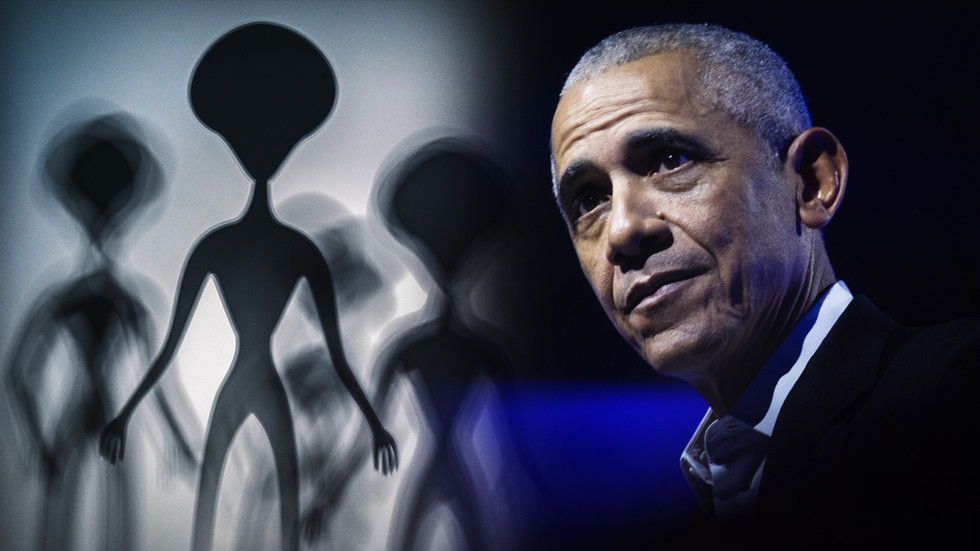
Donald Trump is reported to have ordered the Pentagon and other security agencies to release files related to UFOs and potential alien life, framed as a response to what he called "tremendous interest" from the public. Coverage notes that this move comes shortly after Barack Obama publicly suggested that aliens might be real, even as he stressed he had seen no concrete evidence of actual contact during his presidency. Both sides reference official data that the Pentagon received 757 new reports of unidentified anomalous phenomena between May 2023 and June 2024, of which 21 merited deeper analysis, alongside an earlier tally of nearly 400 recorded incidents, all classified as unexplained rather than confirmed extraterrestrial encounters.
Government and opposition-aligned accounts concur that existing institutions handling these issues include the Pentagon, intelligence agencies, and long-scrutinized sites like Area 51, with presidents themselves granted high-level access that still has not yielded proof of alien bodies or crashed spacecraft. They agree that public fascination, transparency debates, and long-standing conspiracy theories are the primary drivers of current disclosures and presidential commentary, and that both Trump’s order and Obama’s remarks fit into a broader trend of formalizing investigation of UAPs without revising the official position that no verified evidence of extraterrestrial visitation has yet been produced.
Areas of disagreement
Motives and political framing. Government-aligned sources tend to frame Trump’s order as a measured transparency initiative responding to public interest and security needs, while portraying Obama’s comments as a cautious, science-friendly reflection on unknown phenomena. Opposition sources are more likely to suggest that Trump is using UFO disclosure as a distraction or political theater, and that Obama is carefully hedging to protect the intelligence community. Government narratives emphasize institutional responsibility and continuity, whereas opposition narratives often stress electoral calculation and image management.
Credibility of institutions. Government coverage generally reinforces the Pentagon’s and intelligence agencies’ credibility, stressing their systematic cataloging of UAP reports and repeated statements that no evidence of alien visitation has been found. Opposition coverage, by contrast, often questions whether these same institutions are fully forthcoming, pointing to historic secrecy around programs and facilities such as Area 51. Where official-leaning outlets highlight process improvements and new reporting channels, critical outlets frame the same structures as potential mechanisms for continued information control.
Interpretation of the data. Government-aligned reporting usually underscores that the hundreds of UAP cases are unexplained but not proof of extraterrestrial life, and presents the 21 cases under deeper analysis as national security puzzles rather than cosmic revelations. Opposition sources are more inclined to interpret the same numbers as suggestive that something significant is being withheld, or at least that authorities know more than they publicly admit. The official side stresses mundane explanations yet to be found, while critics spotlight the persistence of unexplained cases as circumstantial support for more exotic possibilities.
Implications for policy and transparency. Government narratives highlight ongoing reforms—such as formal UAP investigation offices and structured reporting processes—as evidence of increasing transparency and responsible governance. Opposition voices argue these steps are partial and may even formalize new layers of classification, framing Trump’s order as either insufficiently enforced or easily circumvented, and Obama’s comments as signaling limits on what even presidents can reveal. Official reporting treats the releases as the logical next step in an evolving policy framework, whereas opposition outlets often cast them as reactive moves under pressure from public skepticism and whistleblowers.
In summary, government coverage tends to present Trump’s declassification order and Obama’s careful remarks as parts of a sober, security-focused effort to investigate unexplained phenomena without endorsing alien-visit claims, while opposition coverage tends to cast both presidents’ actions as politically calculated gestures that sit atop a deeper, still-opaque system of secrecy and partial disclosure.