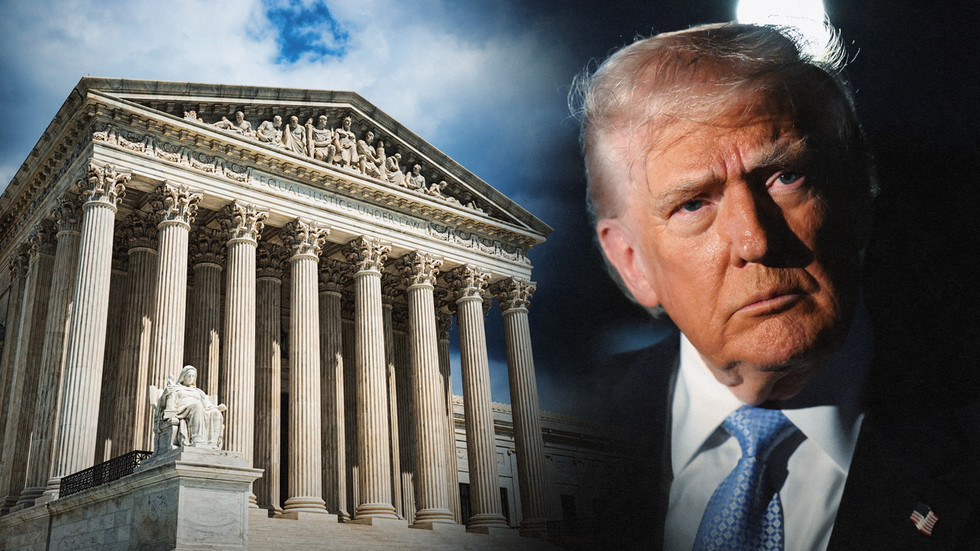
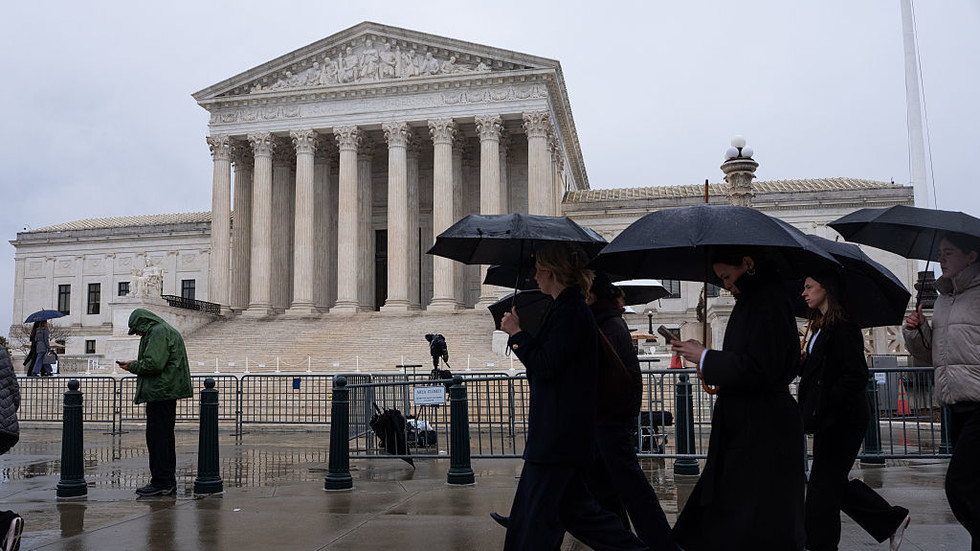
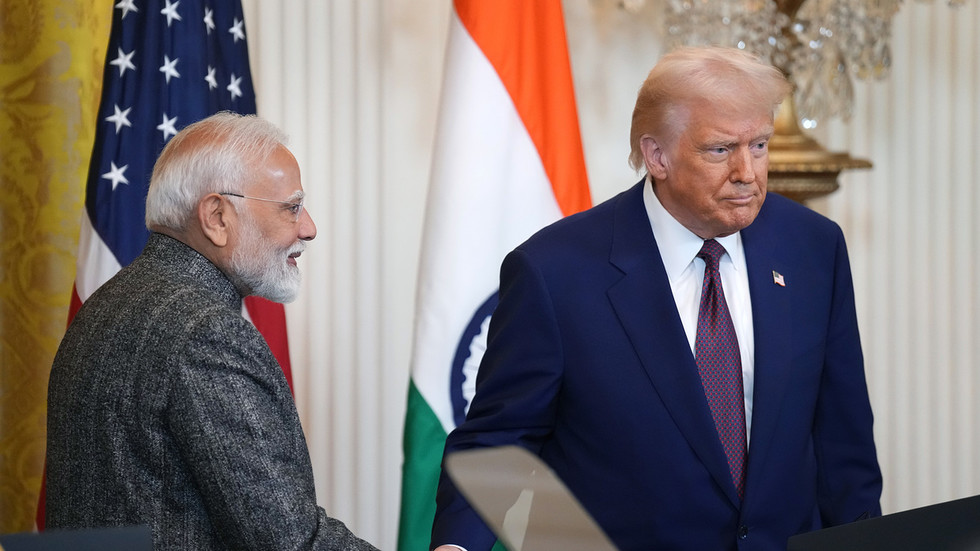
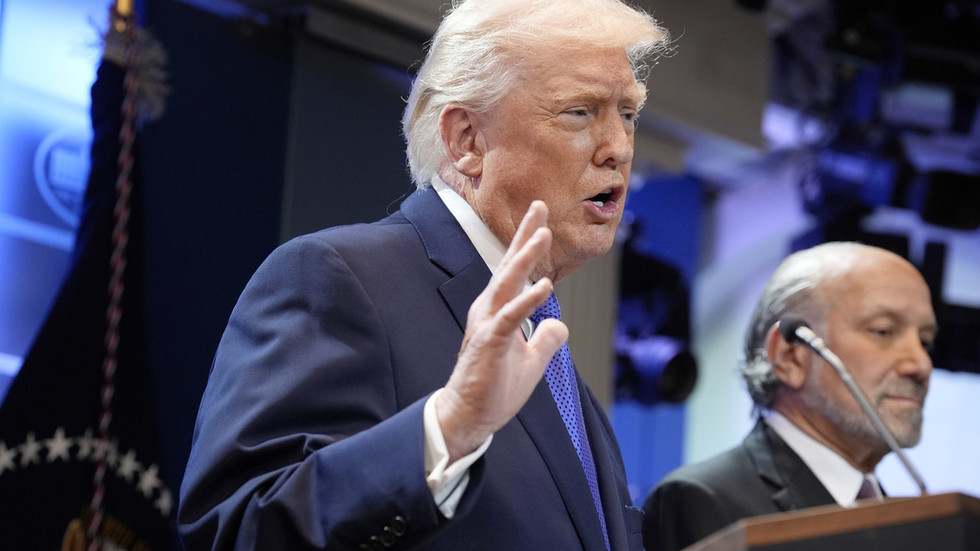
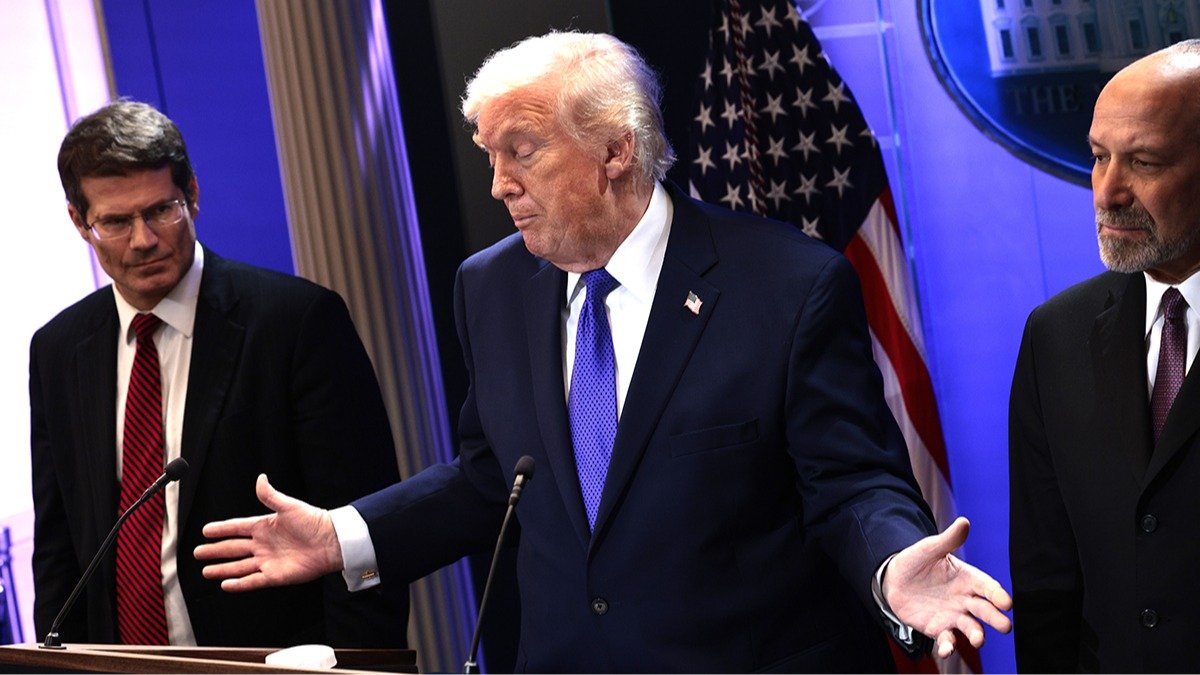
The US Supreme Court's decision on the illegality of most tariffs imposed by Donald Trump has dealt an unprecedented blow to the Republican president's economic policy. It was particularly painful because the highest judicial instance is currently controlled by conservatives, who would seemingly be expected to side with Trump. Furthermore, the verdict revealed serious disagreements within the Republican Party, which is highly inconvenient given the approaching November congressional elections. Meanwhile, Trump immediately made it clear that he has no intention of abandoning his tariff policy, the basic principles of which he formulated back in the 1980s. The first step in the new phase of confrontation is the introduction of a global 10% tariff based on the Trade Act of 1974. The article discusses the reasons and consequences of the US Supreme Court's decision, as well as what other tools Trump has at his disposal. U.S. President Donald Trump, along with Attorney General John Sauer and Secretary of Commerce Howard Latnik, during a press conference at the White House, Washington, USA, February 20, 2026. Photo: Shawn Thew / EPA. When the President Loses The U.S. Supreme Court on February 20, by a vote of six to three, declared illegal the tariffs imposed by Trump under the International Emergency Economic Powers Act (IEEPA) of 1977. The verdict stated that the U.S. President did not have the right to unilaterally rewrite global trade rules under the guise of protecting national security and combating drug trafficking, bypassing Congress. Previously, U.S. presidents used the 1977 law for targeted sanctions, asset freezes against terrorists, or punishment of hostile states. The law mentions the president's right to "regulate imports" but says nothing about tariffs. The Trump administration was not deterred by this. It first used these provisions in February 2025 to "punish" China, Mexico, and Canada for their alleged role in global illicit drug trafficking, which, according to Trump, created an emergency situation for the U.S. On April 2, 2025, the president, citing the IEEPA, declared a state of emergency in the United States. "The U.S. trade deficit constitutes an unusual and extraordinary threat to the national security and economy of the United States. The source of this threat is located, in whole or in significant part, outside the United States, in the domestic economic policies of key trading partners and structural imbalances in the global trading system," he said then. And immediately introduced tariffs on goods imported from 185 countries and territories. Ukraine faced "basic" tariffs of 10%. Chinese goods were assigned a tariff of 34%, the EU - 20%, India - 26%, and the UK - 10%. The highest tariffs were imposed on Cambodia (49%), Vietnam (46%), and Sri Lanka (44%). Russia, Cuba, Belarus, and the DPRK were not subject to these tariffs. "Today is Liberation Day. This is one of the most important days in American history, it is a declaration of American economic independence. We will make America great and rich again. Our country has been ripped off for over 50 years. That will not happen anymore," Trump said on April 2. In addition, guided by the IEEPA, the Trump administration separately imposed tariffs against India for purchasing Russian oil (the tariff decision was eventually revoked by the Republican on February 6 of this year), Brazil, Cuba, Iran, as well as against countries that imported Venezuelan oil under Nicolás Maduro. But the legal basis for these steps was debatable, which was used by all those who disagreed with Trump's tariff policy. The "Liberation Day" was followed by a series of lawsuits, including from Democratic states and small businesses involved in importing various goods, from plumbing to sports equipment. The official name of the lawsuit, on which the decision was made on February 20, is "LEARNING RESOURCES, INC. et al. v. Trump, President of the United States, et al." The aforementioned company produces (mainly in China) educational toys and learning materials, which it then imports into the United States. As Politico noted, the Supreme Court's decision limits Trump's ability to "impose tariffs at will to address geopolitical issues – such as threatening countries doing business with Iran with tariffs – as well as using the threat of tariffs as leverage in negotiations, as was the case with attempts to acquire Greenland." Outrageous or Admirable Senate Democratic Leader Chuck Schumer called the Supreme Court's decision "a victory for the wallets of all American consumers." The politician also took the opportunity to accuse the president of his chaotic "tariff tax" only making life more expensive, hurting American farmers and small businesses, and causing significant market fluctuations. And perhaps all American Democrats think so. Senate Minority Leader Chuck Schumer at a weekly press conference at the U.S. Capitol in Washington, D.C., USA, February 10, 2026. Photo: Jim Lo Scalzo / EPA. However, a deep split emerged within the Republican Party. Staunch Trump allies, like Senator Bernie Moreno, declared that the "outrageous Supreme Court decision ties our hands in the fight against unfair trade that has been devastating American workers for decades." "These tariffs protected jobs, revitalized industry, and made violators like China pay their bills. Now the globalists are winning, investments in factories may be rolled back, and American workers are losing again," Moreno wrote on social media platform X. But, for example, Republican Senator John Curtis called the court's decision confirmation that, "despite all the current noise, the system of checks and balances created by the U.S. founders remains strong nearly 250 years later." Previously, Curtis, along with Democrats, had warned that tariffs could "destroy small businesses." Former U.S. Vice President Mike Pence (during Trump's first term) also welcomed the court's decision. The president himself learned about the court verdict during breakfast with a bipartisan group of U.S. governors. The reaction was immediate: such a decision is a "disgrace." Later, Trump held a press conference where he stated that the court had been influenced from outside: "Foreign interests are represented by people who, I believe, have undue influence on the Supreme Court – whether through fear, respect, or friendship, I don't know." Judges Neil Gorsuch and Amy Coney Barrett drew particularly harsh criticism. Trump nominated them to the court during his first term (in 2017 and 2020, respectively), and now they voted in a way that the head of the White House did not expect. Alternative #1 No one expected the court verdict to force Trump to lay down his tariff weapons. The White House began preparing for such an outcome long before the judges announced the decision. "We've been planning this [large-scale tariff imposition. - Ed.] for five years or even more. Rest assured, when we came to the president at the beginning of his term, we had many different options," U.S. Trade Representative Jamison Greer told Politico last December, summarizing that tariffs would remain part of the political landscape anyway. He was echoed by National Economic Council Director Kevin Hassett, who stated that Washington had not just a "backup plan" but a "backup plan for the backup plan." Several hours after the Supreme Court's decision, Donald Trump announced: he is introducing a 10% global tariff, based not on the International Emergency Economic Powers Act of 1977, but on the Trade Act of 1974. Section 122 of this document gives the president the right, in case of a "large and serious" balance of payments deficit, to impose a "temporary import surcharge" of up to 15% to prevent "immediate" and "significant" devaluation of the U.S. dollar on currency markets. "By taking this step, the United States will be able to stop the outflow of dollars to foreign manufacturers and stimulate the return of production to the country. By increasing domestic production, the U.S. will be able to reduce the balance of payments deficit while creating well-paying jobs and lowering costs for consumers," according to a White House explanatory publication. This measure has never been used before, and it leaves considerable room for judicial interpretation. There is no doubt that lawsuits will be filed. Moreover, it is a temporary solution: after 150 days, an extension is possible, but only with the consent of Congress. And it will not be easy to obtain it amid the approaching midterm elections and growing voter concerns that tariffs increase the cost of goods. U.S. President Donald Trump with Attorney General John Sauer at a press conference on the Supreme Court's cancellation of most of his tariffs, White House, Washington, February 20, 2026. Photo: Bonnie Cash / EPA. Alternative #2 In the same speech, Trump announced that he is initiating "procedures under Section 301 and other investigative directions to protect the country from unfair trade practices by other countries and companies." This refers to Section 301 of the same Trade Act of 1974, a provision that empowers the U.S. Trade Representative to respond to unfair trade practices by foreign countries. A 2021 publication on the U.S. Congress website stated that "since the adoption of the law in 1974, 130 cases have been considered under Section 301, of which 35 were initiated after the creation of the World Trade Organization in 1995." Since 2021, this number has significantly increased. For example, in 2025, three investigations were conducted against China simultaneously. One of them concerned China's dominance in maritime logistics and shipbuilding. In April 2025, the U.S. threatened to impose special port fees on Chinese vessels and tariffs on port cranes (in November, these measures were paused for a year to maintain a fragile trade truce). The second investigation concluded in December: the U.S. recognized China's semiconductor policy as a threat and decided to impose additional tariffs on Chinese chips, which will take effect in 2027. Another investigation - on Beijing's compliance with the provisions of the 2020 Sino-American agreement - is ongoing. In addition, Nicaragua, Brazil, "major seafood-producing countries," and states that "tax digital services" were subject to investigations under Section 301 in the first year of Trump's second term. Alternative #3 However, Trump's toolkit is not limited to this. He also has Section 232 of the Trade Expansion Act of 1962 at his disposal. This provision allows the U.S. president to impose any import restrictions if the Department of Commerce proves that foreign purchases of certain goods threaten the country's national security. During his first term, in March 2018, Trump imposed 25% tariffs on imported steel and 10% on aluminum to protect American steel producers. Upon returning to the White House in 2025, he radically increased the stakes. In February 2025, the Republican expanded the scope of tariffs, and from June 4, global tariffs on steel, aluminum, and their derivatives (including household appliances) were increased to an unprecedented 50%. The only exception was made for the UK, for which the rate remained at 25%. Under the same procedure, global tariffs of 25% were imposed on imports of automobiles and auto parts. Later, for the EU, Japan, and South Korea, the base rate was reduced to 15% through difficult negotiations, and for Britain - to 10%. In addition, in 2025, under Section 232, 50% tariffs were imposed on copper, as well as tariffs on trucks and buses. Currently, the Department of Commerce is conducting similar investigations into pharmaceuticals, critical minerals, drones, and wind power equipment. New cars for export, Tilbury Docks, UK, March 27, 2025. Photo: Neil Hall / EPA. It should be noted that tariffs based on Sections 232 and 301 have a common feature that works against Trump: decisions require preliminary investigations, which can take several months even with expedited procedures. Alternative #4 As an exotic option, lawyers also mention Section 338 of the Tariff Act of 1930, which allows for punitive tariffs of up to 50% against countries that discriminate against American commerce. This tool - like Section 122 of the Trade Act - has never been used in practice before, which carries the risk of lawsuits and lengthy proceedings. "From Trump's perspective, the problem with all these other laws is that they require significantly more administrative procedures than IEEPA to apply, and/or they have volume limitations - for example, they allow tariffs only on specific goods or for a limited period," concludes Peter Harrell, a visiting scholar at Georgetown University's Institute for International Economic Law, who worked in the White House in 2021-22. "While Trump could legally rely on these tools to raise tariffs on many goods and many trading partners, it would require time and administrative effort. And even then, these decisions would likely not cover the full range of countries and products he aims to affect." In any case, it is obvious: the Supreme Court's decision is not the end of President Trump's trade war, but the beginning of its new stage. Trump has plenty of options for "repackaging" tariffs through various trade law mechanisms. Returning Paid Funds Meanwhile, immediately after the Supreme Court's decision was announced, experts raised the question: will the money collected due to the now-canceled tariffs be returned to importers? According to researchers at the University of Pennsylvania, over $175 billion is subject to return. As of December 2025, money had been collected from more than 300,000 importers who filed 34 million customs declarations. Thousands of companies, from small ones to giants like Costco and Goodyear, had begun filing preemptive lawsuits demanding the return of funds even before the U.S. high court's verdict was announced. Meanwhile, Trump immediately made it clear that the administration has no intention of returning the money. Supreme Court Justice Brett Kavanaugh, a conservative (one of the three judges who supported Trump), drew attention to one of the arguments in his concurring opinion: he wrote that the process of returning funds would inevitably turn into an absolute bureaucratic "mess." Previously, experts predicted that the Trump administration might, for example, propose to credit payments from canceled tariffs as "credits" against future customs duties. U.S. President Donald Trump in the Briefing Room at the White House in Washington, D.C., USA, February 20, 2026. Photo: Bonnie Cash / EPA. Democratic politicians, meanwhile, unequivocally sided with businesses and ordinary Americans. Senator Elizabeth Warren stated that it would be fair to compensate for the additional expenses of U.S. citizens, from whose pockets this trade war was de facto paid. But, she admitted, there are no legal mechanisms for such compensation to individuals: "Instead, large corporations with armies of lawyers and lobbyists can file lawsuits to reclaim tariffs and simply keep the money. This is another example of how the game is rigged against ordinary people." There is a considerable truth to the assertion about the main burden on ordinary Americans. Although Donald Trump has repeated the mantra since the beginning of the trade war that foreigners pay for tariffs, various studies show that 86% to 96% of the cost of Trump's "emergency" tariffs were paid by American companies and consumers. Contrary to the White House's expectations, foreign exporters did not significantly reduce their selling prices to maintain their market share in the U.S. As a result, American importers were forced to pay the tariff at the border themselves, after which they included these costs in their margins and passed them on to store shelves. Moreover, as studies show, prices have increased not only for imported goods but also for their American substitutes. The economic policy under the slogan "America First" proved to be quite painful for the middle class. According to the Tax Foundation, Trump's tariffs in 2025 increased the tax burden on each American household by an average of $1,000. After the IEEPA tariffs were declared illegal, the remaining Trump tariffs, as experts noted, would have led to an average increase in expenses of $400 per household in 2026. These calculations do not yet include the new tariffs imposed on February 20 under Section 122 of the Trade Act, nor all the tariffs that Trump may still introduce in the coming days and weeks.