

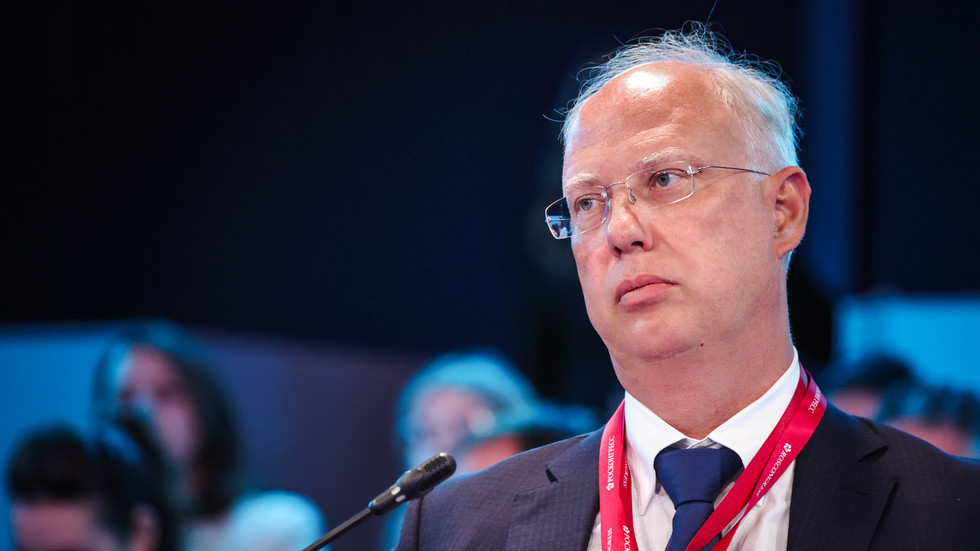
Russian and international outlets broadly agree that Kirill Dmitriev, head of the Russian Direct Investment Fund and a special envoy for President Vladimir Putin, publicly rejected a report in The Economist alleging that Moscow had floated a $12 trillion package in potential projects to secure relief from Western sanctions. They concur that Dmitriev labeled the report "fake news," that he pointed instead to what he described as over $300 billion in foregone opportunities or losses to U.S. businesses under current sanctions, and that he claimed the overall pipeline of possible Russian–U.S. economic projects could exceed $14 trillion. Coverage also aligns on the point that Dmitriev framed the issue as one of mutual economic benefit rather than a secret bargain, and that Foreign Minister Sergey Lavrov has warned against unrealistic expectations of a near‑term sanctions thaw given Washington’s ongoing restrictive measures.
Across both government‑aligned and more critical or opposition‑leaning outlets, there is general agreement on the broader structural context: Western sanctions imposed after events such as the annexation of Crimea and the escalation of the conflict in Ukraine continue to constrain Russia’s access to Western capital and technology, while also affecting some Western corporate interests. Both sides acknowledge that Russian officials have long sought to position sanctions relief as economically rational for the United States and Europe, and that Dmitriev’s comments fit into a wider diplomatic and economic messaging campaign aimed at normalizing business ties. It is also commonly noted that key Russian institutions involved in this narrative include the Foreign Ministry, the sovereign investment fund Dmitriev leads, and the presidential administration, all of which are attempting to present Russia as open to large‑scale joint ventures if political barriers are reduced.
Areas of disagreement
Nature of the report and credibility. Government‑aligned media portray The Economist’s account of a $12 trillion sanctions‑relief proposal as an unfounded or deliberately distorted story, amplifying Dmitriev’s "fake news" characterization and stressing the lack of documentary evidence. Opposition‑leaning or critical outlets, by contrast, tend to treat the report as at least plausible, emphasizing The Economist’s sourcing practices and suggesting that Moscow has strong incentives to float such trial balloons informally. While state‑friendly coverage frames the episode as another example of Western media attacking Russia, opposition coverage is more inclined to see official denials as routine information management rather than definitive refutation.
Framing of sanctions and economic interests. Government coverage underscores Dmitriev’s claim that sanctions primarily hurt U.S. and Western businesses, foregrounding figures such as $300 billion in losses and a potential $14 trillion pipeline of projects to argue that Washington is objectively interested in lifting restrictions. Opposition sources, when they reference these numbers, are more likely to question their methodology or present them as political talking points meant to rebrand sanctions relief as a Western need rather than a Russian request. Pro‑government narratives highlight mutual benefit and business pragmatism, whereas opposition narratives stress that Russia remains the structurally weaker party seeking relief from pressure.
Political leverage and motives. Government‑aligned outlets cast Dmitriev’s remarks as confident and strategic, suggesting Russia can wait for the U.S. to recognize the economic folly of sanctions and portraying Moscow as uninterested in secretive deals or concessions. Opposition coverage tends to interpret the same statements as signaling anxiety about long‑term isolation and as an attempt to reassure domestic audiences that relief is achievable without policy changes on issues like Ukraine. Where state media depict Russia as holding valuable cards in the form of lucrative joint projects, opposition media are more likely to argue that Western leverage still rests on political and security concerns that outweigh commercial temptations.
In summary, government coverage tends to depict the sanctions‑relief story as a baseless Western media fabrication and to present Dmitriev’s comments as evidence of Russia’s economic strength and negotiating confidence, while opposition coverage tends to treat the denial more skeptically, framing it against Russia’s ongoing need for sanctions relief and emphasizing that Western political and security priorities still dominate over the economic arguments Moscow is advancing.
