government
Russian and Belarusian flags to return at 2026 Paralympics
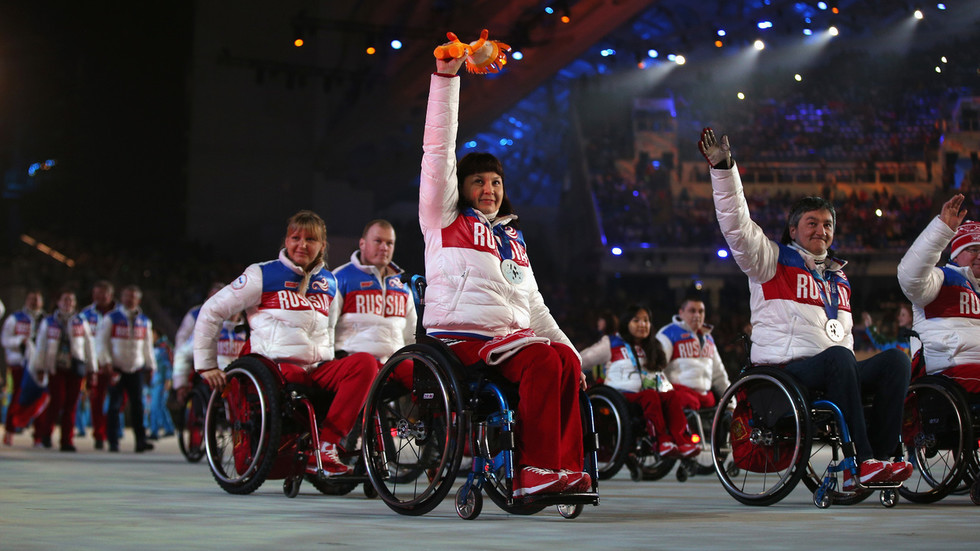
Russia will compete under its national flag at the 2026 Paralympic Winter Games for the first time since 2014
3 months ago
Russian and Belarusian outlets aligned with the government and opposition sources both report that athletes from Russia and Belarus are expected to compete under their national flags at the Milano Cortina 2026 Paralympic Winter Games, reversing the ban imposed after the 2022 invasion of Ukraine. Both sides agree that the International Paralympic Committee has opened a limited number of quota and wildcard spots across several sports, and that Russian participation will be numerically restricted. They also concur that this follows earlier IPC decisions in 2022–2023 to suspend and then formally reinstate the Russian and Belarusian Paralympic committees, with the practical impact only now becoming clear for 2026.
Coverage from both camps notes that the shift for 2026 is not purely political but tied to institutional processes within the IPC and various international sport federations. Both describe that, even after the IPC lifted suspensions, specific federations in sports such as skiing and snowboarding had continued to bar Russians and Belarusians from qualifying events until a court ruling forced those federations to allow some participation. There is shared acknowledgment that a legal decision involving ski and snowboard governing bodies enabled six Russian athletes to qualify, providing a concrete example of how arbitration and sports law shaped the pathway back to the Games. Government and opposition sources alike frame the 2026 Paralympics as a test case of how global sport handles athletes from sanctioned states under ongoing geopolitical conflict.
Framing of the decision. Government-aligned coverage presents the IPC’s move as a long-overdue correction and a partial restoration of sporting justice, emphasizing that Russian and Belarusian athletes are returning on a limited basis and strictly within the rules. It stresses the formal, procedural character of the IPC decision and treats the return of flags and anthems as a normalization of sport. Opposition outlets instead frame the same decision as a political and moral failure of international sport, stressing that full national symbols amount to rehabilitation of Russia and Belarus on the world stage. They highlight that the presence of flags and anthems, even with quotas, symbolizes acceptance rather than mere technical readmission.
Political versus humanitarian lens. Government media largely depoliticize the issue, asserting that sport should remain separate from geopolitics and focusing on the rights of individual Paralympians who should not be punished for state actions. They argue that limiting quotas already reflects a compromise and that further restrictions would be discriminatory. Opposition outlets put politics and wartime responsibility at the center, arguing that allowing national teams back normalizes aggression and undermines solidarity with Ukraine. They invoke the suffering of Ukrainian athletes, including those injured in the war, to argue that humanitarian considerations demand continued exclusion of Russia and Belarus.
Reaction of Ukraine and other states. Government-aligned sources tend to downplay or briefly note Ukrainian outrage and boycott threats, portraying them as emotional or politically motivated reactions that should not dictate global sporting policy. They often stress that the IPC is an independent body and imply that external pressure should not override its decisions. Opposition coverage foregrounds Ukrainian officials’ condemnation and vows to boycott, presenting these reactions as principled and indicative of a broader moral consensus that the IPC is ignoring. They also hint that other countries may quietly share Ukraine’s concerns, framing Russia’s return as potentially isolating for the IPC rather than for Moscow.
Legal and institutional narrative. Government outlets emphasize the legal and procedural victories of Russian sport structures, highlighting court rulings and IPC congress decisions as proof that earlier bans were legally weak or overly politicized. They present the limited quotas as a technical compromise within a rules-based system that ultimately vindicates Russia’s position. Opposition outlets acknowledge the same legal milestones but portray them as narrow, formalistic outcomes that sidestep the broader ethical context of the war. They stress that, while courts forced federations like skiing and snowboarding to open doors to six Russian athletes, this reflects institutional fatigue and legal loopholes rather than any real resolution of the underlying conflict.
In summary, government coverage tends to legitimize the IPC’s decision as a rules-based depoliticization of sport and a measured restoration of Russian and Belarusian participation, while opposition coverage tends to portray it as a grave moral misstep that normalizes aggression, betrays Ukraine, and exposes the weaknesses of international sporting institutions.