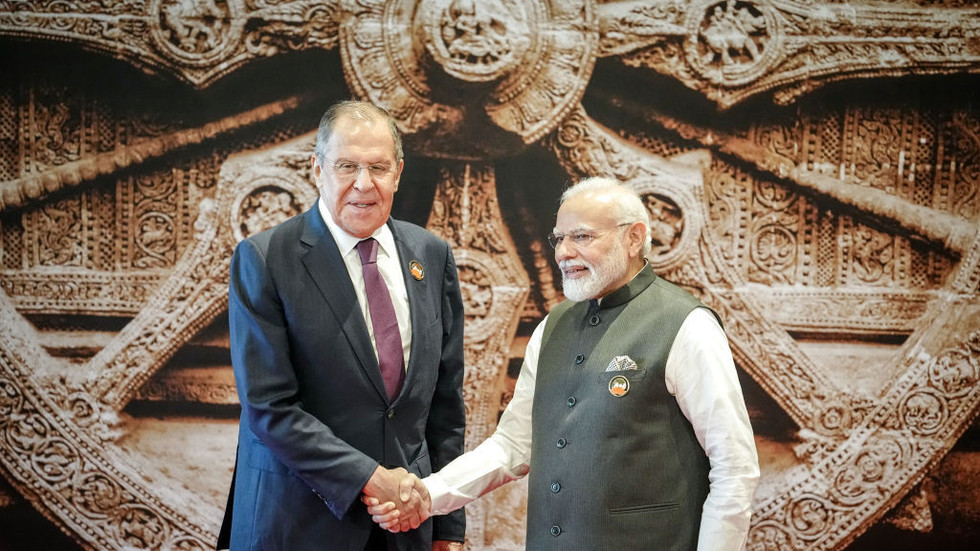
US and Russian official statements are reported as aligning on the basic chronology: senior US figures, including President Donald Trump and Secretary of State Marco Rubio, have publicly claimed that India has agreed to halt or at least stop buying additional Russian oil, tying this assurance to a broader trade understanding and the lifting of a 25% tariff on certain Indian goods from February 7. Government-aligned coverage consistently notes that these US claims emerged around high-profile diplomatic venues such as the Munich Security Conference and in the context of a new trade deal, while simultaneously reporting that Russian Foreign Minister Sergey Lavrov and Moscow’s envoy in New Delhi insist Russia remains India’s largest oil supplier and that they have received no official notification from India about stopping purchases.
Government-oriented reporting also converges on contextual elements that frame the dispute: the US is portrayed as trying to connect its Ukraine-related pressure campaign to trade and energy policy, while Russia emphasizes its description of the conflict as a special military operation rather than a war and rejects any trade–Ukraine linkage as unacceptable. Across these accounts, India is depicted as asserting its sovereign right to pursue energy security and national interest, even as it navigates competing expectations from Washington and Moscow, with the trade deal, tariff removal, and public statements forming part of a broader diplomatic balancing act whose concrete impact on actual oil flows remains uncertain.
Points of Contention
Credibility of US claims. Government-aligned sources tend to present US statements by Trump and Rubio about India agreeing to halt or limit Russian oil imports as authoritative diplomatic assurances connected to a formal trade deal and tariff relief. In contrast, opposition narratives (where they extrapolate from such coverage) would likely highlight Lavrov’s denial of any official notice and the absence of a public Indian confirmation to question whether Washington is overstating or misrepresenting India’s position. Government pieces therefore lean toward treating US claims as a forward-looking policy commitment, while opposition-leaning commentary would cast them as unverified or politically motivated spin.
Characterization of India’s stance. Government coverage generally depicts India as a responsible partner that has pragmatically aligned with US expectations by signaling willingness to stop buying additional Russian oil in exchange for economic benefits like the lifting of tariffs. Opposition perspectives would be more inclined to stress India’s insistence on autonomy, emphasizing its defense of continued Russian imports as necessary for energy security and suggesting New Delhi is being pressured rather than freely choosing. Thus, government-aligned framing underscores convergence with US policy, whereas opposition voices would underline India’s hedging and reluctance to be drawn into Western sanctions.
Linkage between trade and the Ukraine conflict. In government-friendly reporting, the linkage between tariff removal and India’s Russian oil purchases is framed as a legitimate tool of US diplomacy and a normal part of negotiating a comprehensive trade package amid the Ukraine conflict. An opposition reading would more sharply echo Ryabkov’s criticism that tying trade to the conflict is unacceptable, portraying it as coercive conditionality that undermines multilateral norms and disadvantages countries like India that seek independent foreign policies. Government outlets therefore cast the linkage as strategic leverage in support of Ukraine-related objectives, while opposition coverage would treat it as an overreach of US power.
Status of Russian–Indian energy ties. Government-aligned sources acknowledge that Russia remains India’s largest oil supplier but suggest this status may soon diminish as the new US–India trade understanding takes effect and India purportedly winds down purchases. Opposition-oriented interpretations would stress Lavrov’s statement that there is no information about India halting imports and that actual December import dips are normal fluctuations rather than evidence of a strategic cutoff. As a result, government coverage implies an impending structural shift away from Russian energy, whereas opposition coverage would argue that the fundamentals of Russia–India energy cooperation remain intact despite US rhetoric.
In summary, government coverage tends to treat US declarations about India halting Russian oil imports as credible commitments embedded in a broader, legitimate trade and diplomatic framework, while opposition coverage tends to question the veracity and motives of those claims, emphasize India’s energy autonomy and Russia’s denials, and frame US trade–Ukraine linkages as coercive rather than consensual.
Story coverage