government
World ice hockey chief wants return of Russia and Belarus
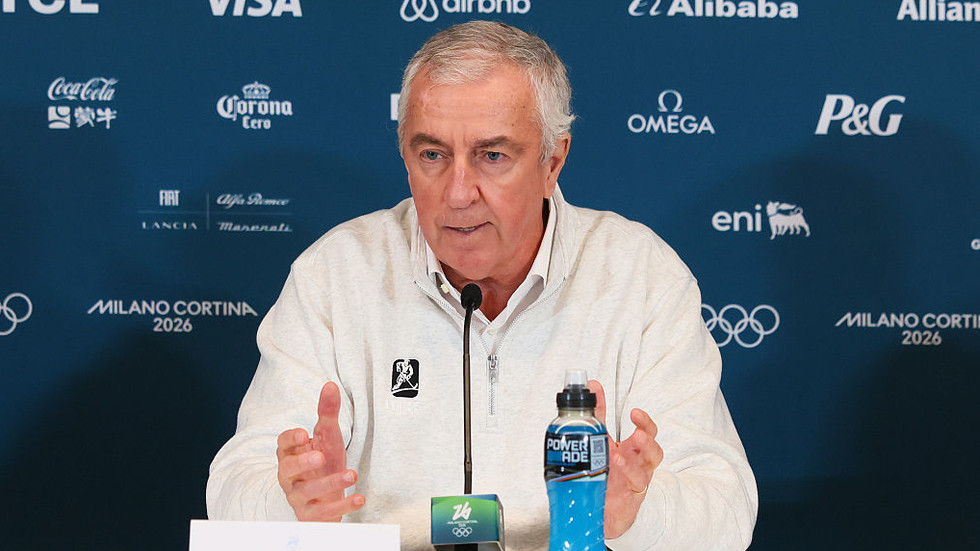
International Ice Hockey Federation chief Luc Tardif has said he wants Russia and Belarus to return to competition “as soon as possible”
3 months ago
IIHF President Luc Tardif has publicly stated that he wants Russia and Belarus to return to international ice hockey "as soon as possible," framing their reinstatement as a sign that the global situation is improving. Both government-aligned and opposition-related summaries agree that Russia and Belarus were suspended by the IIHF in February 2022 over the geopolitical situation and security concerns, and that Russian teams are currently excluded from the 2026 Winter Olympics. They also converge on the fact that NHL Commissioner Gary Bettman has said the league will follow the broader international community’s decisions on Russian participation and prefers to avoid direct involvement in geopolitical disputes.
Across both perspectives, there is shared recognition that the IIHF decision was formally justified by athlete safety and the broader geopolitical context linked to the conflict involving Russia, and that debate continues over how much political pressure influenced the outcome. Both sides acknowledge that Russian sports figures, such as Pavel Bure, argue Russia’s absence lowers the competitive level of major tournaments like the World Championship, and that Russian officials claim Western countries have exerted political pressure to sideline their athletes. There is also agreement that any pathway to reintegration would depend on changes in the international situation and that the IIHF, as the governing institution, retains the authority to decide when and how Russia and Belarus might be readmitted.
Nature of the exclusion. Government-aligned coverage tends to echo Tardif’s and Russian officials’ suggestion that political pressure from Western countries, rather than purely security concerns, drove the suspension of Russia and Belarus. Opposition-oriented interpretations are more likely to stress that the exclusion arose from Russia’s own actions in the geopolitical arena and was broadly consistent with responses in other international sports. Government narratives emphasize that even Tardif himself admitted political considerations played a role, implying unfairness, while opposition voices frame those same remarks as an honest acknowledgment that sports cannot be insulated from state behavior.
Framing of Russia’s return. Government coverage presents Tardif’s call for a swift return as moral and sporting validation that Russia and Belarus “belong” in top-level hockey and that their comeback would restore the full competitive strength of tournaments. Opposition readings tend to argue that any return should be conditional on concrete improvements in the underlying political and security situation, not just on sporting merit. For government-aligned outlets, the benchmark is when the "world situation" looks improved in a way that justifies lifting what they portray as politicized bans, whereas opposition sources stress accountability and the risk of normalizing aggressive state behavior too quickly.
Role of international institutions. Government narratives highlight Tardif’s statements as evidence that the IIHF as an institution is reconsidering past decisions and potentially correcting an injustice toward Russian athletes and fans. Opposition perspectives instead underscore that the IIHF, the International Olympic Committee, and major leagues like the NHL are part of a wider international system that has largely converged on restricting Russian participation after 2022. While government-aligned outlets use Bettman’s reluctance to engage in geopolitics to argue that sports bodies should be neutral and inclusive, opposition accounts interpret that same stance as deference to collective international norms that currently favor continued restrictions.
Impact on the sport. Government coverage leans heavily on claims from figures like Pavel Bure that Russia’s absence has degraded the quality and prestige of events such as the World Championship, using this to argue that the sport itself is suffering from politicized decisions. Opposition assessments acknowledge Russia’s traditional strength in hockey but are more inclined to argue that competitive balance and development can be maintained without Russia and Belarus, and that the sport’s integrity also depends on upholding ethical and political standards. Government-aligned stories thus foreground lost spectacle and diminished competition, whereas opposition framings place more weight on values and the message international hockey sends by maintaining or lifting bans.
In summary, government coverage tends to portray the IIHF bans as overly politicized measures that unfairly weaken international hockey and should be reversed quickly as a sign of global normalization, while opposition coverage tends to frame the suspensions as a justified response to state conduct, emphasizing conditional and cautious reintegration tied to broader political and security changes.