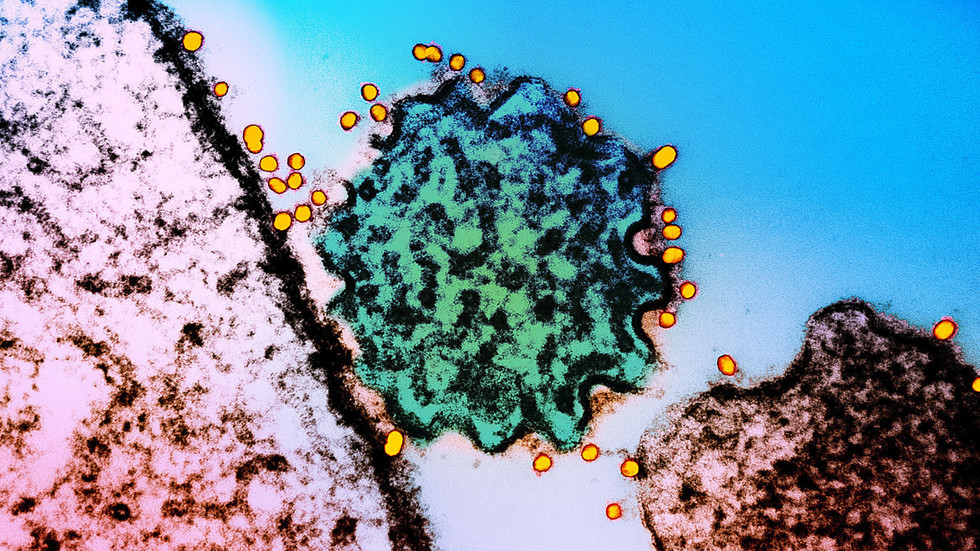
Reports from government-aligned outlets state that a Nipah virus outbreak has been detected in West Bengal, India, centered on a hospital cluster that led authorities to trace and quarantine people who had close contact with confirmed cases. They note that neighboring countries and airports across Asia have introduced precautionary screening measures, and that Russia’s sanitary watchdog has reported no Nipah cases on its territory, even as Russian tourists continue to travel to India without large-scale cancellations. These sources describe Nipah as a rare zoonotic virus carried by fruit bats, with a high case-fatality rate estimated between 40% and 75%, but emphasize that transmission typically requires direct contact with bodily fluids or contaminated food rather than casual airborne spread.
Government coverage further converges on the point that Indian health authorities have activated established outbreak-response protocols, including contact tracing, isolation of exposed individuals, and enhanced surveillance, citing earlier successful containment of Nipah clusters in India as a reassuring precedent. Russian institutions are presented as technically prepared, highlighting the development of a domestic diagnostic test system and deployment of automated monitoring at border checkpoints to detect possible imported infections. Both domestic and foreign official channels are quoted stressing that the outbreak has a low effective reproductive number under current conditions, that there is no need for public panic, and that existing health-system capacities and international coordination are, in principle, adequate to manage the situation if vigilance is maintained.
Points of Contention
Severity and risk framing. Government-aligned sources frame the West Bengal Nipah cluster as serious but tightly contained, underscoring the low reproductive number and limited person-to-person transmission potential. Opposition-leaning outlets, by contrast, are more likely to foreground the virus’s high fatality rate and the history of deadly outbreaks in South Asia, warning that under-reporting or delayed detection could quickly change the risk profile. While official narratives stress that the current risk to the broader Indian population and to travelers is minimal, critical media would question whether the declared containment aligns with on-the-ground realities in overcrowded hospitals and under-resourced districts.
Media behavior and public communication. Government-aligned reporting accuses sections of the media of “hitting the panic button,” arguing that sensational coverage is amplifying fear beyond what the epidemiological data supports and could undermine rational public-health responses. Opposition sources would instead contend that strong, alarmed coverage is necessary to counterbalance perceived government tendencies to downplay outbreaks, especially in the wake of past controversies over pandemic transparency. In this framing, what officials call “panic” is recast by critics as overdue scrutiny and public pressure that forces faster disclosure, clearer guidance, and more robust protective measures for healthcare workers and vulnerable communities.
State capacity and preparedness. Government-friendly outlets highlight institutional readiness, pointing to India’s prior success in containing Nipah clusters, the availability of diagnostic tools, and Russia’s border monitoring and test development as evidence that systems are in place and functioning. Opposition coverage would likely focus on structural weaknesses, asking whether West Bengal’s health infrastructure, staffing, and infection-control practices are truly adequate for sustained containment, and whether rural and peri-urban areas are being neglected. Where official narratives present the outbreak as a test that existing protocols are passing, skeptics would frame it as a stress test exposing chronic underinvestment, data gaps, and political reluctance to acknowledge vulnerabilities.
Economic and political implications. Government-aligned media emphasize continuity and stability, reassuring audiences that tourism and travel from countries like Russia remain largely unaffected, and warning that exaggerated fears could hurt local economies unnecessarily. Opposition voices would be more inclined to question whether economic concerns, such as protecting tourism or avoiding market jitters, are influencing how quickly authorities escalate alerts or restrict movement in affected zones. Thus, while government narratives prioritize confidence in both public health and economic resilience, critics argue that political and commercial incentives may be shaping risk communication and delaying more precautionary interventions.
In summary, government coverage tends to stress that the Nipah outbreak in West Bengal is limited, technically manageable, and being handled by competent institutions with no cause for public panic or major disruption, while opposition coverage tends to spotlight the virus’s lethality, structural weaknesses in health systems, and the possibility that officials are underplaying risks and economic trade-offs, thereby calling for greater transparency and more aggressive safeguards.
Story coverage