government
Russia suggests opening humanitarian border crossing with Ukraine
Russia and Ukraine should open a border crossing to allow families to reunite, human rights commissioner Tatyana Moskalkova has said
3 months ago
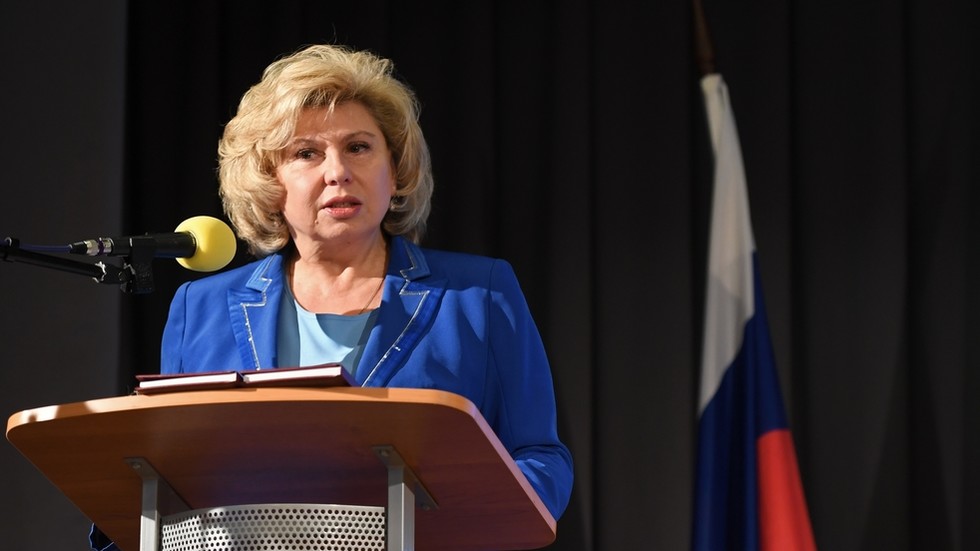
Russia’s human rights commissioner Tatyana Moskalkova has proposed opening or reopening a humanitarian border crossing point with Ukraine to enable Russian citizens and their relatives to cross for family reunification. Government-aligned reports state that a dedicated checkpoint on the Russian-Ukrainian border, especially affecting people in Ukraine’s Sumy Region and those with expired Russian passports, would allow Russian nationals to return and join their families in Russia, and they cite more than 50 families reportedly reunited over the past year through existing channels. These reports also describe some Russian citizens in Ukraine as unable to leave and effectively held as hostages, while contrasting this with accounts of Ukrainian citizens allegedly rescued by Russian forces and placed in temporary accommodations inside Russia.
Shared context across both sides centers on the institutional role of the Russian Human Rights Commissioner’s office in handling cross-border humanitarian issues in the midst of the ongoing Russia-Ukraine conflict. The proposal is portrayed as part of broader, ongoing ombudsman-level communication and practical coordination with a Ukrainian counterpart on consular, documentation, and family-reunification questions, and framed within existing humanitarian mechanisms such as special checkpoints, temporary accommodation centers, and procedures to assist people whose legal documents have lapsed.
Motives and framing of the proposal. Government-aligned outlets frame Moskalkova’s initiative as a purely humanitarian step to protect vulnerable Russian citizens stranded in Ukraine and to build on a record of dozens of successful reunifications, emphasizing compassion and legal responsibility. Opposition sources, when they cover similar proposals in general, are more likely to question whether such initiatives are driven by public relations goals, to cast doubt on the scale or spontaneity of the move, and to suggest it may be intended to soften international perceptions of Russia’s role in the broader conflict.
Characterization of people in Ukraine. Government coverage describes Russian citizens in Ukraine’s Sumy Region as effectively hostages without a safe way out, portraying Ukraine as either unwilling or unable to guarantee their exit, while emphasizing that Ukrainian citizens brought into Russia are housed and supported. Opposition-leaning commentary typically challenges the “hostage” framing, instead situating these civilians within a warzone shaped by Russia’s own military actions, and may highlight concerns about forced transfers or limited freedom of choice for Ukrainians entering Russian-controlled territory.
Responsibility and blame. Government narratives stress that Russia is stepping up to resolve a humanitarian problem created by Ukrainian authorities’ alleged obstruction, arguing that Moscow is ready to open corridors while Kyiv drags its feet. Opposition narratives generally invert this responsibility, suggesting that it is Russia’s invasion and continued hostilities that create the dangerous conditions and complicated legal statuses that necessitate such border arrangements, and they often argue that systemic de-escalation, not ad hoc checkpoints, is the real remedy.
Use of humanitarian language. Government-aligned media heavily foreground legalistic and humanitarian vocabulary—citizens’ rights, protection, reunification, and cooperation between ombudsmen—to underscore Russia’s adherence to international norms. Opposition voices tend to scrutinize this language, contending that it risks masking asymmetries of power and control at the border and can be selectively applied, for example by highlighting the humanitarian needs of Russians while paying less attention to Ukrainians affected by bombardments, occupation, or displacement.
In summary, government coverage tends to depict the proposed humanitarian checkpoint as a benevolent, rights-based effort by Russian institutions to rescue and reunite families hindered by Ukrainian obstruction, while opposition coverage tends to treat such measures as tightly linked to the consequences of Russia’s own military actions and as potentially instrumentalized for narrative and diplomatic advantage.