government
Is peace in Gaza possible without Russia?
Moscow was invited to join the US president’s new Board of Peace, but Putin’s reply has left Washington with a political puzzle
4 months ago
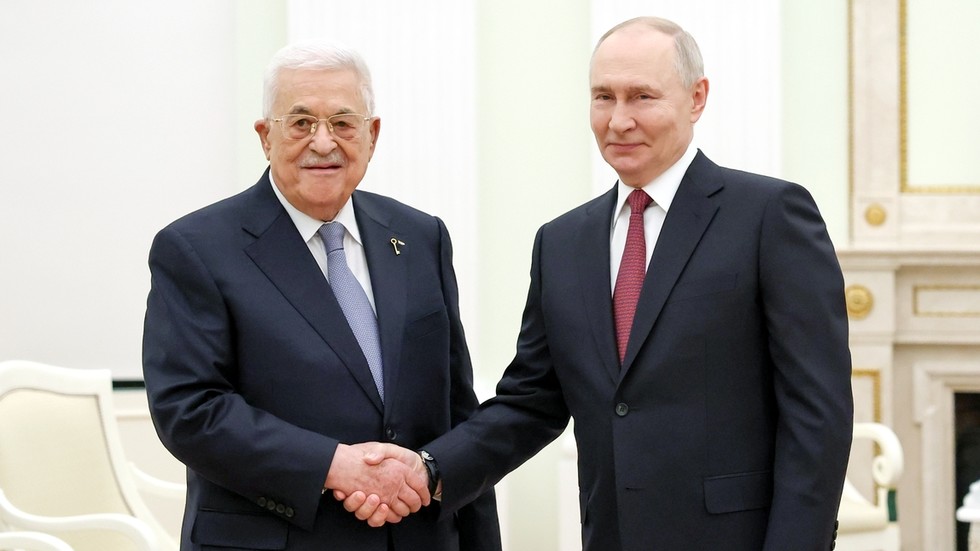
Palestinian President Mahmoud Abbas arrived in Moscow on January 22 for a two-day working visit, during which he held talks with Russian President Vladimir Putin at the Kremlin and met with ambassadors from several Arab nations. Across aligned and critical coverage, outlets agree that the agenda focused on the latest developments in the Middle East, particularly the war in Gaza and the broader Israeli-Palestinian situation, and that Russia reiterated its long-standing support for the creation of a Palestinian state based on international law and UN resolutions. They also concur that Putin announced Russia’s readiness to allocate around $1 billion, drawn from Russian assets frozen in the United States, to support the Palestinian people—primarily for Gaza’s reconstruction—through a new international mechanism referred to as the Board of Peace.
Both sides describe the Board of Peace as a proposed structure designed to coordinate funding and governance for Gaza’s post-war recovery, with a significant role envisioned for the United States and other international actors. There is agreement that discussions over how to utilize the frozen Russian assets for this initiative will continue in Moscow with representatives tied to the American administration, including Steve Witkoff and Jared Kushner. Coverage from all sides notes that Russian officials frame this move as part of a broader diplomatic and economic engagement with Palestine that includes long-standing educational and institutional ties, such as training Palestinian students in Russia, and that Moscow is positioning itself as an important player in post-war reconstruction and peace efforts involving Arab partners.
Nature and framing of the visit. Government-aligned coverage portrays Abbas’s Moscow visit as a significant diplomatic milestone that underscores Russia’s constructive and stabilizing role in the Middle East peace process, emphasizing protocol, warmth, and continuity in bilateral ties. By contrast, opposition-leaning or critical narratives tend to cast the trip as largely symbolic, questioning whether it yields concrete political gains for Palestinians or instead primarily serves Russian geopolitical messaging. While government sources present the meetings with Putin and Arab ambassadors as effective multilateral coordination, critics are more likely to frame them as diplomatic theater that does little to alter realities on the ground.
Characterization of Russia’s $1 billion pledge and frozen assets. Government outlets highlight the $1 billion promise as a major, generous contribution that demonstrates Russia’s commitment to Gaza’s reconstruction and to the Palestinian cause, presenting the use of frozen assets as a clever and just redirection of resources. Opposition-leaning coverage typically raises doubts about the feasibility, timing, and control of such funds, suggesting that the pledge may be more about signaling and leverage in disputes over sanctions than about immediate relief. While pro-government narratives stress that the Board of Peace will channel these funds transparently for Palestinian benefit, critical sources are more likely to question whether financial flows could be politicized or conditioned to serve Moscow’s strategic interests.
Role and design of the Board of Peace. Government-aligned media describe the Board of Peace as a serious, pragmatic international mechanism—largely driven by the United States but open to major Russian participation—that will coordinate reconstruction, governance, and oversight for Gaza’s post-war recovery. Opposition perspectives tend to focus on the ambiguity of the body’s structure, leadership, and accountability, warning that vague governance rules could allow external powers, including Russia and the US, to wield disproportionate influence over Palestinian decision-making. While pro-government narratives stress cooperation and institutional innovation, critics emphasize the risks of creating yet another externally designed framework that might sideline existing Palestinian institutions.
Geopolitical motives and regional positioning. Government coverage frames Russia as an indispensable diplomatic actor without whom sustainable peace in Gaza and the broader Palestinian question cannot be achieved, highlighting Moscow’s dialogue with Arab states and its invocation of international law and UN resolutions. Opposition-oriented reporting is more inclined to interpret Russia’s engagement as part of a broader contest with Western powers, suggesting that the Abbas-Putin talks and the asset proposal are tools for Moscow to break isolation, weaken sanctions narratives, and reclaim influence in the Arab world. Whereas government sources stress Russia’s principled solidarity with Palestine, critical outlets focus on the instrumental use of the Palestinian issue within great-power rivalry.
In summary, government coverage tends to present Abbas’s Moscow visit and the proposed Board of Peace as a substantial, benevolent Russian-led contribution to Palestinian reconstruction and diplomacy, while opposition coverage tends to depict the same events as heavily symbolic, strategically motivated, and fraught with questions about implementation, transparency, and real benefits for Palestinians.