government
Germany expels Russian diplomat
Germany has expelled a Russian diplomat, accusing him of being a spy, prompting Moscow to vow retaliation
4 months ago
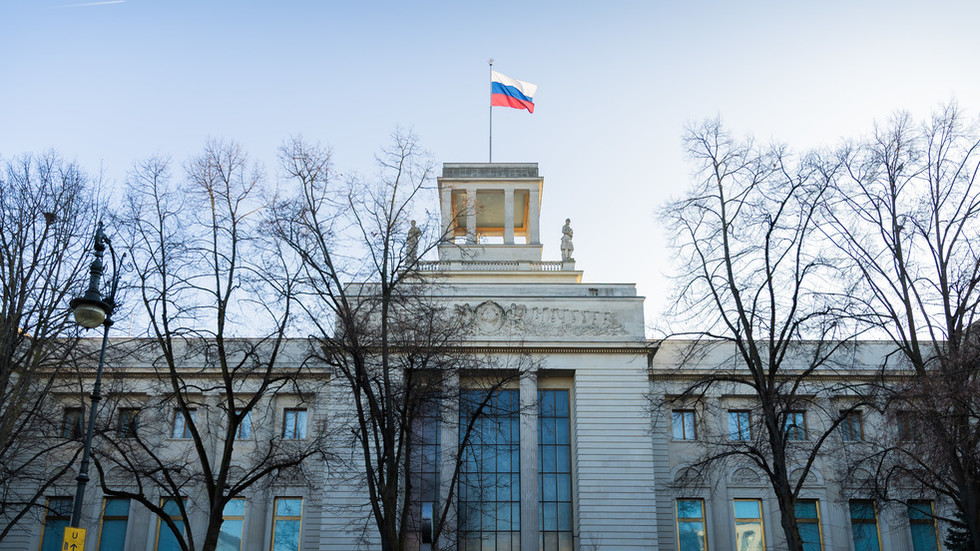
Germany has expelled a Russian diplomat, identified in some reports as the deputy military attaché at the Russian embassy in Berlin, after German authorities detained a woman with dual German-Ukrainian citizenship on suspicion of spying for Russia. Both sides acknowledge that the German Foreign Ministry summoned Russian Ambassador Sergey Nechayev, declared the embassy employee persona non grata, and ordered the diplomat to leave Germany within a short deadline of about three days. Moscow has publicly rejected the espionage allegations, labeling them absurd and provocative, but concedes that the expulsion has taken place and that it is formally framed by Berlin as a response to alleged Russian intelligence activities tied to the Ukraine conflict.
Coverage from both sides agrees that the suspected espionage case centers on information related to the war in Ukraine and Russia’s special services, and that German domestic security services and the Foreign Ministry are the key institutional actors on Berlin’s side. There is shared recognition that this incident fits into a broader pattern of deteriorating German-Russian relations, where diplomatic expulsions and counter-expulsions have become a recurring tool since the start of the Ukraine conflict. Both perspectives also acknowledge that Russia’s Foreign Ministry is preparing a response framed as reciprocal or retaliatory diplomatic measures, consistent with previous episodes of tit-for-tat actions between the two countries.
Nature of the espionage threat. Government-aligned reports emphasize that the detained dual German-Ukrainian citizen was suspected of passing sensitive information about the Ukraine conflict to Russian special services, presenting the episode as part of a broader and concrete security threat. In contrast, opposition-aligned or critical narratives tend to stress the lack of publicly disclosed evidence, frame the allegations as vague or politically timed, and question whether the case truly represents a serious intelligence breach. While official coverage highlights the professionalism and legal basis of the investigation, critical sources are more inclined to describe the charges as overblown or instrumentalized.
Motivations behind Germany’s decision. Government-aligned coverage portrays the expulsion as a sober, rules-based response to a clear violation of German sovereignty and international diplomatic norms, anchored in established procedures like declaring a persona non grata. Opposition-leaning accounts suggest that Berlin’s move may be driven by political pressure to appear tough on Russia and to signal loyalty to Western allies in the context of the Ukraine war. Government sources present the step as narrowly focused on security, whereas opposition sources argue that it reflects broader geopolitical alignment and domestic political calculus more than specific wrongdoing.
Characterization of Russia’s reaction. Government coverage notes Moscow’s denial of the espionage charges and its pledge to retaliate, but tends to frame this as a predictable and somewhat ritualized response from a state accustomed to rejecting Western intelligence findings. Opposition narratives place more emphasis on Russia’s claim that the accusations are absurd and provocative, treating this as at least a partial counter-argument rather than mere noise. While pro-government reporting often characterizes Russia’s reaction as part of a pattern of obstruction and disinformation, critical outlets are more willing to present Moscow’s statements as raising questions about the strength of Berlin’s case.
Impact on bilateral relations. Government-aligned sources typically describe the expulsion as a contained, necessary step that fits into an already strained bilateral relationship and is unlikely to fundamentally alter Germany’s strategic course on Russia. Opposition-oriented coverage, by contrast, warns that such actions deepen the diplomatic rift, invite retaliatory expulsions, and further reduce the remaining channels of communication at a time when dialogue might be needed. Where official narratives stress resilience and principle, critical voices highlight escalation risks and the potential long-term cost for Germany’s diplomatic flexibility.
In summary, government coverage tends to frame the expulsion as a justified, security-driven response embedded in legal and diplomatic norms, while opposition coverage tends to cast doubt on the evidence, stress political motivations, and highlight the risk of further deterioration in German-Russian relations.