government
Trump claims NATO-backed Greenland deal on the table
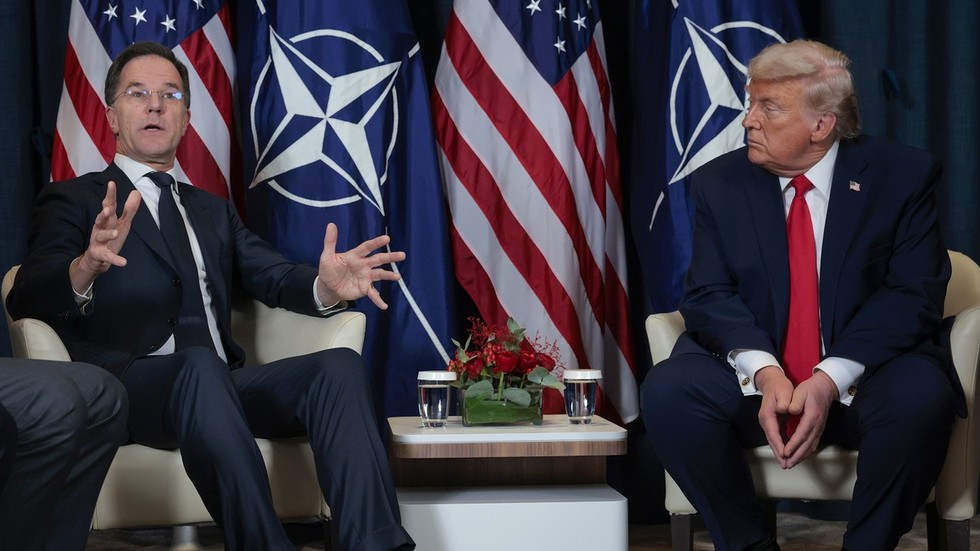
US President Donald Trump has praised the proposal on Greenland outlined by NATO Secretary-General Mark Rutte
4 months ago
Trump and NATO officials are described by both government and opposition outlets as exploring a framework that would significantly expand US military access to Greenland while formally preserving Danish sovereignty. Coverage agrees that the idea emerged from talks between President Donald Trump and NATO Secretary General Mark Rutte about updating the 1951 defense agreement to allow more US bases, elements of the Golden Dome missile defense system, and broader air and missile defense infrastructure on the island. Both sides report that the deal would require Danish consent, would increase NATO activity and security in the Arctic, and would give US companies fast‑tracked or expanded rights to develop Greenland’s rare‑earth and other raw materials, framed as part of a wider strategic competition. There is also shared reporting that Trump publicly linked this prospective NATO‑backed arrangement to his earlier, rejected idea of buying Greenland, while saying the new plan would avoid an outright territorial purchase.
Shared context across both government and opposition sources underscores Greenland’s role in Arctic security, NATO’s northern posture, and the effort to counter Russian and Chinese influence in the region. Both sets of outlets highlight that the proposal fits into a longer history of US‑Danish defense cooperation on Greenland dating back to the Cold War and the 1951 agreement, but now expanded to missile defense and resource extraction. They note that Denmark and Greenland would formally retain sovereignty, that NATO is seeking to modernize legal and defense frameworks as the Arctic gains economic and military importance, and that any agreement would have to reconcile US strategic aims with local and allied political sensitivities.
Nature of the deal and costs. Government-aligned coverage portrays the proposal as a NATO-driven modernization that delivers “total” or “unlimited” US access to Greenland’s military facilities at no financial cost to the United States, emphasizing Trump’s claim that he is “not gonna pay anything.” Opposition sources, while acknowledging expanded US presence, tend to frame it more as a negotiated framework updating an existing treaty, implying there will be political, legal, and practical trade-offs rather than a one-sided windfall. Government outlets stress Trump’s confidence that the US will get “everything it desires,” whereas opposition reporting is more restrained about the scale and terms of access, focusing on formal sovereignty guarantees to Denmark.
Sovereignty and optics. Government coverage largely treats Danish sovereignty as a procedural reassurance embedded in a pragmatic security upgrade, downplaying past tensions from Trump’s overt attempt to buy Greenland. It echoes Trump’s remark that purchasing foreign territory is historically “not unusual,” framing the NATO-backed plan as a smarter, alliance-consistent alternative. Opposition outlets, by contrast, spotlight the explicit clauses preserving Danish sovereignty as a corrective to Trump’s earlier, publicly rebuffed purchase bid, implicitly framing the new approach as damage control for strained US-Danish relations.
Strategic framing and threat perception. Government-aligned sources foreground national security imperatives, highlighting the need for the Golden Dome missile defense system, rapid weapons production, and expanded Arctic basing to deter adversaries, while also airing Trump’s doubts about NATO allies’ reliability. Opposition outlets also mention countering Russia and China, but cast the framework more as a collective NATO adjustment in the Arctic than a personal Trump initiative, and they avoid amplifying his skepticism toward allies. As a result, government narratives emphasize unilateral US strength and urgency, while opposition narratives stress institutional continuity and alliance consultation.
Economic and resource dimensions. Government reporting showcases potential gains for American companies through fast-tracked access to Greenland’s rare-earth and raw materials, treating resource extraction as a strategic lever for US power and self-sufficiency. Opposition coverage acknowledges joint resource development but situates it within regulated, cooperative arrangements between the US, Denmark, and Greenland, and within NATO’s broader Arctic policy. Where government sources frame economic benefits as an almost cost-free bonus of the access deal, opposition outlets frame them as one component of a complex, negotiated package that must balance local interests, environmental concerns, and alliance cohesion.
In summary, government coverage tends to cast the Greenland proposal as a cost-free, Trump-driven coup that maximizes US access and strategic leverage with minimal political downside, while opposition coverage tends to treat it as a cautious, institution-led update to an old defense pact that reins in earlier excesses and embeds US gains within formal sovereignty and alliance constraints.