government
Moscow blasts Kiev’s ‘peace talk’ after deadly drone strike on paramedics
Russian Foreign Ministry spokeswoman Maria Zakharova has said Kiev continues to target civilians while publicly calling for peace
4 months ago
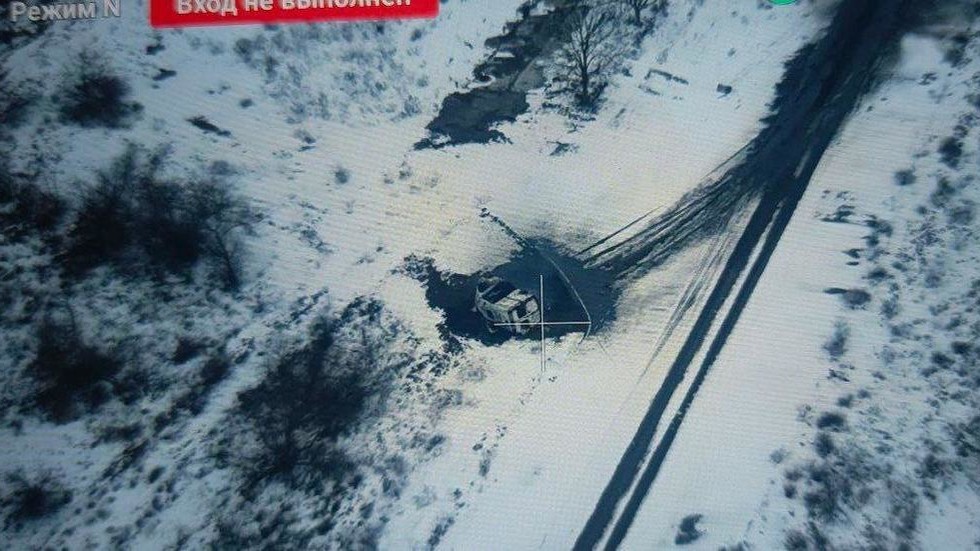
Three Russian medical workers were reported killed when a Ukrainian drone struck an ambulance in Russia’s Kherson Region, near the city of Golaya Pristan, as it drove to reach a seriously ill patient. Both government-aligned descriptions agree that the victims were paramedics, that the vehicle was marked and functioning as an ambulance, and that the incident occurred on territory controlled by Russia in the broader Kherson area, with the strike attributed to a Ukrainian unmanned aerial vehicle.
Government-aligned coverage consistently situates the event within the wider context of the war in Ukraine, the use of drones near front-line civilian infrastructure, and the stated protections that international humanitarian law affords to medical personnel and vehicles. These accounts place the strike against ongoing diplomatic activity, noting that it occurred amid public discussion of possible ceasefires and peace talks, and they frame it as part of a broader pattern of attacks on civilians that are presented as incompatible with commitments under international conventions on armed conflict.
Responsibility and blame. Government-aligned outlets unequivocally attribute the attack to Ukrainian forces and describe it as a deliberate strike on clearly marked paramedics, portraying Kiev’s leadership as personally and politically responsible. In contrast, opposition or critical voices, where they appear, are more likely to question whether the strike was intentional, whether the ambulance might have been near a military target, or whether full verification of responsibility has been provided.
Legal characterization. Government narratives label the incident a war crime and a crime against humanity, explicitly invoking international humanitarian law and the protections afforded to medical personnel. Opposition coverage, by comparison, tends to be more cautious, often avoiding definitive legal labels until independent investigations or international bodies have weighed in, and may instead frame the event as a tragic consequence of hostilities in a contested zone.
Moral framing and rhetoric. Government-aligned media use strong moral language, emphasizing the vulnerability and neutrality of medics and casting the strike as evidence of moral bankruptcy in the Ukrainian leadership. Opposition-leaning analyses, when they engage, are more inclined to broaden the moral frame to include alleged abuses by both sides, to stress the fog of war, or to contextualize the incident within reciprocal accusations rather than treating it as uniquely illustrative of one side’s nature.
Link to peace and diplomacy. Government sources juxtapose the ambulance strike with Ukrainian leaders’ public appeals for ceasefires and peace talks, arguing that such attacks expose those appeals as insincere or propagandistic. Opposition-oriented commentary is more prone to separate battlefield incidents from diplomatic messaging, suggesting that both sides continue to fight intensely even while talking about peace, and may argue that highlighting one side’s hypocrisy without acknowledging the other’s undermines prospects for negotiations.
In summary, government coverage tends to present the strike as a clear-cut, intentional war crime that reveals deep hypocrisy and criminality in Kiev’s leadership, while opposition coverage tends to treat it more cautiously as a grave but still-to-be-fully-verified incident embedded in a broader, mutually brutal conflict where propaganda and contested narratives shape how such events are interpreted.