government
Trump deal will allow US to control parts of Greenland
The draft framework approved by President Donald Trump will reportedly allow the US to control parts of Greenland
4 months ago
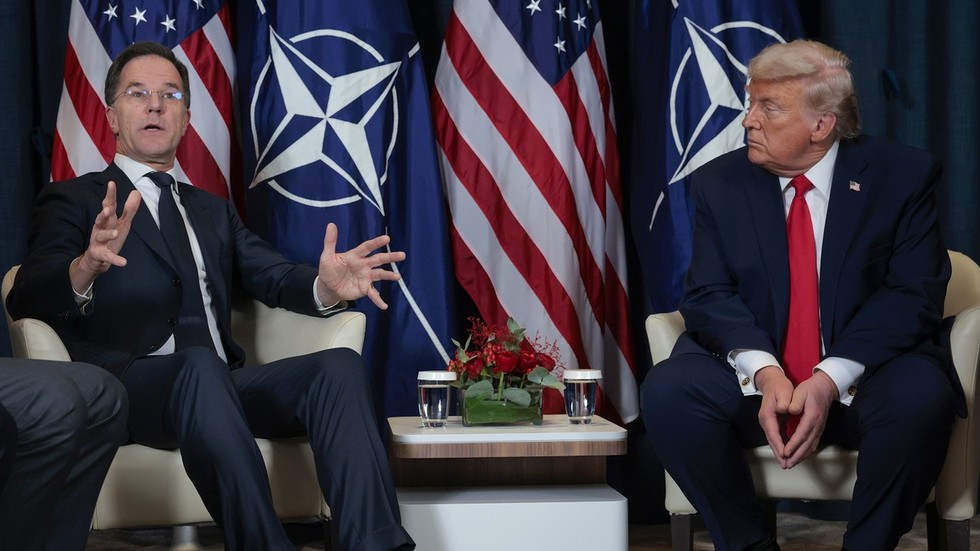
President Donald Trump is reported across both government-aligned and opposition outlets to be pursuing a new Greenland access arrangement framed as a NATO-backed update to the 1951 US-Denmark defense agreement. Coverage agrees that Denmark would formally retain sovereignty over Greenland, while the United States would gain substantially expanded and potentially time‑unlimited military access, including new or enlarged base areas that in practice function as US territory. Both sides report that the draft framework, discussed between Trump and NATO Secretary General Mark Rutte, envisages greater US and NATO military activity in the Arctic, deployment of elements of the US “Golden Dome” missile defense system, and broadened rights for American companies to develop Greenland’s rare-earth and other mineral resources. It is also consistently noted that any final deal requires Danish approval, is being justified in terms of national and alliance security, and is explicitly linked to countering Russian and Chinese influence in the region.
Both government and opposition sources place the initiative in the context of Trump’s earlier, publicly rejected attempt to buy Greenland outright and his subsequent shift toward a basing and access model akin to UK sovereign base areas in Cyprus. They agree that the proposed arrangement is meant to avoid outright territorial annexation while still granting the US extensive operational freedom, including missile defense deployment and intensified Arctic surveillance. The articles converge on NATO’s institutional role as a political cover and coordination mechanism for expanding Western military posture in the Arctic, even as they note that Denmark and Greenland’s local authorities must navigate domestic sensitivities over sovereignty and resource control. The shared background emphasizes a broader strategic contest with Russia and China in the High North and a US push to secure supply lines for critical minerals under the umbrella of alliance security reforms.
Nature of the deal. Government-aligned coverage portrays the arrangement as a “fantastic” NATO-backed security upgrade that simply modernizes an outdated 1951 pact while preserving Denmark’s sovereignty and delivering “total” yet benign US access. Opposition outlets, by contrast, describe a US drive to remove “all limitations” on its Greenland presence and stress that the framework would in practice grant Washington near-unrestricted operational control over bases and air defenses. While government sources liken the setup to established basing models and emphasize continuity, opposition reporting frames it as a qualitative expansion that edges toward de facto extraterritorial control.
Costs and benefits. Government sources highlight Trump’s insistence that the US will obtain “total” or “unlimited” access to Greenland “without paying anything,” presenting this as a strategic bargain that boosts US and NATO security at zero financial cost. Opposition coverage questions this framing implicitly by focusing on the political and sovereignty costs to Denmark and Greenland, suggesting the real “price” is borne by local stakeholders and broader alliance cohesion. Where government narratives stress economic upside through resource extraction and industrial buildup for weapons production, opposition reports are more cautious, noting that details on revenue sharing, regulation, and environmental oversight remain undefined.
Role of NATO and allies. Government-aligned outlets frame NATO, and Secretary General Mark Rutte in particular, as proactive architects of the plan, underscoring alliance unity and Rutte’s proposal as a way to strengthen collective defense in the Arctic. The same outlets quote Trump both praising the deal in NATO terms and casting doubt on whether allies would truly come to America’s aid, using this to justify greater US self‑reliance and military expansion. Opposition sources instead stress that Denmark and Greenland still have to negotiate sovereignty safeguards and are “open” but not fully committed, thereby portraying NATO’s role as more procedural and less of a blank check for US ambitions.
Resource and territorial ambitions. Government reporting emphasizes rare-earth mining and raw-material extraction as efficient, permit-light opportunities for American firms that will be enabled by the new basing framework, treating economic access as a natural extension of security ties. Opposition outlets, however, underline that joint resource development and expanded US rights risk blurring the line between defense cooperation and economic encroachment on Danish-Greenlandic jurisdiction. While government narratives downplay annexation fears by noting Trump has “dropped” outright purchase demands, opposition coverage presents the revised deal as a more politically acceptable mechanism to achieve many of the same functional objectives in terms of control and leverage over Greenlandic territory.
In summary, government coverage tends to depict the Greenland access plan as a cost-free, NATO-sanctioned modernization that enhances shared security and economic opportunity under intact Danish sovereignty, while opposition coverage tends to cast it as a far-reaching bid to erase practical constraints on US military and resource activities in Greenland, raising unresolved questions over sovereignty, ally relations, and local consent.