government
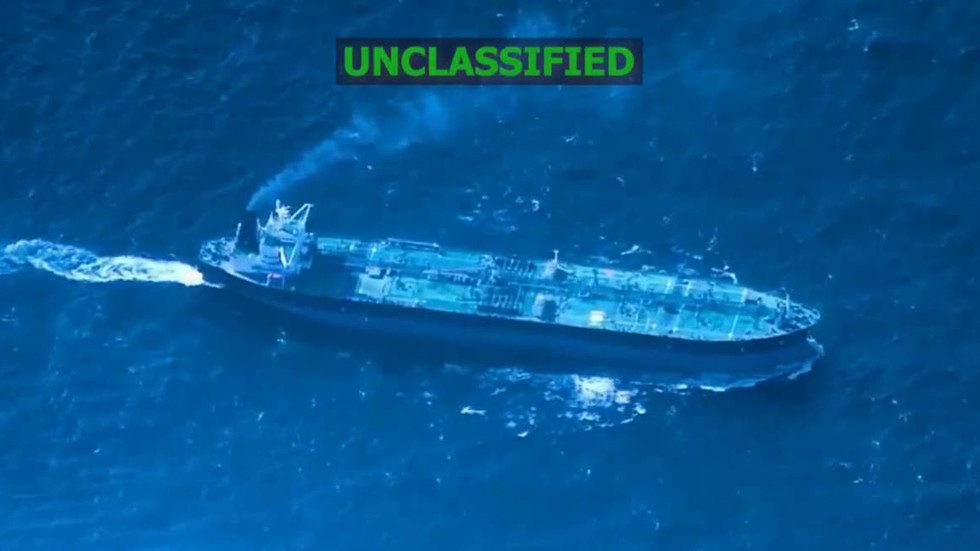
US seizes another oil tanker
Military officials said the motor vessel Sagitta is the seventh tanker in the Caribbean apprehended for allegedly defying US sanctions
4 months ago
US and opposition-leaning outlets agree that the United States seized the commercial oil tanker Sagitta in the Caribbean, under the authority of sanctions related to Venezuelan crude exports. Both sides report that the operation involved the US military, with SOUTHCOM highlighted as the announcing command, and that this is part of a broader pattern of at least seven tanker seizures since December targeting shipments tied to Venezuela and other sanctioned states. They concur that the tanker was operating under a foreign flag, that it had been associated with the so‑called shadow fleet moving sanctioned oil, and that US authorities are pursuing legal measures such as civil forfeiture to secure control of the vessel and its cargo.
Coverage from both sides situates the Sagitta seizure within the established US sanctions architecture against Venezuela’s oil sector and the enforcement role of US defense and justice institutions. They agree that the move is intended to curb unlawful or uncoordinated exports of Venezuelan oil and to signal continued US resolve in policing sanctions evasion networks, including those linked to Iranian and Russian interests. Both perspectives acknowledge that the tankers targeted often have complex ownership chains spanning multiple jurisdictions and that the Sagitta case reflects ongoing efforts to track and disrupt these opaque maritime logistics structures.
Motives and justification. Government-aligned coverage frames the Sagitta seizure as a lawful enforcement step to uphold international sanctions and ensure that Venezuelan oil exports are properly coordinated and compliant. It emphasizes the deterrent message and describes the action as a necessary response to unlawful shipments tied to sanctioned regimes. Opposition sources, while noting the sanctions context, stress the coercive and extraterritorial character of US actions, portraying the seizure more as an assertion of control over global oil flows than a neutral legal duty.
Characterization of the operation. Government outlets portray the seizure as a routine but resolute component of ongoing sanctions enforcement, highlighting SOUTHCOM’s role and the continuity with earlier tanker interdictions such as the Marinera. The tone is institutional and procedural, focusing on mission success and adherence to established policy. Opposition coverage underscores the dramatic aspect of a military seizure of a commercial vessel, presenting the operation as one more episode in a broader campaign against a shadow fleet and suggesting an escalation in US willingness to intervene at sea.
Focus on ownership and networks. Government-aligned reporting concentrates on the tanker’s role in moving Venezuelan crude and its link to sanctioned oil flows, giving less prominence to the detailed ownership chain. By contrast, opposition outlets delve into Sagitta’s complex corporate structure, flagging, and Chinese-linked ownership, using these details to illustrate how sanctions are reshaping maritime logistics and how the US is reaching through layers of foreign intermediaries. This difference in emphasis leads government coverage to center on state-level noncompliance, while opposition coverage highlights private and transnational actors caught in the sanctions net.
Strategic implications. Government sources present the seizure as evidence of sustained US resolve against sanctions evasion by Venezuela, Iran, and Russia, implying that such actions bolster international norms and regional security. Opposition reporting tends to interpret the same event as part of a larger US effort to dominate sanction-sensitive energy routes and leverage control over Venezuela’s export capacity, hinting at geopolitical and economic motives beyond legal enforcement. Where government narratives stress stability and rule enforcement, opposition narratives stress power projection and the potential for economic and diplomatic backlash.
In summary, government coverage tends to depict the Sagitta operation as a rules-based, security-driven enforcement action within a clear sanctions framework, while opposition coverage tends to cast it as an assertive, geopolitically motivated use of military and legal tools to control contested oil flows and pressure Venezuela and its partners.