March 2, 2026
Khamenei's Lessons. The Liquidation of the Iranian Leader Changes the Expectations of Authoritarian Elites in Russia and the World
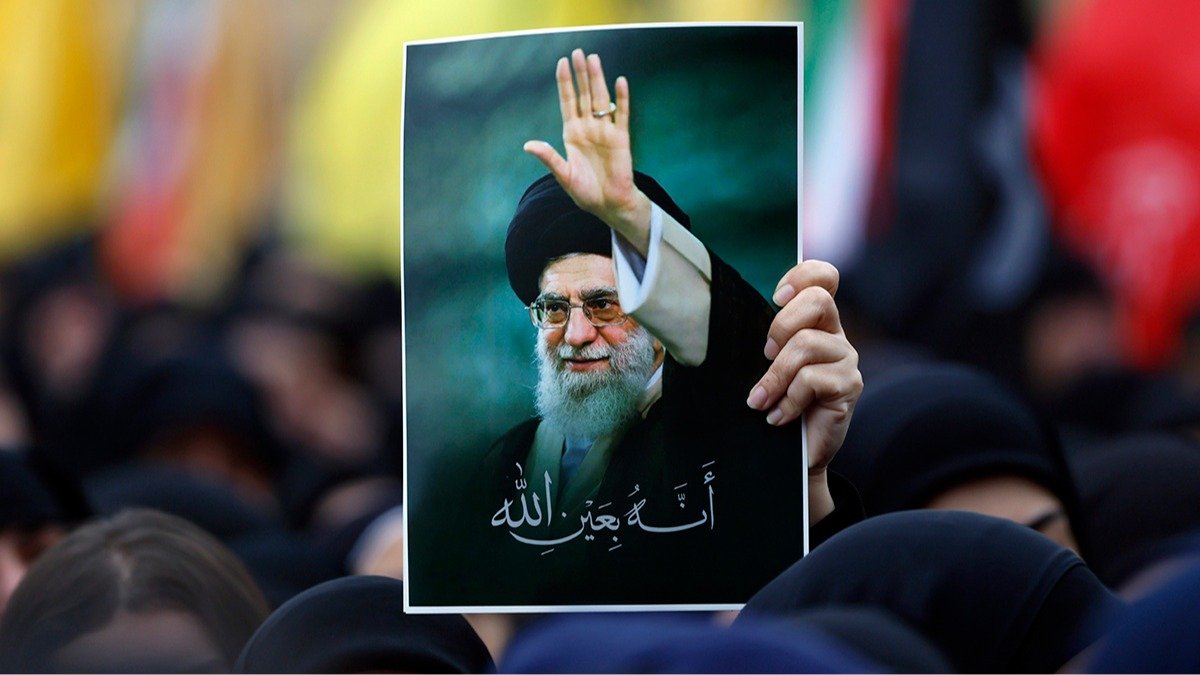
A supporter of Hezbollah carries a portrait of the late Supreme Leader of Iran, Ayatollah Ali Khamenei, and an Iranian flag during a rally in solidarity with the Islamic Republic of Iran in the Beirut suburb of Dahieh, Lebanon, on March 1, 2026. Photo: Wael Hamzeh / EPA. Observing events in Iran, I decided to ask the AI how often in the last 200 years the army of one state has physically killed the head of another state. To my surprise, the non-human mind found only one such case between 1825-2025 – the storming of Amin's palace in 1979. There was also the President of Paraguay, who died in 1870 in a war with foreign states. The AI could not find other examples meeting the strict criteria of foreign military killing the head of an internationally recognized state, no matter how I pressed it. Most often, incumbent heads of state were killed by rebels and conspirators, less often they took their own lives. In very rare cases, they were arrested and tried by other states. Some coups and rebellions had direct external support, but the elimination of a reigning ruler was almost always carried out by internal forces. Regular armies have killed many heads of self-proclaimed territorial entities or rebel groups, leaders of terrorist organizations and drug cartels, chiefs of tribal unions and proto-states during colonization. But the killing of a recognized head of state is a very unusual event. Even on a two-hundred-year horizon. One cannot build a trend on a single point, and theoretically, recent events may remain a rare exception. However, there is another circumstance, unrelated to Iran. The rapid development of electronic surveillance, high-precision weapons, and various types of drones has sharply increased the technical feasibility of eliminating high-ranking individuals. In exactly the same way as Khomeini today, in 1986 they tried to eliminate Muammar Gaddafi, at least twice – Saddam Hussein, and more than once – the leaders of the Taliban (when they were in power). But then nothing worked, and in the last five years, it has suddenly worked many times, even against well-guarded figures. Libyan leader Muammar Gaddafi participates in the opening of the second Arab-African summit in the coastal city of Sirte, Libya, on October 10, 2010. Photo: Sabri Elmehedwi / EPA. Until recently, the situation with attempts to eliminate foreign leaders using intelligence operations was even worse. According to the findings of the Church Committee investigation in the US Senate, the CIA developed over a hundred plans to assassinate Cuban leader Fidel Castro. Several dozen of them were implemented. However, Castro died in old age, of natural causes. This is just one of dozens of examples of targeted attempts to kill a foreign leader in the 20th century or organize an external coup. If one reads not conspiracy theorists' texts, but real archival documents, one can find cases where a wide distribution of resources to various regime opponents helped eliminate or overthrow the head of a foreign state by its internal enemies, but the ratio of successful and unsuccessful attempts to fully orchestrate such actions from the outside in the 20th century was almost one to a thousand. For centuries, the main thing heads of state and the upper echelon of elites in authoritarian countries had to fear was each other. In rare cases, total defeat in war. However, the human losses required to inflict total defeat on a distant authoritarian regime were usually unacceptable to most external actors. The development of technology has created a fundamentally new situation. With total technological superiority (which the US has over most authoritarian regimes), it has become technically possible to eliminate not only an authoritarian leader personally from the outside, but also a group of top officials in many countries simultaneously. The existence of a possibility does not mean it will be realized. Both sides can play into the physical elimination of a leader, and leaders of democratic countries objectively need to appear in public much more often than their authoritarian counterparts. Trump, who survived several assassination attempts and perhaps, as a result of miraculous escapes, believed in his destiny, is more of an exception than a rule. However, for further reasoning, it is not important to us how often such actions will be replicated in reality. Let's limit ourselves to the fact that the elites of authoritarian countries have been clearly demonstrated twice in two months the fundamental possibility of eliminating the top person by external forces with relatively low costs for the latter. Elites perceive potential threats well at a personal level (those who do not perceive them rarely remain in the elite) and involuntarily apply a similar development of events to their own countries. I am not so much talking about Russia now, as about any authoritarian regimes where, even with formally prescribed rules for the transition of power, there is no stable tradition of actually observing such rules. Elites' reflections on the prospects of sudden elimination of their head of state by external forces can follow two logics: clan-based and ideological. If key clans perceive the current rule as indefinitely long, then the presence of figures formally in significant positions, equidistant from key clans or technical figures, may be acceptable or even desirable. If, however, the sudden death of an authoritarian leader becomes more likely in the near future, then the importance of controlling constitutionally significant positions by clan representatives increases. In Venezuela, if you remember, power passed to a figure who was far from the most influential before Maduro's arrest, and now has suddenly gained real authority. A banner with the former commander of the IRGC forces of Iran (IRGC) Qasem Soleimani on the eve of the sixth anniversary of his assassination in Valiasr Square in Tehran, Iran, on December 30, 2025. Photo: Abedin Taherkenareh / EPA. The ideological logic looks different. Among the elite, there are always many opportunists and pragmatists who may verbally support the official rhetoric, but in their hearts do not share the convictions of the top person and do not support his individual decisions. In particular, I have no doubt that a significant portion of the Russian elite considers the war in Ukraine a mistake, and some – the confrontation with the West as a whole. In addition, various groups within the elite bear different risks in case of a sudden collapse of the regime. In particular, in the event of the regime's fall in Iran, the personal prospects of a hypothetical IRGC general who led the brutal suppression of protests and the prospects of, for example, the head of the Iranian Central Bank are significantly different. In the context of the simultaneous targeted elimination of several representatives of the ruling elite at once, it is possible not only to significantly change the balance of power between ruling clans but also the ideological orientation of the ruling system as a whole. It is not so important whether such a thing can actually be achieved in Iran, but rather that heads of individual authoritarian states, as well as those elite groups whose risks in case of regime collapse are maximal, will inevitably think about such a prospect. Many authoritarian leaders want to preserve their ideological legacy, and the most 'bloody' representatives of the elite will receive additional incentives and arguments to attack their less-tainted regime competitors. The considerations described above will contribute to the development of two processes: an attempt to bring the distribution of constitutionally significant posts for transit into line with the existing inter-clan balance, and a weakening of the positions of moderate technocrats with a growth in the influence of ideologically charged or most regime-tainted elites. The scale of the described phenomena in each individual country is a debatable and unclear issue. However, there is little doubt that recent events in Iran and Venezuela will push the thoughts of many people in this direction. It is not so important how much the probability of the sudden death of leaders of individual countries has actually increased; it is important that their elites will think more about this probability. And these thoughts can provoke the most unexpected consequences.
TL;DR
- Historically, the killing of recognized heads of state by foreign armies has been rare; most leaders were overthrown by internal forces.
- Advancements in surveillance technology, precision weapons, and drones have significantly increased the technical feasibility of eliminating high-ranking individuals.
- Recent events have demonstrated the possibility of eliminating top leaders by external forces at relatively low costs, which is being contemplated by authoritarian elites.
- This contemplation can lead to two main shifts in authoritarian regimes: a restructuring of power to align with inter-clan balances and a decline in the influence of technocrats in favor of ideologically driven or compromised elites.
- The awareness of this possibility, regardless of its actual frequency, could provoke unexpected consequences and alter power transitions in authoritarian states worldwide.
Continue reading the original article