February 15, 2026
"He Saw Everyone." A Book About Photographer Dmitry Markov, Whose Photos Became a Chronicle of Modern Russia, Has Been Released. We Spoke with the Author About Working on the Biography and the Disputes Surrounding It
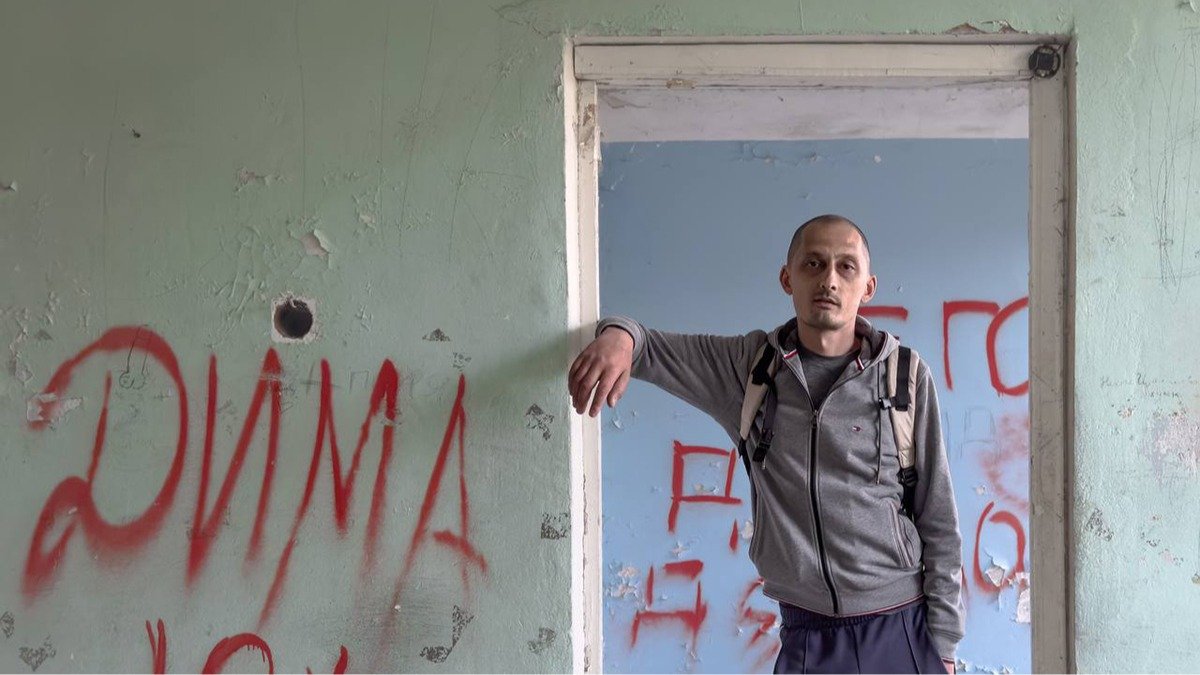
Two years after the death of Dmitry Markov, one of contemporary Russia's most iconic photographers, Freedom Letters publishing house released his biography. Its author, journalist Vladimir Sevrinovsky, calls his work not just a portrait of Markov, but a chronicle of modern Russia – from the collapse of the USSR to the war with Ukraine. However, the author began to be criticized for undertaking to write about a person he did not know personally and was reproached for revealing the photographer's sexual orientation after his death. "Veter" spoke with Sevrinovsky about Markov, his view of photography, and the unexpected reaction to the book. Photographer Dmitry Markov. Photo: Dmitry Markov / Telegram. The text was first published on the website of the publication "Veter". — Initially, you were only going to write an article about Markov. Why did this story captivate you so much that it eventually became a book? — It just so happened that there was a match. Any journalist, researcher knows that when you are writing material, there are time constraints that do not allow you to delve deeper into the story for which you came. And I always wanted to go as far as possible. This is the approach that Marina Razbezhkina [documentary film director, founder and head of the School of Documentary Film and Theater. — Approx. author] teaches in documentary filmmaking. She believes that documentary filmmaking is not just about coming, filming a story – and goodbye. You have to immerse yourself, enter the snake zone [a term coined by Razbezhkina, meaning "personal space." — Approx. author], observe from within, as detailed as possible, and often with this approach, the picture changes completely. Starting to work on the material about Dmitry Markov, I realized that this person is much more important than I thought. Including personally for me. His life holds answers to questions that concern me. For the first month of work, I didn't even think about a book, I was just writing another article. But, talking to people, I realized that this would not fit into the format of an article, something more was needed. When I brought this material to "Takie Dela," they told me: "You, perhaps, did not understand it yourself, but you are writing a book, and you should finish it." And I worked on the book for a year. How important this was to me is best illustrated by the fact that even when I was already overloaded, because now is a very important, crucial time for Russia, I still sat down almost every day and worked on Markov's story. Strangely enough, the story of a person who is no longer alive turned out to be even more important than what I was doing all the other time. Photographer Dmitry Markov. Photo: Vlad Dokshin. — If I understand Razbezhkina's method correctly, it is primarily deep, long-term observation. How can such an approach work with a person you didn't know during their lifetime? How did you structure your work with sources in this regard? — I worked on this book just like I do on other stories; I always use materials from various sources: interviews I conducted, personal observations, scientific articles, and then I combine and sort them by topic, look for connections. As a result, I got a huge amount of raw information. More, I think, than "War and Peace." There were several main sources. First, Dmitry's social media and books. He liked to talk about his life. Plus, I conducted about 40 quite in-depth interviews. Some conversations lasted for months: I could talk to a person, then learn new facts, and return to them. And so several times. Fortunately, with some people, something like a partnership developed. They helped me immensely. They have fundamentally different views, and I am sure: Dmitry would have liked that such different people preserved his memory. It is clear that with a living protagonist, this method works differently because in documentary film, you simply, conditionally, follow them. But here, immersion also works: often a person with whom you communicate for three or four months ends up telling you completely different things, not what they said at the first meeting. And this is much more interesting: everything hidden gradually comes to the surface. The plot of the book itself, strangely enough, continues to this day: everything did not end with the last period, with some characters, amazing metamorphoses are happening right now. And this, of course, is similar to Dima Markov: his stories also almost never ended where he put a period or took a frame. — You said that you initially underestimated Markov's personality and only truly understood him during the process. How would you describe him to someone who hasn't heard of him, and why do you think his figure is so important? — I knew about him what everyone knows: he was an outstanding photographer. Probably, the main photographer of Russia of that time, which, in essence, has not ended even now. It's striking that with the beginning of the war, many of his shots have changed their meaning and are now perceived differently. His art, these "pictures," as he himself called them, continue to develop after the author's death. For example, the famous shot where a blond boy in a beret stands surrounded by paratroopers. The frame looks completely different now, although it was taken a long time ago. Photo: Dmitry Markov/ Flickr.And his photographs, taken after the start of the invasion, when he seemed to be silent... You just see a guy sitting in a train car, and so much is written on his face. And the crowd outside, which doesn't look at him, and the woman looking into the frame... You could make a movie, and it wouldn't express as much as this deceptively simple photograph. It would seem that he just took a picture of the person opposite him in the train car, but no. Then I learned that Dmitry himself saw his main role not in photography, but in volunteering. And this is another amazing, very contradictory aspect. While I was studying it, my opinion of Markov changed several times, there were such emotional swings. First, you see that the person is great, he did wonderful things. But then such horrors begin... And then you begin to understand on another level what it was all about. In essence, he – far from ideally, as he could – gave his wards freedom. And even if someone misused that freedom, he at least had the opportunity. I am talking about the teenagers from the orphanage in Belsky Usty [a village in the Pskov region where the children's home is located. — Approx. author] with whom he worked in the village of Fedkovo. Subsequently, he collected very serious money for charitable organizations. [Since 2007, Dmitry Markov has collaborated with the charitable organization "Rostok," which helps children from correctional orphanages, and later worked as a mentor in its "children's village" Fedkovo – a project for the social adaptation of teenagers from the orphanage in Belsky Usty. — Approx. author]. When I spoke with the head of "Rostok," Alexey Mikhailuk, he told me that the foundation is still operating on Dima's money. A year after his death, Markov was still feeding them and still feeding several projects. Farewell to the army. Photo: Dmitry Markov / Instagram.And finally, the third aspect is his ability to see and accept people with different views. For me, a person working in Russia during the war, this is the most resonant [in Dmitry Markov]. We like to judge everyone indiscriminately. We often think that we are so wonderful and right in everything, and people outside our wonderful circle are not even worth talking to. Against the backdrop of the colossal traumatic division of Russian society, Markov's ability is very important. He saw everyone. He was a person who could go to Navalny's rally, and then get drunk with a paratrooper or talk to a cop at the same rally and see a person in them. I think this is a very important skill because if parts of Russia do not learn to talk to each other, this terrible situation will only worsen. And only such mutual acceptance will heal us someday, followed by reconciliation and the end of the age-old cycle of violence from which we cannot escape. . "I think this is Markov's most important lesson, which, I think, cost him his life. Between his death and that final burst when he finally wrote his response and read the reaction to it, I see a direct connection. I think it was very important for him himself to be accepted. And when he realized that this was no longer possible, that his human, understandable, humane, and completely non-militaristic act was causing a storm of hatred – this, in many ways, brought his premature death closer. It is important to learn such a view from him. He knew how to unite very different people. Take any projection: believer and non-believer, liberal and conservative – he was somewhere in the middle. He accepted everyone and knew how to be friends with everyone. — The book cover has an interesting portrait. As if Markov has the face of a dove, why did you choose it? — It's not a dove. By the way, it's a great mystery to me why several people immediately thought it was a dove. It's a stork. And this is again the theme of acceptance – one of the key ones for the book. At first, when Dmitry was called a stork, he was annoyed by it, but then everything turned out completely differently. The wonderful Dagestani artist Murad Khalilov worked on this portrait. And it was difficult for him because at first, he wanted to create a simple human portrait, and it didn't come easily to him. Murad quickly painted the background, the undershirt, the pose, but the face was problematic. He read the book and thought for a long time, and then the theme of the stork somehow clicked in his head – and everything fell into place. Markov himself would have understood the meaning of the portrait. It's a key bird for him, and, of course, Murad very wisely decided to depict him in this way. I even thought of putting an epigraph from Vvedensky: "and all, looking around with a giggle, babble that the world's stork is lonely and segmented, it is fire, it is a haystack, it is God." The stork is an important symbol in this book, which I hope everyone who finishes reading it will understand. Book cover by Vladimir Sevrinovsky. Photo: freedomletters.org. — Your book only contains descriptions of the hero's photographs; the photographs themselves are not included. Why did this happen? — I had disagreements with Markov's family on several issues related to this biography. As a result, I decided not to ask them for photographs. [In the book, Vladimir Sevrinovsky mentions that some of Dmitry Markov's relatives opposed the publication of information about the photographer's homosexuality. Here's how the author explains his decision to include this information in the book: "At first, I wanted to remain silent. It would have been easier for everyone. But the further I progressed through the plot, the more I became convinced that without this – seemingly small – element in Dmitry's story, there would remain gaping lacunae, because without it, one cannot understand either his relationships with many people or his art. Without mentioning this aspect of Markov's life, which was so important to him, the entire book would have acquired a cloying taste of lies. But no. He was who he was, and lived a full life, and loved, and dreamed of being accepted for who he was." ] And besides, several people told me that my perspective was important [for the book], it was important to retell these shots as I saw them. Markov's books, despite his brilliant writing, are still more like photo albums with texts. And I understood that it would be speculative on my part if I also turned my book into his photo album, but with my text. I hope that those who, by chance, do not have Markov's beautiful books will acquire them after reading this biography. It is very easy to find the photographs mentioned in the book there, and many other equally amazing ones. — In the book, you look at Dmitry not only as a photographer, an exceptional recorder of reality, but also as a reflection of reality. What does Markov's story tell us about modern Russia? — My first major prose book was about Russia as a whole, about all its regions. The next one I wrote about one region – Dagestan. And now, in essence, I have brought the concentration to the limit and made a book about one person, but about a person in whose life all of Russia was reflected, especially since he visited many regions, and lived in some of them. And he had an amazing gift, which very good documentarians have: to be in the right place at the right time. Sometimes even practically against his will. When he moved to Pskov, for example, he could not have predicted that in 2014 he would find himself in the thick of an international scandal and take an active part in a historic event [This refers to the events of 2014 when the funerals of servicemen of the 76th Guards Airborne Assault Division, who died during hostilities in eastern Ukraine, took place in Pskov. Russian authorities then denied the presence of their military personnel in Ukraine, so the funerals were "closed." Dmitry Markov, who lived in Pskov at the time, documented the events for Reuters. — Approx. author]. Photo: Dmitry Markov / Telegram.Of course, it was important for me to show not only Markov, but also Russia. The book pays a lot of attention to other characters – this is also his perspective: look at Dmitry's Instagram, there are almost no selfies, mostly portraits and stories of other people. And when you read about them, you begin to understand both Markov and the country – all this exists together. I don't want to use clichés like "hero of our time," but perhaps it's impossible to describe him more accurately. Yes, he is a hero of our time; this time is astonishingly reflected in his biography. And this biography provides an opportunity to reflect on the entire fate of modern Russia, because he lived through its very beginning and the current time, when everything has come to such a tragic, but logical conclusion. — Then I will ask you about another cliché. In the comments, people sometimes write that he engaged in "darkness." That his photographs are a manifestation of the most unpleasant things. Do you have an answer to such comments? — I advise such people to travel a bit through the provinces – you will see much worse things. And, most importantly, it seems strange to me to perceive his shots as some kind of horror, "darkness," because Markov did the opposite. I wouldn't even say that his work is an objective depiction of reality. Like the work of any artist, it is an aestheticized reflection of reality. The people [in his photos] are beautiful. "A person who appreciates Markov's work might meet one of his characters in real life and either simply not notice them or cross to the other side of the street because they don't want to interact with them. But in Markov's photographs, these people can be admired. When Markov worked with teenagers from Belsky Usty, some of them suffered from enuresis (involuntary urination. — Approx. author). Consequently, the sheets had to be changed. And some of the guys would stuff these sheets into a corner, they stank there, and then they had to be literally picked out. If Markov had been engaged in "darkness," he would have photographed the dirty, urine-stained sheet in the corner. But he photographed something else – how these sheets were drying in the wind outside, and it's a photograph of amazing beauty. You admire it and don't even think about what came before: that Markov had to breathe the stench a little earlier, deal with all this... And then he hung these sheets out and seemed to add a little beauty to the world. Photo: Dmitry Markov / Flickr. — Markov studied under Alexander Lapin, whom you describe in the book as the last true photo guru. Can another Markov appear without Lapin? — Another Markov, in my opinion, is not needed, just as another Pushkin, another Tolstoy is not needed, because Markov is one of a kind, like any outstanding talent, he is unique and should not be mindlessly copied. There are photographers, in my opinion, quite comparable to him in talent, but different. When Dud asked him who he would highlight among his colleagues, he named Alexey Vasiliev. And if you look at the photographs of this, in my opinion, most masterful Yakut photographer, you will understand that yes, they are different, and it's good that they are different, but he also sees beauty and poetry in his beautiful republic. — If you try to film Dmitry's life, for example, based on your book, what are the key episodes? — The culmination of the book – the chapter "Queen of Rags" – might be harder to convey in cinema than in text, but that's the director's task. Because everything converges there. Markov's life, with all its chaos, is very harmoniously structured from a literary and artistic point of view. This is not my particular merit as an author – it just happened that way. Or, at the very beginning, the episode with the cinema in Pushkino, in my opinion, is fantastic. It's impossible to imagine such things happening, especially under the auspices of some official bureaucratic projects. Or the absolutely cinematic story of how he furiously chases away his girlfriend's admirer... Many things can be listed, but these would be spoilers. — The book mentions sexual violence that Dmitry Markov experienced in childhood. Is this known from his own words? — Yes. It was important for him to talk about these two episodes. Obviously, they did not pass without a trace if he remembered them later. — Let's talk about the reaction to your book. Did anything surprise you about it? — To begin with, I have practically seen no reactions to my book. Few people have read it yet. Those who have read it have had a mainly positive reaction; I really liked Konstantin Kropotkin's review. As for the reaction to the well-known "Meduza" material [this refers to a publication that states that Markov's "coming out" as a homosexual person was made in the book. — Approx. author], let it be on their conscience. Yes, like any person, orientation was an important part of Markov's life. But I'm offended when, without reading the book, people only pick out this. As if the only thing that could interest anyone in Dmitry's life was his orientation, and everything else was unnecessary. I would understand if an LGBT-themed portal did this – for them, of course, it is especially important, and I am grateful to the representatives of the queer community who supported me. But when "Meduza" does it... I don't know, in my opinion, it was not a very good decision. The book also has truly sharp moments, because Markov was not a saint. If some other episode had been taken out of context and everything else discarded, the reaction might have been even harsher. I hope that when people read the book, they will perceive Markov's orientation simply as one of many elements of his life. It is an important fact that is necessary to understand the hero. But I wanted him to enter culture without scandal. — Do you think it is ethical to "out" a hero after death? — Having learned about my hero's homosexuality, I consulted with representatives of the queer community and studied world experience. In the West, posthumous disclosure of orientation happens quite often, although it is still accompanied by discussions. Equating it to outing, which can only happen during life, is incorrect. I understand Gabriel Rotello's position, who accused critics of hypocrisy: first, the Daily News newspaper attacked him for disrespecting Malcolm Forbes's memory because of the story about his homosexuality, and soon published an editorial stating that Greta Garbo suffered from alcoholism before her death. " In the last two years, much has been written about Dmitry, including unflattering facts that he himself did not publicly declare. Is it homosexuality that disgraces him so much that only about it should be silent? Markov felt the need to inform his friends about his orientation. Those who knew him in the early 2000s and late 2010s told about this. It was important for him to be accepted as he is. In the end, it was, in essence, an open secret. Even before "Meduza's" post, questions appeared under the book's announcement on Facebook – would this topic be revealed? People were preparing to be indignant, to raise a scandal, if they didn't find it in the biography. Silence would not only distort the hero's personality but also show everyone that I consider this aspect of him shameful. And for that, I would be justly blamed. Photographer Dmitry Markov. Photo: Dmitry Markov / Telegram. — Did you see the publication on Fyodor Pavlov-Andreevich's Facebook? And what journalist Mitya Aleskovsky wrote? Both reacted quite sharply to the publications about Markov's homosexuality. And Aleskovsky, for example, writes that "to pretend that homosexuality constituted the basis of Dima's worldview is completely wrong and unforgivable." — I absolutely agree with him. I think if Mitya and Fyodor had simply read the book, they would likely have treated it with understanding, because there is nothing in the book that contradicts their views. Homosexuality is devoted, I think, about 1% of the text. And the remaining 99% are about something else entirely. — In his Facebook discussions, Aleskovsky also wrote that people who knew Dima do not read biographies written by someone who did not know Dima. — I know Dmitry Markov's friends who have already ordered the book and are eagerly awaiting it. One even became the first reader of the draft, even before the editor. If a person doesn't want to read it, that's their right. But why condemn without reading? "I think that, on the one hand, it's bad that I didn't know Dima, but on the other hand, it gives me a certain advantage. I was a blank slate, tabula rasa. When very different, dissimilar people told me about him, I didn't filter it through my bias, but tried to reconstruct his personality from scratch; it developed during the work, like a living person. I want to believe that I succeeded. There are many cases where good biographies were written by those who didn't know the person, lived in another country or era, so I don't accept this argument. — And why did you eventually have disagreements with Dmitry's relatives? — I communicated with his sister and am grateful to her because she provided a lot of important information, read the book, and helped correct some inaccuracies. I think she understood that I put a lot of soul into the work. It's a very sad situation: you respect a person, you understand their motivations, but you still can't agree [Dmitry Markov's sister did not want information about his homosexuality to be included in the book. — Approx. author]. I believe that if you undertake to tell, and such an important story at that, you cannot let the book turn into a lie. And removing certain fragments, of course, leads to the distortion of Dmitry's entire life. It was agonizing for me not to agree with Tatiana. If I hadn't invested so much in this book, I probably would have simply abandoned it. — Artist Pavlov-Andreevich has such an argument against this "coming out": "Posthumously, you will deprive Dima of access to his huge audience in Russia. Because if today Dima's books can still be ordered (and his exhibition organized, which his family is doing – and you have provided them with excellent service!), then now, post-mortem, you will make Dima a pariah by attaching him to a forbidden non-existent movement." What do you think about this? — I categorically disagree. There is no argument that I have not thought about for a long time and intensely. We are now living, thank God, not in the mid-20th century, when books could be burned and people could not read them until the fall of the regime. Dima's photographs, as they were easily accessible to anyone with internet access, will remain so. As for printed publications, even more controversial books are not difficult to buy. From the perspective of the Russian authorities, Markov was a "correct gay" – despite being open with his close ones, he did not publicly advertise his orientation and was against gay parades. There are such people in the State Duma, and everyone knows about them. I am sure that Dima's books will continue to sell just as well. I think their print runs will only increase on the wave of new interest. — Lastly, I wanted to ask: perhaps, while working on this book, you noticed any persistent misconceptions about Markov? What do you think people most often misunderstand about him? — As often happens with famous people, in the imagination of many, it is not the person himself who exists, but the legend created around him. And everyone shapes this legend in their own way. This is especially true for Markov – a highly ambivalent person. People, including those who knew him well, tell opposite things about him: some say he hated the regime, others that he "reformed" and was "on our side." And everyone pulls him to their side. Because even people who knew him for many years – regarding the question of whether it's good or bad that I didn't know him – still filter him through their own perception, fitting him into their worldview, sometimes too simple. Photo: Dmitry Markov / Instagram.And he was a complex person; he didn't fit into simple frameworks, which is what makes him interesting. I tried to reflect his contradictions, his readiness to encompass everything, in the book. It's important to show him as a living person, not some monument. The book contains an image related to one of his photographs: a huge, clumsy Lenin monument, and under it sits a boy with a mobile phone looking in another direction. The imaginary, bronzed Markov is like this monument, under which a boy still sits, his work lives and develops, and I tried to understand him. Of course, on this path, I failed in many ways; some lacunae remained unfilled. This is natural and, strangely enough, correct. Because Markov also constantly experienced failures. I even like that this book, with its already difficult fate, resembles him in some ways. Perhaps it should be so. Vlad Dokshin
TL;DR
- A new biography of photographer Dmitry Markov, penned by Vladimir Sevrinovsky, has been released two years after Markov's death.
- Sevrinovsky describes the book not just as a portrait of Markov but as a chronicle of modern Russia.
- The author explains his process of deep immersion and extensive research, including numerous interviews, to reconstruct Markov's life.
- The biography highlights Markov's evolution from an acclaimed photographer to someone deeply involved in volunteer work, particularly with orphaned teenagers.
- A key aspect explored is Markov's remarkable ability to connect with and accept people from all walks of life, seen as a crucial lesson for a divided society.
- The book has faced criticism for writing about someone the author didn't personally know and for revealing Markov's homosexuality after his death.
- Sevrinovsky defends the inclusion of Markov's sexual orientation, stating it's essential for a complete understanding of his life and art.
- The book intentionally omits Markov's photographs, focusing instead on the author's interpretation and storytelling.
- The biography aims to present Markov as a complex, living person rather than a static monument, reflecting the turbulent history of modern Russia through his experiences.
Continue reading
the original article