politics
December 30, 2025
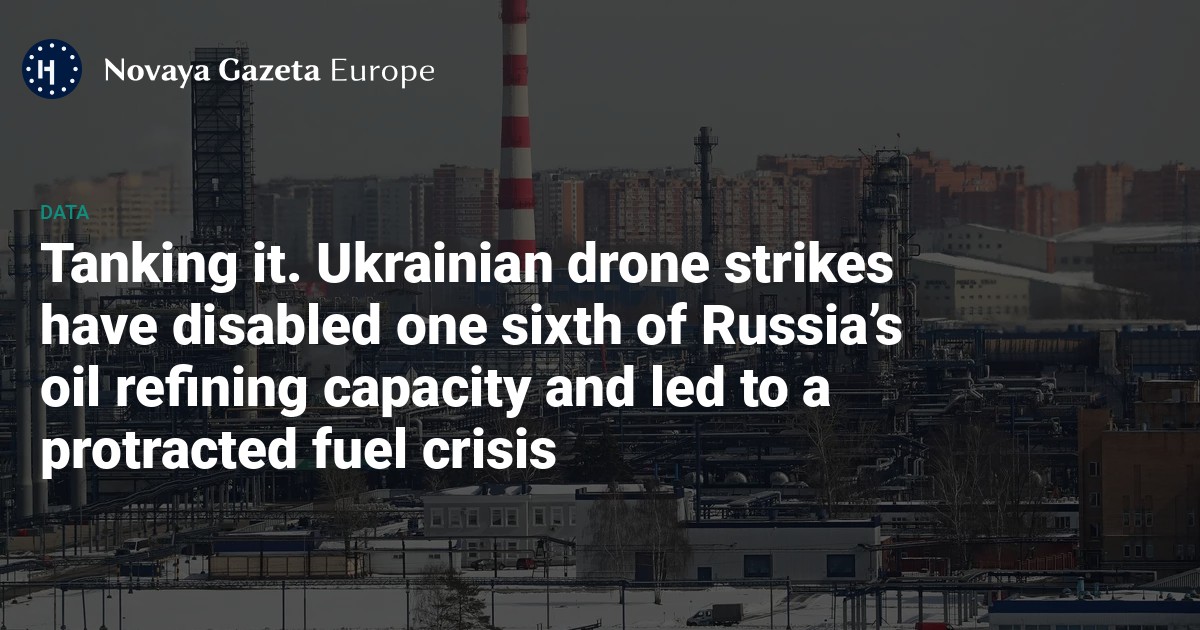
Tanking it. Ukrainian drone strikes have disabled one sixth of Russia’s oil refining capacity and led to a protracted fuel crisis
The Gazpromneft Moscow Petroleum Refinery, 4 April 2022. Photo: EPA/MAXIM SHIPENKOV
TL;DR
- Ukrainian drones have disabled 17% of Russian oil refining capacity.
- The current fuel shortage is the longest since the war began and is expected to last until at least winter, potentially into 2026.
- 40 attacks on Russian oil refineries have occurred this year, with 25 resulting in partial or complete shutdowns.
- The crisis is longer than usual due to drone strikes, scheduled maintenance, and high interest rates affecting smaller gas stations.
- Average gasoline prices have increased by 7.2% since January 1, while inflation was 4%.
- Short-term measures like banning gasoline exports until October are not working.
- Systemic solutions include refining oil in Belarus and addressing the state-regulated fuel price model or lifting sanctions on refining equipment.
- Dampener payments to oil companies have proven ineffective in the long term.
- Increasing mandatory fuel sales on the stock exchange is proposed as a way to make fuel more affordable.
Continue reading the original article