March 22, 2026
Expertise = Verdict. How Kyrgyzstan 'Proves' Guilt in Criminal Cases Against Critics of Power
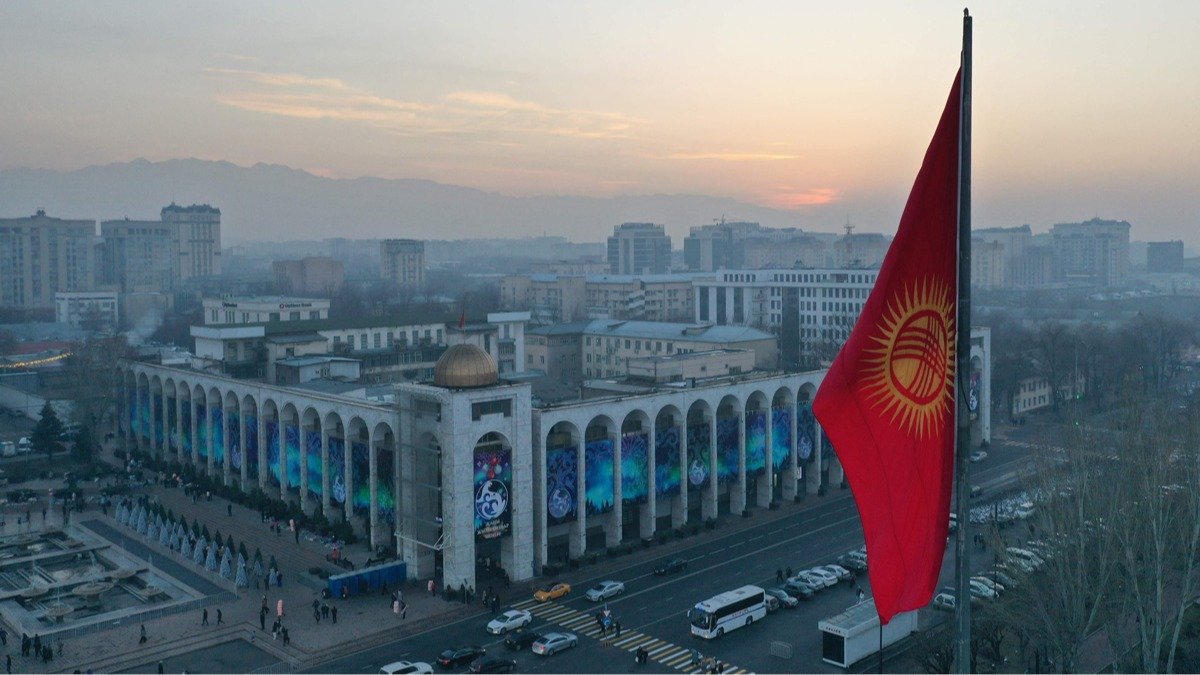
Bishkek. Photo: Vyacheslav Oseledko / AFP / Scanpix / LETA. In recent years, forensic examinations in Kyrgyzstan have become the main tool in the criminal prosecution of independent journalists, activists, opposition members, and other critics of the authorities. Often, it is the examinations that play a key role in the case, serving as the main evidence of guilt. At the same time, the forensic examination system is mired in corruption, some conclusions were likely written 'to dictation,' and sometimes the experts are not experts at all because they lack proper accreditation. Despite this, courts continue to accept the conclusions of various specialists as primary evidence, encouraging the use of this tool in political cases. Similar examinations have been used in almost every politically motivated case, even though the specialists' findings are often questionable or even comical. 'Kloop' has described the examination conclusions in its case in detail and for a deeper understanding, they can be found here or here. In total, three cases against 'Kloop' were built on examinations: on the liquidation of one of the publication's legal entities in Kyrgyzstan; against four former employees of the editorial office on charges of inciting mass riots – as a result, two of them spent six months in pre-trial detention, were sentenced to five years in prison, but later all four were released on probation; on recognizing 'Kloop' materials and the activities of its co-founder Rinat Tukhvatshin as extremist. Experts dislike coming to court and ask not to be filmed, but transcripts of expert interrogations can be read here, here, and here. Politically motivated cases are based on three articles of the criminal code: 'mass riots,' 'inciting racial, ethnic, national, religious, interregional hatred (discord),' and 'public calls for violent seizure of power.' 'The current practice [...] shows that in criminal proceedings for such criminal cases, expert conclusions serve as the sole evidence presented by the prosecution,' writes human rights defender Gulshair Abdirasulova in her 2024 report. And this sole evidence raises questions. Kyrgyzstan has a separate department that deals with forensic examinations, and the law that regulates it is the 'Law on Forensic Expert Activity.' Academy of Sciences. Photo: Cabinet of Ministers of the Kyrgyz Republic. According to this law, forensic examinations can be carried out by specialists of this department who undergo mandatory accreditation. However, if the necessary specialists are not available in the forensic service, then one can turn to other individuals with 'relevant knowledge in the required field' for a conclusion. 'But his [not a forensic service employee's] conclusion is not a forensic expert's conclusion, it is a specialist's opinion. So, there is a fundamental difference. [...] This is not an examination, it is the opinion of a specific person,' explains Abdirasulova. And the authorities actively use such 'opinions.' For example, in recent years, so-called 'political science examinations' conducted by employees of the National Academy of Sciences (NAS) have begun to appear in political cases. The problem is that, firstly, there is no such concept as 'political science examination' in the laws of Kyrgyzstan, and consequently, there can be no accredited experts. Secondly, the Academy of Sciences is not a forensic organization, and its employees conducting political science examinations do not have accreditation to fulfill such requests from law enforcement agencies. Despite this, according to Abdirasulova, in 2022 and the first half of 2023, the NAS conducted 148 examinations at the request of the GKNB and the police. These include high-profile cases against activists and journalists. For example, the Kempir-Abad case, involving 27 people, the case of 11 former employees of the Temirov Live publication, and others. Although many of them were eventually released on probation, and some were acquitted, most of the accused spent from six months to a year in pre-trial detention. There are also those who were sentenced to imprisonment – for example, journalist Makhabat Tajibek kyzy, who is serving her six-year sentence in prison for incitement to mass riots. Data on such activities of the NAS for the last two years is unknown; the department's website has stopped publishing statistics. Makhabat Tajibek kyzy. Photo: Kloop. Examinations 'to dictation' But there is another, more significant problem with NAS examinations: at least some of them were written to the dictation of special services. This was revealed by a former employee of the Academy, Zhoomart Karabayev. He was fired from the NAS in 2023, officially for disclosing state secrets. However, according to his lawyers, this happened after the GKNB employees 'disliked' Karabayev's examination conclusion. 'He was asked to write in the [conclusion] that the posts [on social media] in the criminal case contained calls for mass riots. But [Karabayev] concluded that there were none. Zhoomart refused to rewrite the conclusion,' Karabayev's lawyer Kantemir Turdaliev told 'Kloop.' Zhoomart Karabayev. Photo: Zhoomart Karabayev's Facebook page. After his dismissal, Karabayev openly stated that special service employees were forcing his colleagues to write conclusions 'to dictation.' He published audio recordings on social networks in which, according to Karabayev, NAS employees discussed the demands of law enforcement officers to write 'necessary' expert conclusions for them. In one of the recordings, as Karabayev claims, Vice-President of the NAS Cholponkul Arabaev says that Karabayev cannot refuse to conduct examinations for the GKNB. The man also advises his colleagues 'not to quarrel' with representatives of the special services. In addition, Karabayev accused his colleague Azamat Zhanyshbek uulu of receiving money from law enforcement officers for preparing 'illegal' examinations for the GKNB. As a result, Karabayev was accused of incitement to mass riots and violent seizure of power and sentenced to three years of probation. Source: Kloop. The examination for his case was also written by Zhanyshbek uulu. He also provided his conclusions in cases against some journalists and activists. 'In practice, the conclusion of one 'expert' is used, who is both a linguist, a philologist, a religious scholar, a psychologist, and many other things and people. And the conclusion of a single person serves as the primary basis for evidence for judges,' Abdirasulova described Zhanyshbek uulu. He prepared expert conclusions for at least five criminal cases, including Karabayev's case, for which Kyrgyzstanis were convicted for criticizing the authorities. At the same time, it is unknown whether Zhanyshbek uulu's activities or his examinations, which, according to Karabayev's statements, might have been written under pressure or for money, have been checked. - Writer and journalist Olzobay Shakir was sentenced to five years in prison for inciting mass riots; later, his sentence was commuted to three years of probation. - Activist Zarina Torokulova received five years in prison for incitement to mass riots, but was later pardoned by the president. - Activist Adilet Baltabay was found guilty of incitement to mass riots and sentenced to five years in prison, but was later released on probation. - Activist and member of the opposition party 'Butun Kyrgyzstan' Mirlan Uraimov was sentenced to one year in prison for calls for the seizure of power. Corrupt Experts In December 2025, the GKNB detained six employees of the Republican Center for Psychiatry and Narcology (RCPN) on suspicion of corruption. The department claims that the doctors conducted an examination of a girl suspected of manufacturing narcotic drugs and, having received 1.5 million soms from her family, declared her non-responsible twice so that she could avoid criminal liability. Zhanna Karaeva and Zhakshenbek Aralbayev. Photo: GKNB. Two of the detained experts – Zhanna Karaeva and Zhakshenbek Aralbayev – were involved in the trial against 'Kloop' when the prosecution demanded the liquidation of one of the publication's legal entities. Their examination formed the basis of the state's accusations. The examination text not only lacks any quotes from the materials of 'Kloop' studied by the experts but also does not mention which specific materials were studied. The authors do not cite any data or scientific articles. Despite this, the court ordered the liquidation of one of the media outlets. The criminal case against the RCPN employees became the first public acknowledgment by the current authorities of Kyrgyzstan of the problems in the forensic examination system. Despite this, the authorities have not yet initiated investigations or reviews of examinations written by these and other specialists, nor have they announced planned reforms in this area. Kazakh 'Pocket' Experts The practice of using examinations as a political tool is not new to the Central Asian region. According to human rights defender Bakhytzhan Toregozhina, in Kazakhstan, examinations have been used to combat critics of the authorities for about 20 years. 'If they [the authorities] want to imprison someone, or if there is something clearly commissioned in the case, then these examinations are used very actively,' says Toregozhina. According to her, courts often resort to expert conclusions, which form the basis of accusations. And most often, the accused are sentenced to imprisonment not without the help of 'pocket' experts. One such expert is Roza Akbarova. She used to work at the Center for Forensic Examinations under the Ministry of Justice, and now she continues her activities in this field, but as the head of the private company 'Alliance of Independent Forensic Expertise.' Roza Akbarova. Screenshot from video: YouTube. She has developed expert conclusions for at least several high-profile criminal cases in Kazakhstan. And in all these cases, the expert conclusions became fundamental evidence. According to Kazakh media, based on her expertise in 2012, Vladimir Kozlov, the leader of the unregistered opposition party 'Alga,' was sentenced to 7.5 years in prison on charges of inciting social discord, calls for violent changes to the constitutional system, and creating an organized criminal group. Four years later, he was released on parole. In 2018, the expert opinions of Akbarova and her colleagues formed the basis of the verdict, according to which the movement 'Democratic Choice of Kazakhstan,' created by opposition politicians, was recognized as extremist. The court hearing was held without the participation of the movement's representatives; only government officials and expert Akbarova were present. 'The experts' conclusion is consistent with the explanations of representatives of the Ministry of Internal Affairs, the Committee of National Security of the Republic of Kazakhstan, and the opinion of the Ministry of Justice and the Ministry of Information and Communications of the Republic of Kazakhstan, as well as other objective data established in the case,' the court decision states. The European Parliament condemned the abuse of anti-extremist legislation against the 'peaceful' movement 'Democratic Choice of Kazakhstan.' In June 2020, Akbarova's expertise became key evidence in the case against civil activist Alnur Ilyashev, who criticized the ruling party Nur Otan on social media for corruption and incompetence – this conclusion was reached by experts from the human rights organization Clooney Foundation 'For Justice.' Alnur Ilyashev. Photo: Alnur Ilyashev's Facebook page. As a result, the court found Ilyashev guilty of 'disseminating deliberately false information that threatens public order during a state of emergency' and sentenced him to three years of restriction of liberty. He was also deprived of the right to engage in public and social activities for five years. 'Alnur Ilyashev committed no crime. He merely peacefully expressed his opinion, which the authorities and their 'experts' called a criminal act and severely punished,' stated Amnesty International researcher for Central Asia Heza McGill. Russian Experience: 'Experts on Call' In Russia, examinations in criminal prosecutions of government critics began to be used in the 90s, although they actively started to be applied around 2007-2008 – according to Dmitry Dubrovsky, who analyzes forensic examinations. Previously, the law in Russia worked the same way as in Kyrgyzstan: the investigation could involve both accredited experts and specialists without accreditation. Dubrovsky explains that the authorities actively used this opportunity, and the investigation even developed a practice of 'experts on call' – specialists who were actively involved in various cases. At the same time, the scientific community did not recognize them, but the court was not bothered by this. Natalya Kryukova. Screenshot from video: YouTube. 'N. N. Kryukova, who has not published a single scientific paper, has written at least a hundred forensic examinations – from pornography to right-wing radicalism. In all her examinations, she supported the investigation's position – regardless of how much this position was based on science or even common sense,' writes Dubrovsky in his article on the website of the project led by him, the community of scientists and experts Amicus Curiae. At the same time, Kryukova herself is a mathematics teacher and a candidate of pedagogical sciences. 'Kryukova's co-author, Doctor of Cultural Studies V. I. Batov, frankly admitted at a hearing in the case of 12 former members of the NBP (National Bolshevik Party. - Ed.) that he 'always does what the client wants',' Dubrovsky continues. Dmitry Dubrovsky. Photo: RASA. According to Dubrovsky, there were only a few such 'experts on call,' but 'the Moscow prosecutor's office adored them.' 'They always wrote quickly, complete nonsense, but no one cared,' he says. In 2021, the laws began to change, and now only specialists from state forensic organizations have the right to conduct certain types of examinations. This has only strengthened the tool of forensic examinations as a weapon against critics of the authorities. 'It [the conclusion of non-state experts] was such a sham that even the court was uncomfortable with it. [...] The security agencies do all the same things, meaning they don't do any better, but at least it looks more decent,' explains Dubrovsky. Examinations for State Propaganda While repressive regimes refine their mechanisms for using examinations for political persecution, in Kyrgyzstan, it seems, the authorities have decided to develop methods for their use and are now experimenting with how else this tool can be used for their own purposes. In September 2025, one of the pro-government propaganda YouTube channels, 'Kaganat Media,' published a video analyzing a video column by 'Kloop' co-founder Rinat Tukhvatshin. This YouTube channel frequently publishes videos about independent media and their journalists, activists, opposition members, and other critics of the authorities. But this particular report is special: to strengthen the narrative and lend it authority, the authors used the opinion of an 'expert' and built the entire story around his conclusion, similar to how the investigation builds its case in politically motivated cases. Arslanbek Kamchybekov. Screenshot from video: YouTube. Arslanbek Kamchybekov appeared as a specialist. In the video, he is called the only certified profiler in Kyrgyzstan, but it is unknown by whom he is certified. His name is not in the official registry of forensic experts. Kamchybekov commented on Tukhvatshin's video about being beaten by the GKNB. His 'expert' opinion was used to 'prove' that the publication's co-founder 'plays quite poorly on camera' and that his words allegedly do not correspond to reality. 'According to Kamchybekov, to analyze a potential and serious manipulator, one needs five minutes or more, but to create a psychological profile of the 'Kloop' leader, the specialist needed less than a minute,' says the video host. At the same time, the video analyzed by Kamchybekov lasts 28 minutes, and his main argument for Tukhvatshin lying is frequent blinking. 'Frequent blinking means the person is under stress. Under stress because of what? Because of the unreliable information he is transmitting,' says Kamchybekov. The video did not gain much traction with viewers, with just over 600 views. But it shows that the authorities are seeking other ways to use this tool they have grown so fond of, which was initially created for dispensing justice but has turned into a political weapon against those deemed undesirable.
TL;DR
- Forensic examinations in Kyrgyzstan are increasingly used as the main evidence in criminal cases against independent journalists, activists, and opposition members.
- The system is plagued by corruption, with accusations of conclusions being written 'to dictation' and experts lacking proper accreditation.
- Courts often accept these questionable findings as primary evidence, fueling politically motivated prosecutions.
- Examples include cases against the media outlet 'Kloop,' journalists, and activists, leading to arrests, imprisonment, and probation.
- The National Academy of Sciences (NAS) has conducted numerous 'political science examinations' despite the lack of legal basis and accreditation for such expertise.
- There are allegations that some NAS examinations were influenced or dictated by security services, with one former employee speaking out.
- Similar practices of using 'pocket' experts and questionable examinations to prosecute critics have been observed in Kazakhstan and Russia.
- A recent case involved the detention of medical experts accused of corruption for declaring a suspect non-responsible to avoid prosecution.
- The trend indicates that forensic examinations, initially designed for justice, are being weaponized for political repression in Kyrgyzstan.
Continue reading the original article