March 7, 2026
Battle for the Moscow Art Theatres. How Bogomolov Lost the School-Studio Rector Position to Khabensky, and Bezrukov Was Thrown into Another Resurrection of the Gorky Moscow Art Theatre
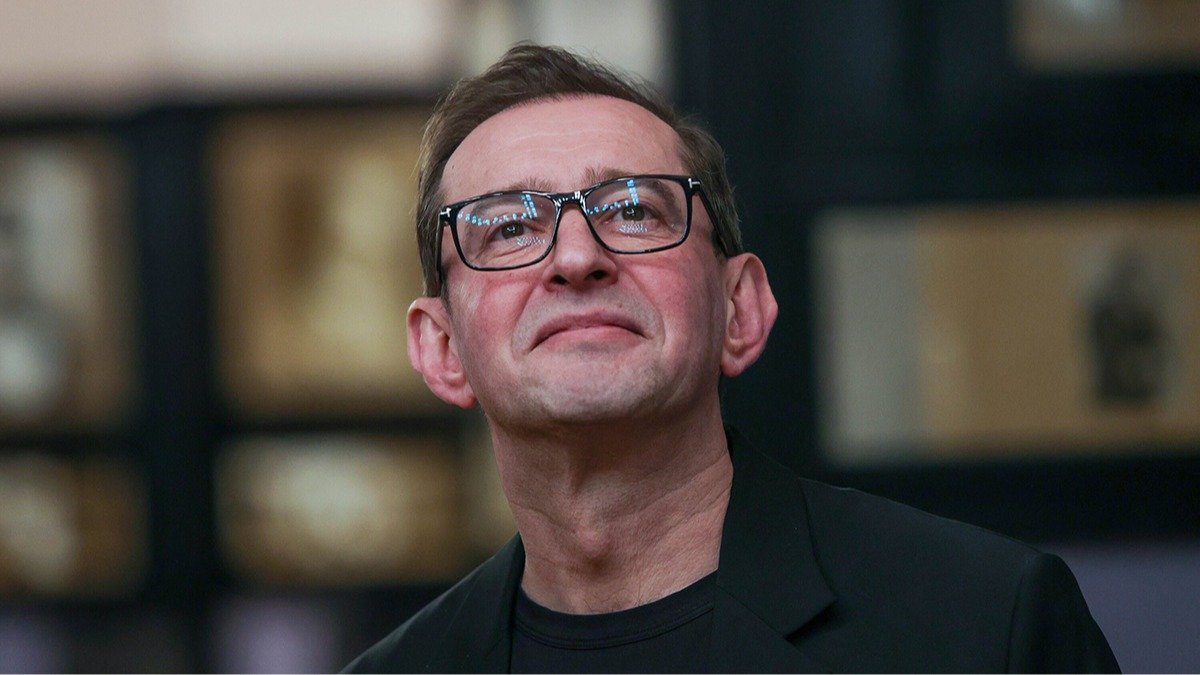
Konstantin Khabensky during the opening of the exhibition "All that I Can Do" in the Green Foyer of the Chekhov Moscow Art Theatre on February 11, 2026. Photo: Dmitry Belitsky / Moscow Agency.Protests against the appointment of Konstantin Bogomolov as acting rector of the school-studio began instantly: both within the team and from the outside: from the ranks of both liberal-opposition and "patriotic" figures, with frontmen like Dmitry Pevtsov and Nikolai Burlyaev. The graduates' letter was distributed without signatures - and the wording in the text was such that it was impossible to guess the political views of the authors (pro-war actors like Anton Shagin and emigrant anti-war activists like Varvara Shmykova acted as a united front). When I was writing the previous text and analyzing the logic of the appointment, it seemed to me that Bogomolov's position could not be shaken: he would remain in the school-studio and be approved by a vote. Bogomolov himself acted on the same premise: he came to the school-studio, held meetings, announced that he would recruit a course, and even moved some of his personal belongings to the office. On February 6, the Writers' Union award ceremony took place at his Theatre on Bronnaya: Nikita Mikhalkov, Dmitry Medvedev, Dmitry Peskov, Vladimir Medinsky were there, Margarita Simonyan connected via video link, propagandists like the editor-in-chief of "Literaturnaya Gazeta", and literary talented participants of the war in Ukraine. And the ceremony was hosted - and he shone on stage all evening - by Konstantin Bogomolov himself. After such a moment of touching closeness to the powers that be, Bogomolov's position seemed very strong... but something went wrong. And early in the morning of February 11, Bogomolov wrote that he voluntarily resigned from the position (after which he became unusually active on his Telegram channel, talking about his favorite books, boasting selfies from the gym, and supporting the closure of the GULAG museum). The version that Mikhalkov was to blame for everything appeared almost immediately: commentators recalled his long-standing relationship with the Sobchak-Bogomolov family. Meanwhile, in conversations on Kamerny Lane, the name of another Konstantin Yuryevich - Khabensky - had been heard for a long time. Bogomolov did not exactly spend his whole life dreaming of becoming a rector and a reformer of theatrical education: and it was natural to interpret his arrival at the school-studio as a springboard for his future transition to the Chekhov Moscow Art Theatre, his native and main theatre, where he worked with Tabakov and where, after Tabakov's death, he tried to lobby for the appointment of Khabensky himself as artistic director, instead of Zhenovach, who was appointed at the time. Award ceremony for the laureates of the national literary prize "Slovo" at the Theatre on Malaya Bronnaya, February 6, 2026. Photo: Sergey Vedyashkin / Moscow Agency. It happened in 2018, Zhenovach lasted three years, and the first step of Khabensky, who arrived in 2021, was the return of Bogomolov's cult play "The Ideal Husband" to the stage. However, over the past years, Bogomolov has grown into a full-fledged political figure, and could now himself aspire to leadership. While Bogomolov was swearing allegiance to Vladimir Putin in various ways, Konstantin Khabensky tried to keep a low profile and not participate in propaganda events. As a prominent artistic director, he is included in the presidential council on culture and is considering productions on the "SVO theme", while on his main stage, director Nikolai Roshchin, who was expelled from St. Petersburg and removed from his post as artistic director of the Alexandrinsky Theatre after his play "Cyrano" was checked for "discrediting the army," is staging his second play. The most high-profile scandal involving Khabensky was the dismissal of Dmitry Nazarov from the theater in 2023 for public anti-war statements (there is a version that Khabensky was forced to do this in exchange for the mobilization exemption of several theater employees; Nazarov calls this "a lie"). However, Khabensky can hardly be called an opposition figure: one of his constant collaborators, writer Alexander Tsypkin, presents books by Alexander Zhuravsky, an official of the presidential administration, and another - Putin's trusted person in 2024, Nikolai Tsiskaridze. Khabensky's administrative resource is higher than that of director Bogomolov - some of the country's leadership still suspects the latter of insincerity. Khabensky seems to be free from such suspicions - this allows him to simultaneously not march in lockstep and have access to offices where Bogomolov (for now) is not granted audiences. The Russian state machine today is capable of ignoring "public outrage" of almost any scale - but only as long as the outraged public does not find allies within the government itself. In this case, this is exactly what happened: a broad coalition arose against Bogomolov's appointment (and his further move to the Moscow Art Theatre, the country's main drama theatre), which managed to overturn the Minister of Culture's decision. Konstantin Bogomolov at the XVIII Congress of the Union of Writers of Russia in the main hall of the Central House of Writers, December 8, 2025. Photo: Vasily Kuzmionok / Moscow Agency. It is possible, however, that there was some deal involved - and Konstantin Yuryevich B. will also receive some consolation prize. The Gorky Moscow Art Theatre could well become such a prize: an institution historically connected with the Chekhov Moscow Art Theatre, a monumental building on Boulevard Ring, directly opposite the Theatre on Bronnaya. For many years (since 1987!) Tatyana Doronina reigned there, and no one except her fans went to the theater. In 2018, then-Minister of Culture Vladimir Medinsky tried to rectify the situation - and sent a "patriotic landing party" to the theater in the person of Eduard Boyakov, Zakhar Prilepin, and Sergey Puskepalis. The landing party lasted in the theater until 2021, generated a certain number of news items, but did not withstand the bureaucratic struggle. The new Minister of Culture, Olga Lyubimova, replaced Boyakov with the experienced manager Vladimir Kechman (I wrote more about the interesting fate of this person here) - what a misfortune, as a result, he again ended up on the defendant's bench. The appointment of Sergey Bezrukov is the third attempt to revive the theater with the largest auditorium in the center of Moscow (1300 seats, an incredible number for a drama theater). Now Bezrukov has joined the ranks of highly effective theater managers who have 2 theaters in the capital (Mashkov, Gerasimov, Bogomolov himself). This decision fits into the general logic of cultural policy: Bezrukov is an unconditional loyalist, a trusted person of Putin-2024, and a recipient of a medal for supporting the "SVO fighters" from the Ministry of Defense; moreover, his patriotic position never contradicts the party line, and he publicly defended his colleague Bogomolov (i.e., the Ministry of Culture's decision). Sergey Bezrukov before the press preview of William Shakespeare's comedy "Twelfth Night" directed by Anna Gorushkina before the premiere at the Moscow Provincial Theater, February 11, 2026. Photo: Artur Novosiltsev.From a creative point of view, the Provincial Theater is not of interest, but it does not generate scandals, and the audience comes to see the popular actor. Practically an ideal example of a state theater-2026 - Bezrukov will likely scale this experience to a new, federal level. All these intricacies, in general, would not be worth detailed consideration if it were not for one "but". They reflect the chaos that has developed around the main governing body of Russian official culture - the Ministry of Culture. In its current configuration, the ministry is an operator, not a programmer: orders and ideas come to the Ministry of Culture from the presidential administration (Kiriyenko and Sergey Novikov), state security agencies (FSB), and informal advisors close to the president (Mikhalkov, Kovalchuks). The minister and her team are forced to maneuver between them, which leads to incidents like the school-studio case. For Russian culture, this is a winning situation. Change is possible only for the worse: and the creation of a super-ministry, to which literature and the book market will be transferred from the Ministry of Digital Development along with theater, cinema, and museums, and which will be headed not by the performer Lyubimova, but by someone with their own great ambitions and resources. For example, Dr. Vladimir Medinsky will be brought back. And then the content of this column will sound like a nice anecdote.
TL;DR
- Konstantin Bogomolov withdrew his application for the position of acting rector of the School-Studio at the Chekhov Moscow Art Theatre.
- Protests against Bogomolov's appointment came from both liberal-opposition and 'patriotic' factions.
- Konstantin Khabensky, artistic director of the Chekhov Moscow Art Theatre, appears to have a stronger administrative resource and is favored over Bogomolov.
- Sergey Bezrukov has been appointed to lead the Gorky Moscow Art Theatre, the third attempt to revive the institution.
- The article suggests a chaotic cultural policy in Russia, with decisions influenced by various power centers, including the presidential administration and security services.
- The situation highlights the complexities of state-controlled culture and the maneuvering within artistic and political circles.
Continue reading the original article