April 27, 2026
St. Petersburg conscript unable to fly out of Belarus due to military draft notice – the first such case. What it means for conscripts - "Novaya-Europe" investigates with lawyers
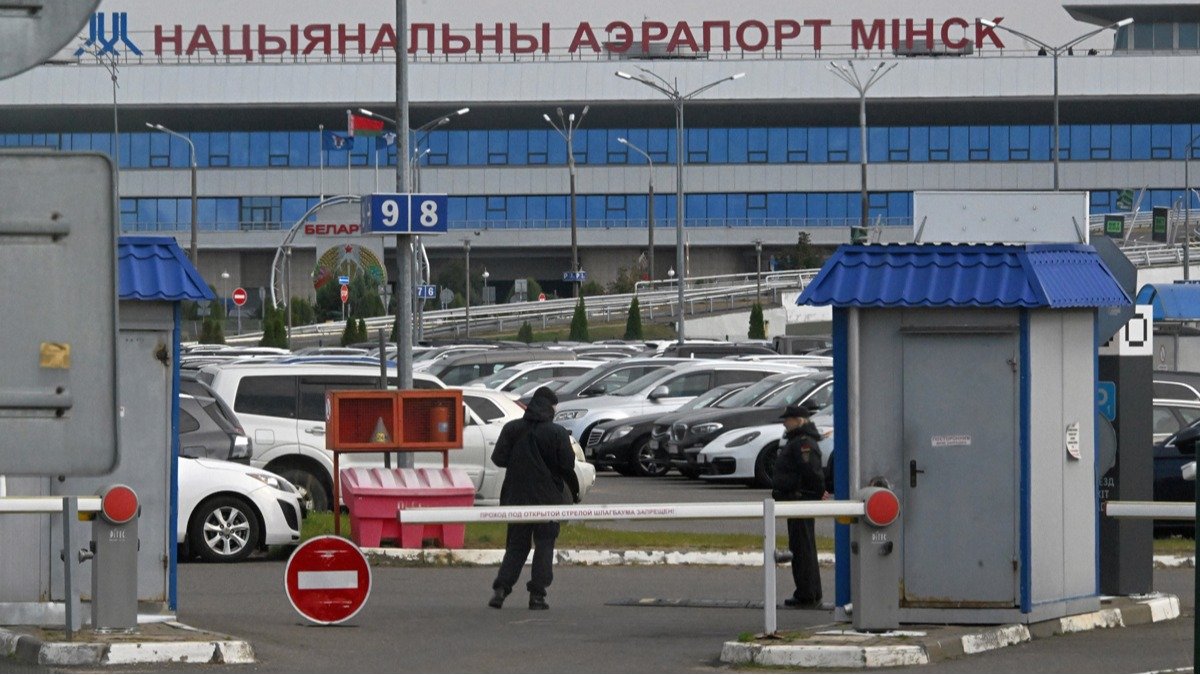
A conscript from St. Petersburg was denied entry to Belarus and subsequently refused departure twice at Minsk airport. All this due to a summons requiring him to report to the military enlistment office. This is the first reliably known case where a travel ban based on an electronic summons has worked on the Belarusian route – a traditional "safe corridor" for those avoiding military service, according to lawyers interviewed by "Novaya-Europe." However, against the backdrop of dozens of successful departures by other conscripts with summonses, this story appears to be an exception confirming the rule: Russia and Belarus's border databases are still not synchronized, and the unified military registration system is faltering. "Novaya-Europe," along with lawyers, is analyzing what this case means for conscripts and precisely which databases are being synchronized by the Russian Federation and Belarus. Minsk Airport. Photo: Anatoly Zhdanov / Kommersant / Sipa USA / Vida Press. What happened? According to the "Movement of Conscientious Objectors," in early April 2026, a man received a paper summons to appear at the military enlistment office for a medical examination on April 29. Simultaneously, an entry in the electronic summons registry indicated a travel ban from Russia. The first time the conscript attempted to leave the country by land, he was removed from his transport at the Russian-Belarusian border and verbally informed of the travel ban. The second time, the man traveled to Belarus by train via Smolensk – there were no checks on this section of the border. However, at Minsk airport, he was denied boarding a flight to Tbilisi. Two days later, he tried to fly again, this time to Yerevan, presenting his Russian internal passport – but was again refused departure. In all three instances, as reported by the DSO, border guards only provided verbal explanations and no written documents regarding the ban. - We are increasingly seeing actual restrictions on leaving the country, which are not only imposed by military enlistment offices but also enforced by border services at airports. The case with Belarus is the first instance where, firstly, a person was removed from a flight at the land border. Secondly, where border guards of another state, based on information in the Russian electronic registry, restricted an individual and prevented them from leaving Belarus, - stated Artyom Klyga, head of the legal department of the DSO, in a comment to "Novaya-Europe." The head of the legal department of "Conscript School," Timofey Vaskin, confirmed in a conversation with "Novaya-Europe" that the case where a conscript with a travel ban due to a summons could not cross the border at Minsk airport was indeed the first publicly known instance. - Of course, anything could have happened privately, but this is the first case that human rights defenders have reliably learned about, - he noted. What does this case signify? Activists from the "Movement of Conscientious Objectors" note two new practices that were not observed before. Firstly, the application of the ban at the land border of the Russian Federation and Belarus – this route was traditionally considered a "safe" exit route, as there were almost no checks there previously. Timofey Vaskin from "Conscript School" agrees: according to him, "this route was convenient for those who were already prevented from leaving Russia and had received written notices of travel bans from the border service. He also mentioned that this applies to some deserters: they could calmly leave through Minsk, bypassing Russian border checkpoints. Secondly, according to the DSO, the travel ban at Minsk airport for a Russian citizen suggests that an exchange of information from the electronic military registration registry and summons registry has begun between Belarusian and Russian border guards. - One can assume that Belarus has gained access to the electronic military registration registry: whether a summons has been issued for a person, whether they are a conscript, or if they have a deferment/exemption. Meaning, they know this from somewhere. In fact, for Belarus, I think this is in line with fulfilling obligations as a union state, - commented Artyom Klyga to "Novaya-Europe." However, the head of the human rights project "Idite Lesom" (Go to the Forest), Grigory Sverdlin, expressed strong doubt in a conversation with "Novaya-Europe" about Russia and Belarus exchanging data from the electronic registry, suggesting it's more likely an isolated incident. - Just on April 22, we had a conscript who traveled through Belarus with an electronic summons. And people continue to travel out of Russia itself, having already received an electronic summons. " This means the registry restrictions are not yet effective within Russia. It would be strange if they were effective in Belarus, - Sverdlin told "Novaya-Europe." According to Timofey Vaskin from "Conscript School," the incident rather indicates that Russia and Belarus are attempting to synchronize their border databases – rather than Russia sharing data from its military enlistment offices and military registration registries with Belarus. Belarus, he explained, acts in its own interests: by abolishing border controls with Russia, it understands that Belarusian citizens who are wanted or have travel bans can go to Russia. Therefore, it is beneficial for Belarus to control the situation on its side, just as Russia controls the departure of Belarusians with restrictions. Belavia Airlines airplane at Minsk Airport. Photo: Anatoly Zhdanov / Kommersant / Sipa USA / Vida Press. For this reason, the expert added, both sides have tried to synchronize border guard databases since the border was opened, and progress has apparently been made in exchanging data on travel bans due to summonses. At the same time, synchronizing databases between Russia and Belarus (for example, regarding wanted persons) can take several months, according to the lawyer: faster in some cases, slower in others. "Therefore, even after receiving a summons, it is worth trying different options: fly out of Russia, if that doesn't work – try land routes through Kazakhstan, and then – try flying through Minsk. Are travel bans isolated cases? The human rights project "Idite Lesom" began collecting appeals from conscripts attempting to leave Russia with summonses and restrictions starting October 14, 2025. Since then, their assistance line has received 15 appeals, of which: 13 cases were successful departures, and only two cases resulted in denial of exit at the border. The first known case of a travel ban due to an electronic summons for failing to appear at the military enlistment office was recorded in September 2025: a 28-year-old man received a summons for a medical commission, planned to fly to Turkey, but was not allowed to leave at Sheremetyevo Airport. Also, in March 2026, a conscript from Kaliningrad, who failed to appear for a data clarification summons, was issued five different bans through the electronic registry. " However, in the vast majority of situations, Russians manage to cross the border even after receiving a summons, as noted by "Idite Lesom." For example, human rights advocates shared the case of a conscript who received an electronic summons in November but paid no attention to it. In December, he calmly flew from St. Petersburg to Dubai and back – with no issues. Later, he received an SMS about restrictions, but nothing was displayed on "Gosuslugi." Despite this, he bought tickets to Vietnam. At Vnukovo Airport, he was stopped at passport control, sent for further checks, asked for his internal passport, issued a written notification of the ban, and not allowed to board the flight. Immediately after the refusal, he traveled to Minsk – and flew out from there without problems. The conscript's girlfriend suggests that the restriction was tied to his internal passport (the military enlistment office does not have his foreign passport data) and advises men in such situations to try passing through biometric gates at airports. A "Russia" road sign on the highway between Belarus and Russia, near the village of Krasnaya Gorka, June 5, 2019. Photo: Vasily Fedosenko / Reuters / Scanpix / LETA. Data exchange between military enlistment offices and the FSB is still not established. Authorities announced the launch of a unified registry back in 2024, but mass distribution of electronic summonses only began in August 2025. Upon receiving an electronic summons, a conscript is automatically deprived of the right to travel abroad and obtain a foreign passport. Additionally, prohibitions on real estate transactions, registration of sole proprietorships or self-employment, obtaining loans, and vehicle registration may follow. According to a December investigation by "Vazhnye Istorii" (Important Stories), the Unified Military Registration Registry is still operating with serious limitations. The main reason is failures in data exchange between military enlistment offices and the FSB. Despite the declared "digitalization," military enlistment office employees still manually select who to send a summons to, journalists found out. If the system worked correctly, immediately after sending a summons, the military commissar should have pressed "electronic confirmation," after which the information would go to the FSB and the border would be closed. " However, data exchange between military enlistment offices and the FSB is still not established, and due to this, the automatic travel ban does not work in most cases, investigators concluded. What should conscripts do? The main advice from Timofey Vaskin is not to wait for a summons. "If a person already understands that they will leave Russia if they receive a summons, it's easier to leave immediately. If you plan to leave, leave now," he stated. It is also crucial to contact human rights defenders, emphasized Grigory Sverdlin. "We will select individual options for each specific situation," he said. In case of illegal conscription, you can contact the following projects: "Idite Lesom"; "Movement of Conscientious Objectors"; "Conscript School"; "Prizyv k Sovesti" (Call to Conscience).
TL;DR
- A Russian conscript was denied exit from Belarus and twice at Minsk airport due to a military summons, a first for this route.
- The incident highlights potential synchronization issues between Russian and Belarusian border databases and the unified military registration system.
- While most conscripts can still travel despite receiving summonses, this case suggests potential future travel restrictions.
- Experts advise individuals planning to leave Russia to do so proactively rather than waiting for a summons.
- The unified military registration system is reportedly facing limitations due to data exchange issues between military enlistment offices and the FSB.
Continue reading the original article