March 6, 2026
"Banditry" vs. "Terrorism." Hungary and Ukraine exchange increasingly harsh accusations. What do the leaders of the two countries threaten each other with, and what does "Druzhba" have to do with it?
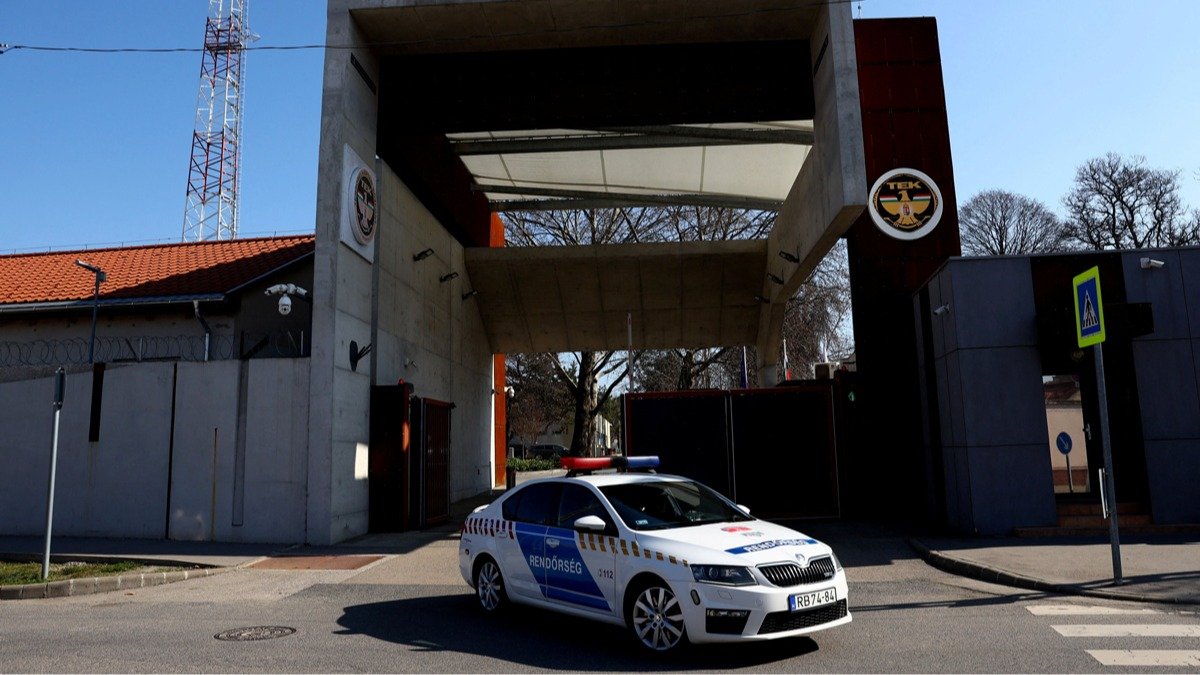
The long-standing conflict between the Hungarian and Ukrainian authorities has reached a new level. Hungarian leader Viktor Orbán accused Kyiv of "state banditry," after hearing accusations of "terrorism and racketeering" from Ukrainian Foreign Minister Andriy Sybiha. The head of Ukrainian diplomacy thus reacted to the news of the detention of employees of the state bank "Oschadbank," who were transporting $40 million, 35 million euros, and 9 kg of gold from Austria to Ukraine. Kyiv points out that there is no hidden agenda here: the transportation was carried out in accordance with an agreement between Raiffeisen Bank Austria and "Oschadbank." However, Budapest has launched an investigation on suspicion of money laundering. The incident with the cash-in-transit personnel is another attempt by Orbán to pressure Kyiv, as he seeks the resumption of Russian gas supplies through the "Druzhba" pipeline, which runs through Ukrainian territory. Success would give Orbán additional points before the crucial parliamentary elections on April 12. But so far, the Hungarian prime minister's blackmail has not led to the desired result. A police car exits the Anti-Terrorism Center headquarters, Budapest, Hungary, March 6, 2026. Photo: Bernadett Szabo / Reuters / Scanpix / LETA. "Took hostages and stole money" On the night of Friday, March 6, the press service of "Oschadbank" reported the "unjustified detention" in Hungary of seven employees of a cash-in-transit brigade, who were traveling in two cash-in-transit service vehicles from Austria. As explained by the bank, it was about "regular transportation of foreign currency and precious metals between Raiffeisen Bank Austria and Oschadbank Ukraine." The company demanded the immediate release of their employees and property and their return to Ukraine. Ukrainian authorities reacted to the incident as harshly as possible. "Hungary took hostages and stole money. This is state terrorism and racketeering," said Ukrainian Foreign Minister Andriy Sybiha on the night of March 6, promising to appeal to the EU with a "request for a clear assessment of Hungary's illegal actions, hostage-taking, and robbery." Details of the incident became known on Friday morning. The National Tax and Customs Administration of Hungary (NAV) announced the initiation of criminal proceedings on suspicion of money laundering. The agency stated that the "investigation is being conducted in accordance with Hungarian criminal law with the assistance of the Anti-Terrorism Center." NAV noted that $40 million USD, 35 million euros, and 9 kg of gold were transported in two armored vehicles. "Only this year, over 900 million US dollars, 420 million euros, and 146 kg of gold bars have already been transported through Hungary to Ukraine," the agency added. "We have a number of serious questions about this," said Hungarian Foreign Minister Péter Szijjártó. "This is a huge amount of cash, and why did the Ukrainians need to transport such a huge sum? If this is truly a transaction between banks, then the fair question arises, why don't banks settle with each other by transfer? Why should such a large amount of cash pass through Hungary at all?" According to Szijjártó, many questions also arise because "these cash transports are accompanied by people with clear ties to Ukrainian special services." "What is this money for, whose money is it?" the Foreign Minister wondered. And he himself suggested: "Isn't this money the money of the Ukrainian military mafia?" He did not specify who or what exactly he meant. Hungarian Prime Minister Viktor Orbán and Foreign Minister Péter Szijjártó on the second day of the NATO summit in Brussels, Belgium, July 12, 2018. Photo: Tatyana Zenkovich / Reuters / Scanpix / LETA. Meanwhile, after this, government spokesman Zoltán Kovács made it clear that Budapest would not push the situation to extremes: the authorities decided to expel all seven detained individuals from Hungary. No "Druzhba" The incident is another episode in the confrontation between Budapest and Kyiv over the fate of the "Druzhba" pipeline, through which Hungary, along with Slovakia, until recently received Russian oil. Supplies were halted on January 27, after Russia shelled "Druzhba" near the city of Brody (Lviv region). Budapest and Bratislava accused Kyiv of illegally halting oil transit. In turn, Ukrainian authorities explain the absence of transit by damage to the pipeline and the need for repairs, which are being delayed due to new Russian attacks. On March 5, Ukrainian President Volodymyr Zelensky indicated that he would not restore "Druzhba." "There are some things that have no price. They [Russian troops. - Ed.] are killing us, and we are supposed to give [Russian. - Ed.] oil to Orbán," the Ukrainian leader said. But after that, he added: the EU insists that without resuming oil transit, Kyiv will not be able to receive a European loan of 90 billion euros. The allocation of these funds was agreed upon by EU leaders at the summit on December 18, 2025. It was planned that Kyiv would begin repaying the interest-free loan only after Russia paid reparations to it (in case of Moscow's refusal, frozen Russian assets were to be used for these purposes). In December, Hungary also protested, but ultimately did not block the initiative, but was simply excluded from the scheme: it, as well as Slovakia and the Czech Republic, were released from all financial obligations on the loan. But that was a political decision that still needed to be agreed upon by various authorities. And finally, on February 20, Orbán announced: "As long as Ukraine blocks the 'Druzhba' oil pipeline, Hungary will block Ukraine's military loan of 90 billion euros. We cannot be blackmailed!" Since then, the conflict has begun to escalate rapidly. Orbán showed satellite images, which, according to him, showed that "there are no technical obstacles to resuming the operation of the pipeline." Zelensky responded that the images do not show all the details. Orbán threatened to achieve his goal by force ("We will win. And we will win by force. We have political and financial tools"). Zelensky, in response, promised to "give the address of one person in the European Union" to the Ukrainian Armed Forces ("Let them call him and talk to him in their language"). Election posters depicting Zelensky, European Commission President Ursula von der Leyen, and Hungarian opposition figure Péter Magyar in Budapest, Hungary, March 3, 2026. Photo: Attila Kisbenedek / AFP / Scanpix / LETA. On Friday morning, Viktor Orbán criticized Zelensky's statement and added: Ukraine is carrying out "state banditry" against Hungary, to which "proper responses must be found." "Until order is restored, we will use all means. We have stopped fuel supplies to Ukraine, we are not sending diesel either, electricity is still going, but we will also stop all important cargo shipments for Ukraine through Hungary until we get approval from the Ukrainians for oil supplies," Orbán promised. On Thursday, Hungarian Minister of Energy Gábor Csák said that Budapest has given Ukraine three days to resume "Druzhba's" operation or allow a group of inspectors to check the pipeline's condition. In case of inaction, Csák added, Budapest will use "all legal options" within the EU against Kyiv. Hope for Elections Moscow can be considered the beneficiary of the ongoing conflict, as it benefits from all acute conflicts on European territory. "The intensity of rhetoric [in Europe. - Ed.] is growing, everything is intensifying," said Russian Presidential Press Secretary Dmitry Peskov on Friday. And he made a joke, hinting that Brussels should intervene on behalf of one of the members of the Euro-Atlantic family: "It's time to invoke Article 5 of NATO" [referring to the article of the charter that states an attack on one member of the Alliance is considered an attack on all. - Ed.]. Meanwhile, Brussels is currently primarily focused on finding ways to bypass the Hungarian veto. This was reported on March 5 by Politico, citing diplomatic sources. As one of the publication's sources noted, there is no quick legal solution that would allow Hungary to be removed from the process. Nevertheless, according to Politico, the EU hopes to resolve the issue before the EU summit on March 19. In a draft of the final conclusions of this meeting, which the publication reviewed, it is stated: leaders will "welcome" the loan agreement and "look forward to the first tranche for Ukraine by early April." In any case, given all the current uncertainty, another bet might pay off. The European Union and Kyiv might simply have to wait for the parliamentary elections in Hungary, scheduled for April 12. According to recent opinion polls, the center-right opposition party Tisza ("Respect and Freedom") is leading quite confidently. For example, a Zavecz Research poll conducted from February 22 to 28 showed that 50% of decided voters support Tisza (an increase from 48% in January), while Orbán's Fidesz party has only 38% (a decrease from 39% a month earlier). A poll conducted by the Publicus Institute gave similar results: 47% versus 39%. As Reuters noted, the outcome of the vote "remains highly uncertain," as many voters have not yet chosen their party, but in any case, "Orbán faces the biggest challenge in his 16-year rule." And it is quite possible that in a little over a month, representatives of European structures will no longer have to rack their brains over ways to neutralize Budapest's anti-Ukrainian stance.
TL;DR
- Hungary detained Oschadbank employees transporting $40 million, 35 million euros, and 9 kg of gold, leading to accusations of "state banditry" from Hungary and "state terrorism and racketeering" from Ukraine.
- Hungary suspects money laundering and has launched a criminal investigation, while Ukraine asserts the transport was a regular banking operation.
- The conflict is intertwined with Orbán's pressure on Kyiv to resume Russian oil transit via the "Druzhba" pipeline, a key issue ahead of Hungary's April 12 elections.
- Ukraine has retaliated by halting all important cargo shipments through Hungary until oil transit is approved.
- The EU is seeking ways to bypass Hungary's veto on a 90 billion euro loan for Ukraine, with potential resolutions hoped for before an upcoming EU summit.
- Upcoming Hungarian elections are seen as a potential turning point, with polls suggesting a strong challenge to Orbán's ruling party.
Continue reading the original article