April 18, 2026
Russian authorities openly admit economic problems. Putin seeks reasons for GDP decline, while Nabiullina points to a first-time labor shortage
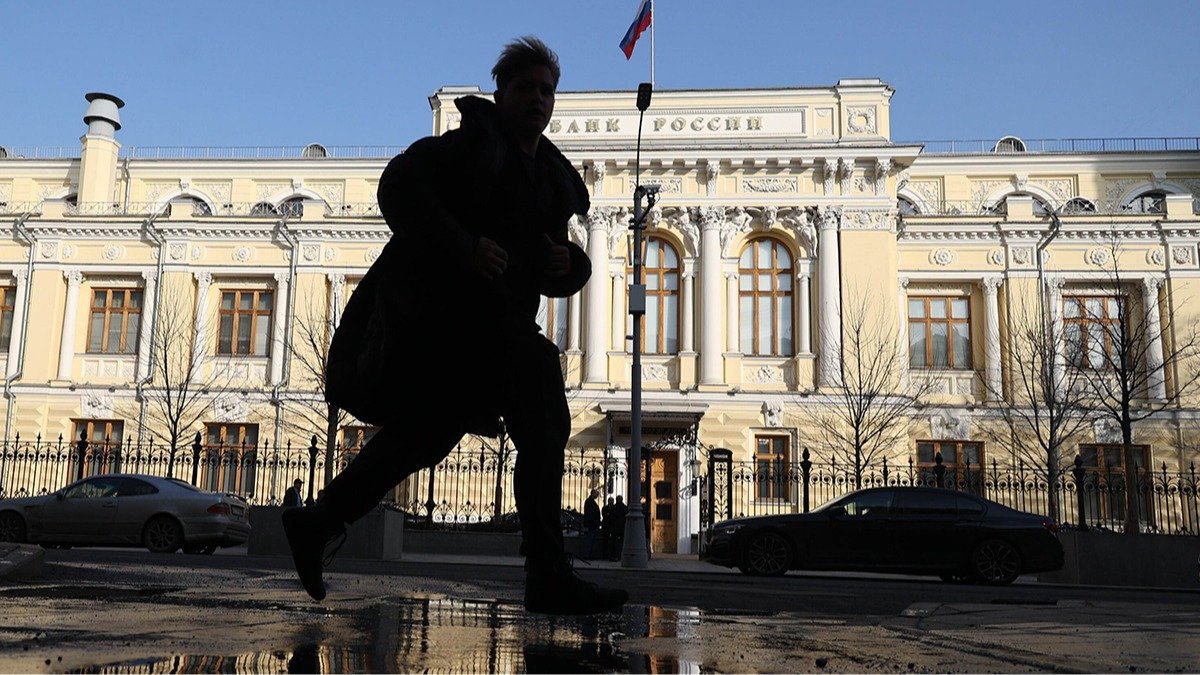
In the last month, Russian authorities have spoken more openly than before about economic problems. This is despite Vladimir Putin having repeatedly stated the economy's stability earlier. However, officials' public statements rarely link these difficulties to the full-scale war in Ukraine, which has been ongoing for five years. Novaya Gazeta Europe reports on how the Kremlin, government, and Central Bank are discussing the economy. Photo of the Central Bank of Russia building, Moscow, March 12, 2026. Photo: Yaroslav Chingayev / Moskva Agency. Putin: GDP is declining, citing "seasonal factors." On April 15, at a government meeting on economic issues, Putin acknowledged negative dynamics and instructed to stimulate economic growth to overcome the expected trends. Among these trends is GDP decline, which fell by 1.8% in January-February. Putin stated that while specialists note calendar, weather, and seasonal factors as reasons for the decline, these are not the sole determinants of business and investment activity. He also reported that industrial production and construction are in the negative. Putin stressed the importance of maintaining a balanced budget and its stability, especially amidst sharp fluctuations in external markets. Ministry of Finance on the budget: deficit higher than planned. The Ministry of Finance previously reported that Russia's federal budget in the first quarter of 2026 had a deficit of 4.576 trillion rubles, or 1.9% of GDP, which is approximately 20.9% more than initially planned. Finance Minister Anton Siluanov stated at the Moscow Exchange forum that the situation would stabilize throughout the year and that the deficit should not be alarming. Ministry of Economic Development: reserves are depleted, businesses must adapt. Minister of Economic Development Maxim Reshetnikov stated on April 17 that the current economic situation is "not easy," particularly for businesses, due to tax changes. He acknowledged that pressure on entrepreneurs is increasing and that the state should help them adapt. Reshetnikov noted that in previous years, the economy could grow using internal reserves despite labor shortages and wage growth, but this buffer is now largely exhausted, and the macroeconomic situation is more complex. He added that a strong ruble and high interest rates are also pressuring the economy, slowing down business. Therefore, businesses need to focus on cost management, efficiency, and productivity. Reshetnikov had previously warned of economic problems, suggesting in June 2025 that Russia was on the verge of recession. Central Bank: Russia faces a labor shortage. Central Bank Governor Elvira Nabiullina stated at the Moscow Exchange forum that the Russian economy is experiencing a labor shortage for the first time. She attributed the current downturn in external conditions and a 2% unemployment rate, along with inflation reaching 10% early last year, to economic overheating. Photo of Central Bank Chairman Elvira Nabiullina, Moscow, January 28, 2026. Sergey Kiselev / Moskva Agency. Former Deputy Chairman of the Bank of Russia and Chairman of the Moscow Exchange Supervisory Board, Sergey Shvetsov, moderated a session where he stated the Central Bank achieved a significant result last year with inflation below 6%. He noted that near-zero unemployment leads to wage growth exceeding productivity growth, creating inflationary pressure. Shvetsov also mentioned significant budget expenditures for the war in Ukraine, which do not create immediate supply of goods and services, leading to complex conditions. He added that high real interest rates make bonds and deposits favorable, and while inflation is slowing this year, economic growth is at the lower end of forecasts. RAS Academician: Russia is "in trouble." Former State Duma deputy and Russian Academy of Sciences academician Robert Nigmatulin stated at the Moscow Economic Forum that Russia is facing a systemic crisis and is "in trouble." He pointed to an unprecedented decline in living standards, demographic decline, and a lack of presidential control. Nigmatulin highlighted that even China's poorest regions have higher incomes than Russia's poorest regions, with an annual natural population decrease of 0.6 million. He also noted that consumer prices have risen by 77% in 11 years, equivalent to 7% annual inflation. He expressed surprise that presidential decrees on the economy since 2012 are not being fulfilled, with no accountability. Central Bank: economy adapting, but inflation remains high. The regulator noted that economic activity in early 2026 remained subdued, partly due to demand shifts and business/consumer adaptation to new tax conditions. Inflation remains elevated, with prices not slowing down in February-March, holding around 5.9% annually. The Central Bank believes a significant cooling of price growth is needed to reduce it. High inflation expectations and continued real wage growth remain additional pressures. The regulator states the economy is gradually adapting, with basic economic activities resuming growth and consumer activity reviving. Government budget support is significant, and lending dynamics align with gradual inflation reduction. However, heightened geopolitical risks have destabilized global markets and investor expectations. In Russia, this has led to cheaper short-term bonds due to falling rates, while long-term bond yields have risen amid uncertainty. Financial market dynamics in March-April were influenced by expectations of interest rate cuts, rising export prices due to conflicts, and potential return to currency operations under the budget rule. Economy "falling." Russian companies are increasingly experiencing revenue decline, and the economy is transitioning to a "downturn," according to Mikhail Matovnikov, Senior Managing Director at Sberbank, as reported by The Moscow Times citing Reuters. He cited weak external demand and prolonged high interest rates as key factors. Matovnikov warned of rising credit risks that banks will have to manage. As of February 1, 11.3% of corporate loans on bank balance sheets were non-performing, totaling 10.6 trillion rubles. He also noted that state-owned companies are under pressure and will likely require debt restructuring. Matovnikov indicated that significant growth support from the budget or lending is unlikely due to a deficit budget and limited bank capacity, leading to a "hard landing" for the economy. Other assessments, including those from the TsMAKP center and the IMF, predict modest GDP growth of around 0.9-1.3% for the year.
TL;DR
- Russian officials, including President Putin, are now openly discussing economic downturns, contrary to previous assertions of stability.
- Key economic indicators show negative trends, with GDP declining and industrial production and construction in the red.
- The Ministry of Finance reported a budget deficit exceeding initial plans.
- The Ministry of Economic Development notes that economic reserves are nearly depleted, and businesses face increasing pressure from tax changes and a strong ruble.
- The Central Bank highlights a significant labor shortage and economic overheating, evidenced by high inflation.
- Experts and analysts warn of an economic downturn, rising credit risks, and unsustainable fiscal conditions.
- Geopolitical risks and high interest rates are cited as additional factors negatively impacting the Russian economy.
Continue reading the original article