April 28, 2026
“The City is Choking on Stench. You Get Used to It.” Report from Tuapse, Where the Black Sea Has Literally Turned Black, But the Authorities Pretend Everything is Fine
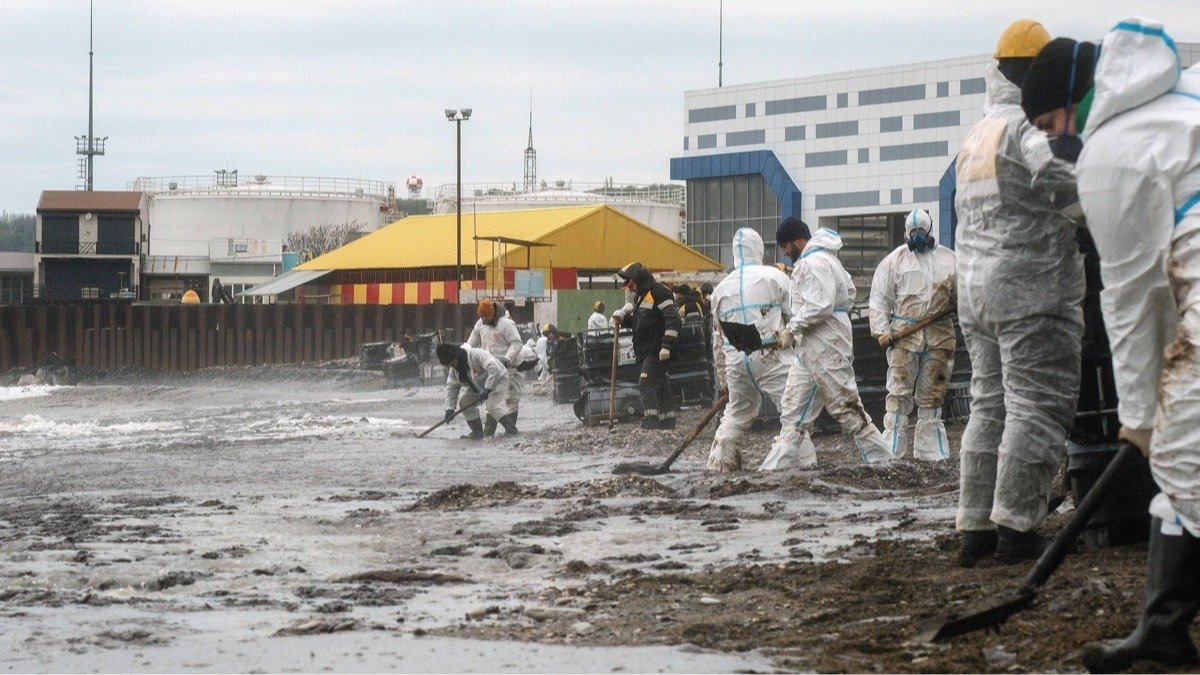
Tuapse is a small port city on the Black Sea coast, roughly halfway between Krasnodar and Sochi. Tourist facilities coexist with the Tuapse oil refinery, which occupies a third of the city's area. In April 2026, the refinery was attacked by Ukrainian drones three times, resulting in deaths and an environmental emergency. A fire with thick black smoke raged for nearly a week, Tuapse experienced black rain, and beaches had to be cleaned of toxic waste. Vyetər visited Tuapse to report on the city where blackness and the smell of petroleum products are becoming a part of everyday life. Photo: Boris Morozov / Sputnik / Imago Images / Scanpix / LETA. Material first published on the Vyetər project website. “The authorities have stuck their tongues up their asses.” On the night of April 16, Tuapse residents woke up to sirens and loud noises. Drones hit two houses, killing two people. A 14-year-old girl is still missing. The morning after the drone attacks, residents saw a huge column of black smoke over the local oil depot. Authorities initially claimed air quality was normal. Only in the evening did they admit to a large fire at the port. For the next week, residents complained of a choking smell of burning and petroleum products, and an oil slick was spotted near the port. On April 20, the city was attacked again. One person died at the port. A school, kindergarten, museum, church, and several apartment buildings were damaged. Residents complained that the city was unprepared for drone attacks, with no known functioning bomb shelters. After the second attack, residents reported “oil rain,” with cars, bus stops, and roads covered in petroleum products. The regional authorities acknowledged the “black rain” two days later. Six days after the first attack, officials reported that concentrations of poisonous substances in the air had doubled or tripled in most of the city. Residents reported headaches and sore throats. From April 17-18, residents reported that petroleum products from the burning oil depot had entered the local river and then the Black Sea. Despite booms, a strong rain on April 24 caused oil to spill into the sea. Volunteers and rescuers cleaned beaches of contaminated soil. An ecologist stated that mazut was found 20 kilometers from Tuapse. Residents involved in the cleanup described the situation as difficult, with thick mazut layers on the beaches. They criticized the authorities for claiming the pollution was “local” and for a lack of coordination. Ten days after the first drone attack, cleanup efforts were ongoing. The oil refinery fire was extinguished after six days. The amount of combustion products released into the air and deposited on the city's streets is unknown. An ecologist warned of long-term health risks from inhaled particles, including increased risk of cancer and neurological diseases. Animals are also at risk, with a makeshift center for cleaning stray animals established. Birds, especially waterfowl, are vulnerable. Combustion products also poison plants, with heavy metals accumulating up the food chain. A resident described the situation as an “ecological catastrophe,” with black puddles and sticky asphalt. They felt ignored by the authorities. A document from 2024 modeled a catastrophe scenario, including population evacuation, in case of an oil spill into the Black Sea. Residents reported at least six tanks burned, exceeding the modeled scenario. Despite this, the Association of Tour Operators of Russia claims no reduction in demand for Tuapse tourism is expected, stating popular resorts are tens of kilometers away and currently unaffected. However, experts report pollution is being carried towards these resorts. Locals are pessimistic about tourism prospects, citing ongoing attacks and sirens. On the night of April 28, Tuapse was attacked by drones again, with the oil refinery on fire. Residents of nearby streets were advised to evacuate.
TL;DR
- Tuapse experienced multiple drone attacks on its oil refinery in April 2026.
- The attacks resulted in fires, deaths, and a significant environmental emergency.
- Residents reported black rain, a pervasive smell of petroleum products, and contaminated beaches.
- Official responses were initially slow, with authorities downplaying the extent of air and water pollution.
- Residents expressed dissatisfaction with the lack of preparedness and effective response from local authorities.
- Environmental experts warned of long-term health and ecological consequences.
- Despite the pollution, tourism officials claimed that nearby popular resorts remain unaffected.
- Another drone attack occurred on April 28, causing a new fire at the refinery and leading to evacuations.
Continue reading the original article