February 15, 2026
Colombian 'Beast' Luis Garavito Confessed to 300 Murders but Expected to Be Released and Defend Children's Rights
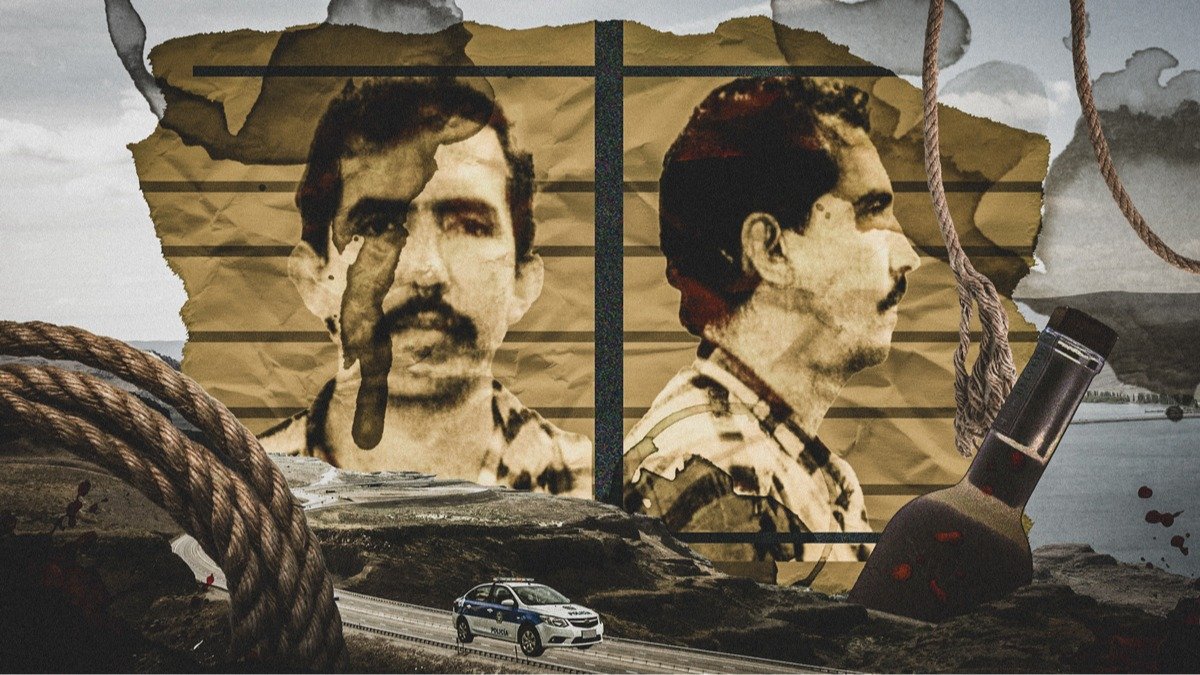
This maniac drove around Colombia for a long time and killed random fellow travelers. Preferring underage boys. According to his own admission, Luis Alfredo Garavito, nicknamed the 'Colombian Beast', killed with impunity for over nine years. He was found guilty of murdering 138 people, although he himself confessed to killing over 300 people. He was sentenced to 1853 years and 9 days in prison, but only served 22 years. Garavito claimed that upon his release, he would become a human rights defender. Collage: Novaya Gazeta Europe. Garavito was born on January 25, 1957, in the town of Génova, Quindío Department, Colombia. Luis was the eldest of seven siblings. When he was detained, he claimed that his father and his friends made him a maniac: they had been raping the boy since he was 12. Trying to escape further abuse, Garavito left his parental home early and began wandering the country. He was bullied at school, and in adulthood, he was diagnosed with depression and psychosis. In court, he said that the devil had pursued him all his life. The first murder, according to his own admission, he committed in 1992, when he was 35. Later, investigators would be shocked by how accurately the maniac remembered almost every crime. And there were many. Garavito described in detail how he abducted and raped children. And although reports of missing teenagers were regularly filed with the police, the search for the killer was poorly conducted. Just when the 'Beast' first went hunting, the entire country's police were hunting for the notorious leader of the Medellín cocaine cartel, Pablo Escobar. Garavito was very careful in choosing his victims. Mostly, they were boys aged 6 to 13, from poor families, who often ran away from home. Sometimes, no reports of their disappearance were even filed with the police. Garavito's pattern of crimes was almost always the same. The maniac would spot a victim in crowded places: markets, train stations, squares, where boys from poor neighborhoods, selling gum, fruit, and cigarettes, usually hung out. He would arrive early in the morning, strike up a conversation, and buy sweets, a cigarette, or drugs. After establishing contact with a child, Garavito would ask for help for a small fee: to watch livestock or load a car. Usually, the boys would seize the opportunity to earn money and go with the polite uncle to the outskirts. There, away from people, he would tie up the victim, rape him while drinking alcohol, and kill him. Bottles of vodka were found at almost all crime scenes. He did not try very hard to cover his tracks. However, in many Colombian towns, police stations do not even have computers, let alone the internet and a unified database. Therefore, for a long time, no one realized that the murders occurring in different places were the work of one person. Unidentified Victims Garavito was arrested almost by accident. In April 1999, a homeless man sleeping in the woods saw an adult man raping a boy. The homeless man quietly crawled away and ran to the police. The police did not find the rapist at the scene. But he could not have gone far. A couple of hours later, a police patrol encountered a man on the road who closely resembled the one described by the witness from the woods. Garavito had no documents with him. He gave the name of a real person, a local politician, stated his passport number, and claimed he was traveling to a neighboring town on official business. The police almost believed him, but the station had no computer, and verifying the detainee's words quickly was impossible. Garavito was held under lock and key, while they decided to check several addresses from the detainee's address book. One of the addressees lived nearby. He stated that the detainee's name was Luis Garavito, and he was not a politician at all. Furthermore, the homeowner handed over a box to the police that Garavito had left with him for safekeeping. The box contained children's photographs cut from documents. And several children among them had already been found murdered, or their families had reported them missing. Cornered by evidence, Garavito changed his tactics and actively cooperated with the investigation. He spoke about 172 murders and several dozen rapes. Many of his crimes were never confirmed. On January 25 (Garavito's birthday, incidentally), 1999, a strong earthquake struck Quindío, claiming the lives of 1100 people. So, despite some bodies being found precisely where he indicated, they could not be identified. Luis Garavito was found guilty of 138 murders. The total sentence was 1853 years and 9 days. But in Colombia, the maximum prison sentence is 40 years. And given that Garavito cooperated with the investigation, the court could not sentence him to more than 22 years. The story of the serial killer had a significant impact. Many citizens considered the sentence too lenient and tried to pressure the government to reinstate the death penalty or at least life imprisonment for people like Garavito. Incidentally, Garavito did not appear at any of the court hearings. Colombian law allows a defendant not to be present in court if they have fully confessed to the crime. The maniac took advantage of this, reasonably believing that the relatives of the murdered children might tear him apart on the spot. On June 11, 2006, Colombian television presenter Pirry showed an interview with Garavito where he stated that he might soon be released. This interview stirred up the country. Experts confirmed that Garavito indeed had legal grounds for release. In 2023, he could have qualified for early release after serving 60 percent of his sentence and with good behavior. Thus, judicial authorities had to find a loophole in the law that would allow keeping the maniac behind bars. By taking advantage of the fact that Garavito committed his crimes in different departments of Colombia, they added another sentence, and he had to forget about early release. The authorities of Ecuador, where Garavito also committed several murders, sentenced him in absentia to 22 years in prison. After his release, Garavito planned to become a pastor and protect abused children – at least that's what he said in interviews. He was held separately in prison: the administration reasonably believed that fellow inmates would kill him. In 2023, Garavito died in the prison hospital at the age of 66 from eye cancer and leukemia.
TL;DR
- Luis Garavito, known as the 'Colombian Beast,' confessed to over 300 murders, predominantly of young boys, between 1992 and 1999.
- He was convicted of 138 murders and sentenced to 1853 years and 9 days, but Colombian law limited his actual prison term to 22 years.
- Garavito's arrest was accidental, initiated by a homeless man witnessing an assault.
- His case led to public outcry over the lenient sentence, with calls for harsher punishments.
- Authorities found legal grounds to extend his sentence and prevent early release, and he died in prison in 2023.
Continue reading
the original article