March 12, 2026
Mass mobile communication outages in Moscow have been ongoing for a week. The main points. We explain how internet outages have affected businesses and city residents
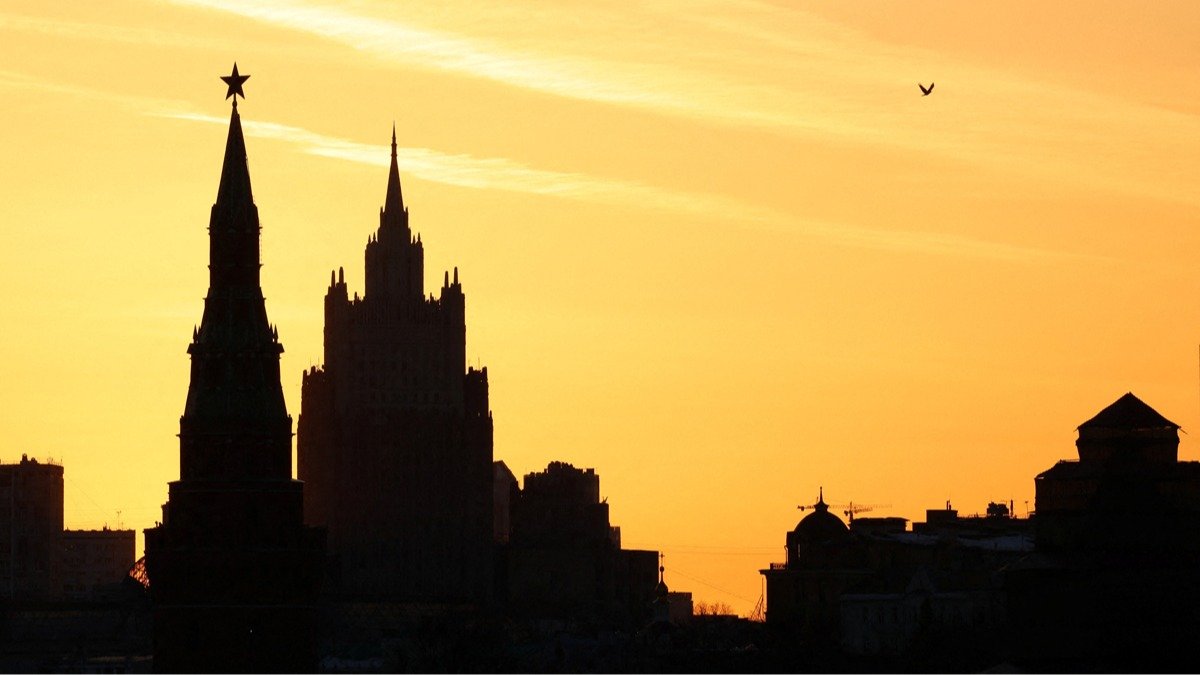
Mass mobile communication and internet outages have been observed in Moscow since March 5, affecting more than 20 districts of the city. As a result of communication disruptions, the capital's businesses are incurring losses, and residents are facing inconveniences – from being unable to pay for parking to problems with banks. The internet disruptions are allegedly related to security measures, but the exact restoration times remain unknown. The main points about what is happening in the capital are in the material "Novaya-Evropa." View of the Kremlin and the Russian Ministry of Foreign Affairs building, Moscow, March 10, 2026. Photo: Anastasia Barashkova / Reuters / Scanpix / LETA. Internet disconnection in Moscow Problems with communication have been observed in Moscow since March 5. The first mobile communication and internet outages appeared in the Southern and Central administrative districts. Then the outages spread to other districts of Moscow. At the same time, "Durov's Code" reported that in some districts of Moscow, only some sites from the "white list" were opening. Telecom operators stated that the outages occur for reasons beyond their control: "They may be caused by security measures – we cannot influence them, and the completion times are unknown. For now, we recommend connecting to Wi-Fi," said a T-Mobile representative. As "Novaya-Evropa" found out, by March 10, communication was not working fully or partially in at least 23 districts of the capital. Most often, Muscovites complained about this in the center: near the metro stations Kurskaya, Taganskaya, Baumanskaya, and Kitay-gorod. At the same time, the devices themselves show the presence of the LTE network, but in fact, the internet, and often calls and SMS messages, do not work. "Ensuring security" Putin's press secretary Dmitry Peskov stated that "all disconnections and restrictions occur in strict accordance with current legislation." "This is all, probably, due to the main necessity – ensuring security. But regarding the problems it poses for business – of course, this is a subject for further analysis," he said. Also, answering journalists' questions about why the outages are happening now, Peskov explained: "As the Kyiv regime uses more sophisticated methods for attacks, more technological response measures are needed to ensure the safety of citizens." At the same time, "Kommersant," citing sources in the telecom market, writes that the events are related to "external restrictions." A source for RBC in the information security market says that the problems are related to testing "white lists" in Moscow. According to him, "this testing has been going on for a long time in the regions, and now it has reached Moscow." Sarkis Darbinyan, a cyber lawyer and co-founder of "Roskomsvoboda," emphasized in a conversation with "Novaya-Evropa" that the main reason for such outages is the war, which has been going on for more than four years, and "wild fear of repeating the "Web" operation" (an SBU military operation conducted on June 1, 2025, during which Russian military airfields Dyagilevo, Olenya, Ivanovo, and Belaya were attacked by FPV drones secretly delivered by trucks. – Ed.). "Apparently, there was some signal from intelligence that another UAV attack was being prepared, and the authorities, who usually protect Muscovites and try to shield them from the horrors of war in every possible way, decided on an unpopular step to protect the capital and the officials living in it. The inconvenience, well-being, and even health of citizens have clearly given way to the country's main priority – ensuring the security of the authorities themselves," the expert points out. At the same time, the communication shutdown in the capital, according to him, is technologically almost no different from what happened in Moscow on the eve of Victory Day in 2025. Mobile operators use the same TSPU (Technical Means of Threat Counteraction – Ed.) nodes to "throttle" all incoming and outgoing traffic, except for traffic from "white list" services, explains Darbinyan. A passerby with a phone on a Moscow street, March 10, 2026. Photo: Pavel Bednyakov / AP Photo / Scanpix / LETA. Consequences The total damage to Moscow's businesses from internet outages was estimated by experts interviewed by "Kommersant" to be in the range of 3 billion to 5 billion rubles. In their calculations, they proceeded from the share of the digital economy in the gross regional product and the scale of the restrictions. At the same time, the calculator of the "Internet Protection Society" calculated that one day of communication outage in Moscow costs approximately 4.8 billion rubles. The press service of the Association of Internet Trade Companies also pointed out that Moscow is the largest consumer market for internet trade. "Due to regular disconnections, the issue of the "white list" is critical for businesses. In our opinion, any legally operating Russian service providing services to the public must maintain its accessibility. Otherwise, such a situation can lead to serious violations of competition, when several major services can operate, and all others cannot," the association emphasized. At the same time, small and medium-sized businesses are primarily affected by mobile internet outages, experts note. The fact is that large companies, whose branches have already faced restrictions in the regions, may have had time to adapt their processes. "At the same time, up to 50-70% of internet traffic in Russia comes from mobile devices, and among the most affected are courier services, taxis, carsharing, and retail trade with mobile POS terminals," says Sergey Kudryashov, partner in the "Digital Transformation" practice at Strategy Partners. Due to the mobile internet outage, the number of pickup orders in the "Chibbis" service decreased from 5-6% to 2%, and Flowwow couriers took longer to clarify routes. At the same time, marketplaces Ozon and Wildberries stated that internet disruptions did not affect the operation of pickup points, as most of them work on wired internet. A woman reads a newspaper on a bench in a snowy park in Moscow, March 10, 2026. Photo: Maxim Shipenkov / EPA. In general, Moscow residents face numerous daily inconveniences. For example, due to communication problems, it is impossible to authorize in public Wi-Fi networks. In addition, online maps do not load in the center, causing delays in deliveries and for couriers. Also, many users cannot use mobile applications to pay for parking, and those who try to do so via SMS encounter errors when topping up their accounts. People often cannot pay their bills in cafes through mobile terminals. Darbinyan notes that, in addition to billions in losses for businesses, internet outages cause failures in "a huge number of Internet of Things devices, medical equipment, and other devices that support the life of the city and its residents." "From a once progressive capital, where digitalization has touched all spheres of life, Moscow is turning into a backward city where no one is promised high-speed network access anymore, and people are returning to offline applications, MP3 players, and cash," the expert concludes.
TL;DR
- Moscow has experienced widespread mobile and internet outages affecting over 20 districts since March 5.
- Businesses are suffering substantial financial losses, estimated between 3-5 billion rubles daily.
- Residents face daily inconveniences, including issues with parking payments, banking, and online services.
- Authorities attribute the disruptions to security measures and the need to counter sophisticated attacks, but provide no timeline for restoration.
- Experts suggest the outages are linked to testing 'white lists' of services and potentially a response to an anticipated drone attack.
- The disruptions disproportionately affect small and medium-sized businesses, courier services, taxis, and retail.
- Concerns are raised about the impact on the Internet of Things, medical equipment, and the city's overall digital infrastructure.
Continue reading the original article